
Steroid Skin Changes: What They Are, Why They Happen, and How to Manage Them
When you use topical steroids, a class of anti-inflammatory medications applied directly to the skin to treat eczema, psoriasis, and rashes. Also known as corticosteroids, they work fast—but using them too long or too strongly can lead to steroid skin changes. These aren’t rare side effects. They’re common, often overlooked, and sometimes permanent if not caught early.
Skin thinning, a visible loss of skin thickness and strength caused by prolonged steroid exposure. Also known as cutaneous atrophy, it makes skin look translucent, fragile, and prone to bruising or tearing. You might notice visible blood vessels, stretch marks, or a shiny texture where the cream was applied daily for weeks or months. This isn’t just cosmetic—it increases your risk of infection and slows healing. Another frequent issue is rebound redness, a flare-up that happens when you stop using the steroid too quickly. Also known as steroid withdrawal, it can make your skin feel burning, itchy, and worse than before you started.
Steroid skin changes don’t happen overnight. They build up slowly, which is why people often don’t realize the cause until it’s advanced. Kids on long-term eczema treatments, older adults using creams for chronic rashes, and even athletes using steroid creams for muscle soreness are all at risk. The problem isn’t the medicine itself—it’s how it’s used. Stronger steroids (like clobetasol) are more likely to cause damage than gentle ones (like desonide). Applying them to thin skin areas—like the face, armpits, or genitals—raises the risk even more.
Thankfully, you can avoid or reverse many of these changes. The key is using the lowest strength for the shortest time needed. Your doctor should guide you on how often to apply it and when to stop. If you’ve been using a steroid for more than two weeks, talk to your provider about tapering off. Switching to non-steroid options like calcineurin inhibitors or moisturizers with ceramides can help. And if you’re already seeing skin thinning or redness, don’t panic—but don’t ignore it either. Early action makes a big difference.
What you’ll find in the posts below isn’t just a list of articles. It’s a practical toolkit. You’ll see how steroid skin changes connect to real treatments like desonide, how sun protection matters when your skin is weakened, and how other medications can either help or make things worse. No fluff. No theory. Just clear, direct advice from people who’ve seen this happen—and how to fix it.
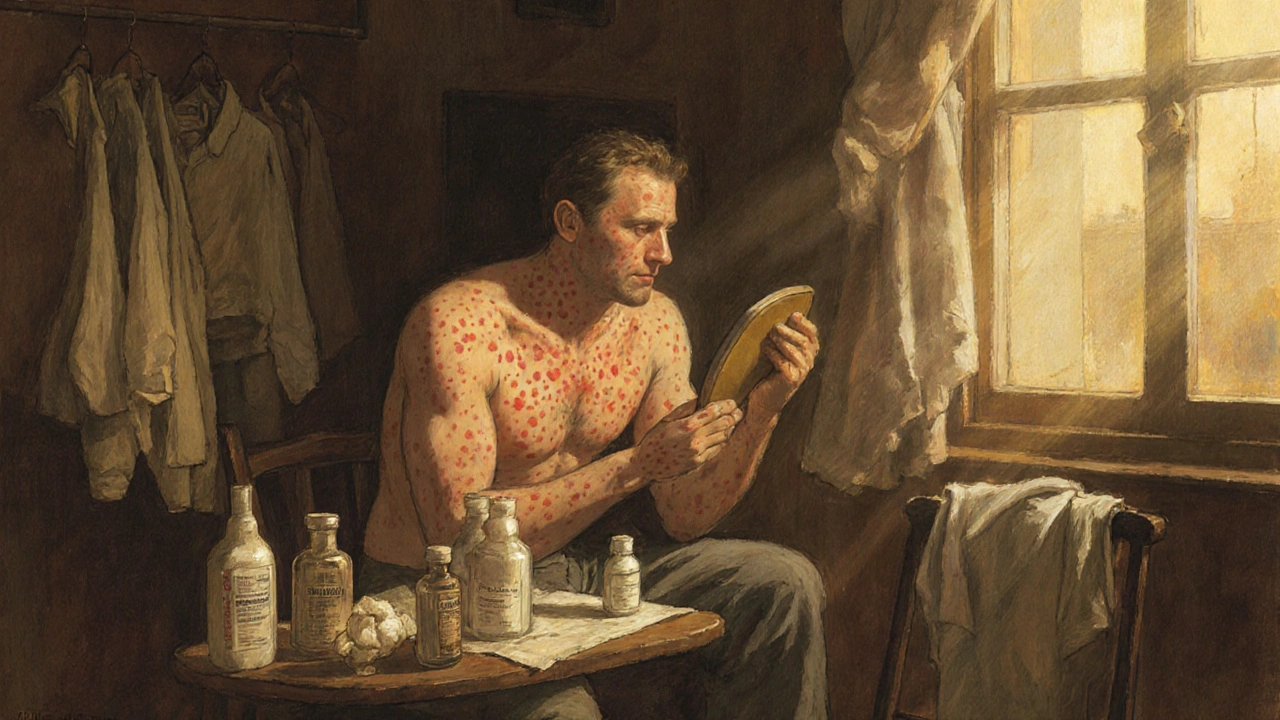
Steroid-Induced Acne and Skin Changes: Topical and Lifestyle Solutions
Steroid-induced acne appears as uniform red bumps on the chest and back after starting corticosteroids or anabolic steroids. Learn how tretinoin, antifungal washes, and lifestyle changes can manage it without stopping essential medication.