
Steroid Acne: Causes, Treatments, and What You Need to Know
When you take steroid acne, a skin condition triggered by corticosteroid use that mimics acne but often appears as uniform, small bumps without blackheads. Also known as corticosteroid-induced acne, it can show up after using pills, creams, injections, or even inhalers. It’s not your typical teenage breakout—it doesn’t come with oily skin or clogged pores. Instead, it’s a reaction to how steroids change your skin’s oil production and immune response. You might notice it after starting prednisone for asthma, using a strong topical cream for eczema, or even after a joint injection. The bumps are usually the same size, red or skin-colored, and show up on the face, chest, or back—often where the steroid was applied or absorbed.
This isn’t just a cosmetic issue. topical steroids, medications applied directly to the skin to reduce inflammation, often used for eczema, psoriasis, or allergic rashes are one of the most common triggers, especially when used too long or too strong. People often don’t realize that even over-the-counter hydrocortisone creams can cause this if used daily for weeks. corticosteroid side effects, unwanted changes in the body from steroid use, ranging from weight gain to skin thinning and acne are well-documented, but steroid acne is often overlooked because it looks so similar to regular acne. That’s why many try regular acne treatments—benzoyl peroxide, salicylic acid—and wonder why nothing works. The problem isn’t bacteria or oil. It’s the steroid itself.
Stopping the steroid is the first step, but it’s not always easy. If you’re on prednisone for an autoimmune disease, you can’t just quit. The goal is to lower the dose slowly while switching to non-steroid alternatives when possible. For topical cases, switching to a weaker steroid or using it only a few days a week helps. In the meantime, gentle cleansers and non-comedogenic moisturizers are key. Avoid harsh scrubs or acne spot treatments—they’ll only make it worse. Some doctors recommend antibiotics like tetracycline for a few weeks to calm inflammation, or retinoids if the skin can handle them. The good news? Once the steroid is reduced or stopped, steroid acne usually clears up in weeks to months. No scarring, no long-term damage.
What you’ll find below are real, practical guides on how to spot steroid acne early, how to manage it without making it worse, and how to safely reduce steroid use when possible. You’ll also see what alternatives exist for conditions that usually require steroids—like eczema or arthritis—and how to protect your skin while still getting the treatment you need. This isn’t about avoiding steroids altogether. It’s about using them smartly, knowing the risks, and taking back control of your skin.
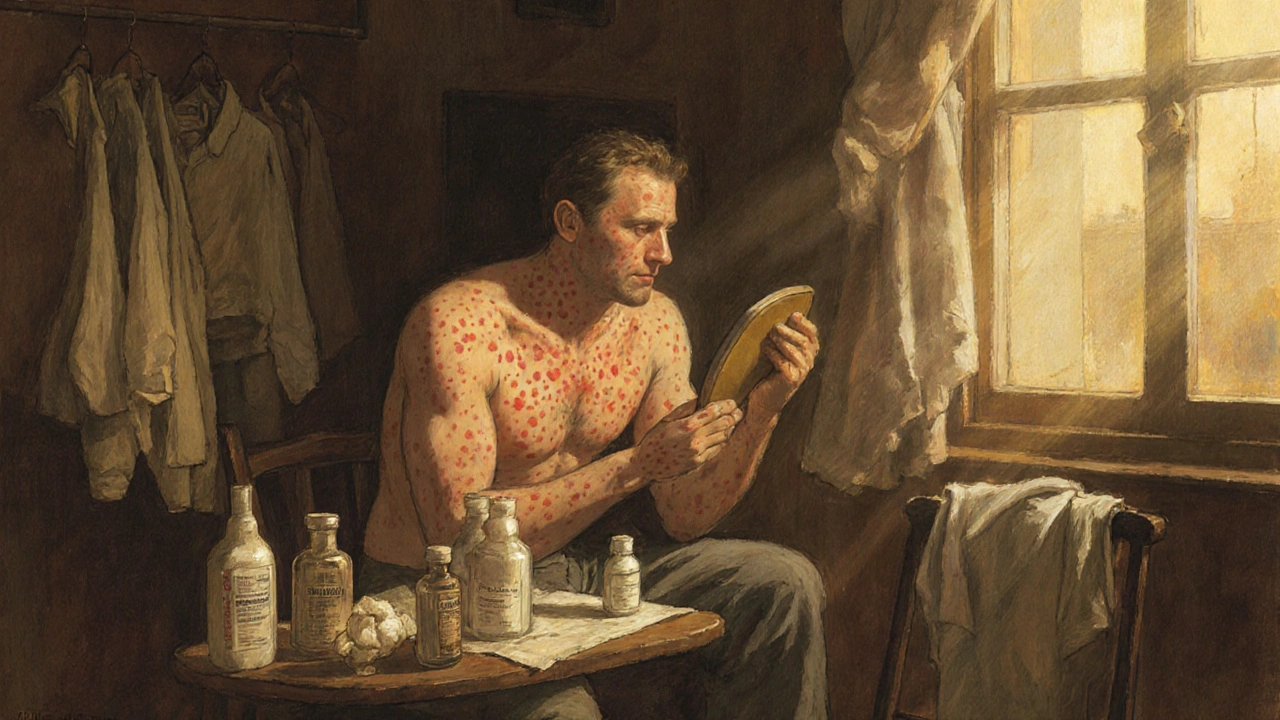
Steroid-Induced Acne and Skin Changes: Topical and Lifestyle Solutions
Steroid-induced acne appears as uniform red bumps on the chest and back after starting corticosteroids or anabolic steroids. Learn how tretinoin, antifungal washes, and lifestyle changes can manage it without stopping essential medication.