
Pulmonary Fibrosis: Causes, Treatments, and What You Need to Know
When your lungs develop scar tissue, they lose their ability to expand and move oxygen into your blood—that’s pulmonary fibrosis, a progressive lung disease where healthy tissue turns stiff and fibrous. Also known as interstitial lung disease, it doesn’t just make you winded—it can slowly steal your ability to walk, talk, or even sleep without struggling for air. Unlike asthma or COPD, where airways tighten, pulmonary fibrosis damages the very structure of the lungs. Once scarred, that tissue doesn’t heal. The goal isn’t to reverse it, but to slow it down and help you live as well as possible.
What causes it? Sometimes, it’s clear: long-term exposure to asbestos, silica dust, or certain chemicals. Other times, it’s linked to autoimmune diseases like rheumatoid arthritis or scleroderma. But in about half of all cases, doctors can’t find a cause—that’s called idiopathic pulmonary fibrosis, the most common and aggressive form of the disease. It mostly hits people over 60, and men are more likely to develop it than women. The progression varies—some decline slowly over years, others worsen rapidly. There’s no cure, but treatments have improved a lot in the last decade.
Two drugs—pirfenidone, an antifibrotic that reduces lung scarring and nintedanib, another antifibrotic that blocks signals driving scar growth—are now standard for slowing disease progression. They don’t fix the damage, but they can buy you time. Oxygen therapy helps when your blood oxygen drops, and pulmonary rehab teaches you how to move better with less breathlessness. For the most advanced cases, a lung transplant, the only option that can restore near-normal lung function is considered, though it’s risky and not for everyone.
What you won’t find in most guides are the everyday realities: the weight of carrying an oxygen tank everywhere, the fear of catching a cold, the frustration when simple tasks like showering leave you exhausted. These aren’t just medical issues—they’re life-altering. The posts below cover what actually works: how to manage side effects from antifibrotic drugs, when oxygen therapy helps most, what to ask your doctor before considering a transplant, and how to avoid infections that can send you into a tailspin. This isn’t theory. It’s what people living with pulmonary fibrosis need to know to stay out of the hospital and keep doing the things that matter.
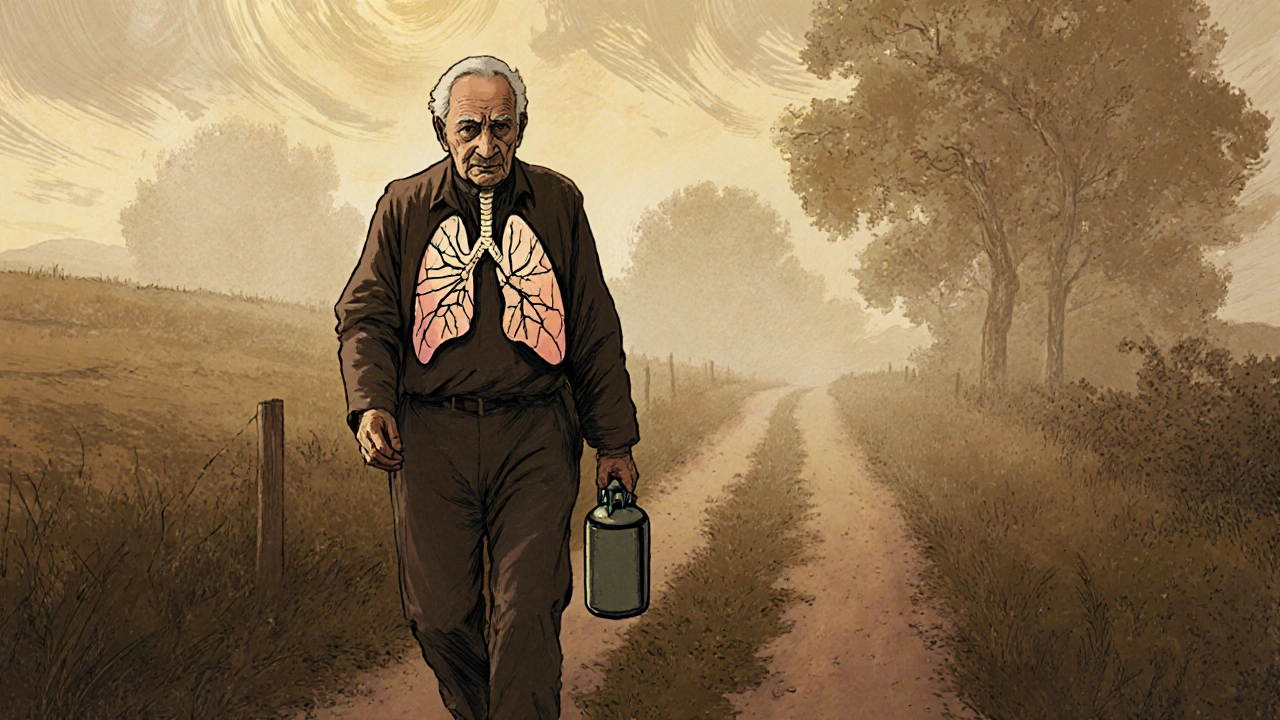
Interstitial Lung Disease: Understanding Progressive Scarring and Modern Treatment Options
Interstitial lung disease causes progressive lung scarring that leads to breathlessness and fatigue. Learn how early diagnosis, antifibrotic drugs like nintedanib and pirfenidone, and pulmonary rehab can slow progression and improve quality of life.