
Malassezia folliculitis: Causes, Treatments, and What You Need to Know
When your skin breaks out in itchy, acne-like bumps that won’t go away with regular treatments, it might not be acne at all. It could be Malassezia folliculitis, a fungal infection caused by yeast that lives naturally on your skin but overgrows under the wrong conditions. Also known as fungal acne, this condition looks like small, uniform pimples—often on the chest, back, shoulders, or face—but doesn’t respond to benzoyl peroxide or antibiotics.
This isn’t just a cosmetic issue. Malassezia, a type of yeast that thrives in oily areas of the skin, feeds on sebum and multiplies when your skin’s natural balance is disrupted. Common triggers include hot, humid weather, wearing tight synthetic clothing, long-term antibiotic use, or using heavy oils and moisturizers. Unlike bacterial acne, which often has blackheads or cysts, fungal acne presents as clusters of tiny, red, itchy bumps that feel sore or burn. Many people waste months treating it as regular acne, only to find their skin gets worse.
What makes this tricky is that antifungal treatments, like ketoconazole shampoo or oral fluconazole, are the only things that work. Topical steroids? They make it worse. Antibiotics? They can trigger it. Even some acne cleansers with salicylic acid won’t touch the yeast. The right treatment starts with diagnosis—often a skin scraping or biopsy—and moves quickly to antifungals. Over-the-counter options like selenium sulfide shampoo used as a body wash can help mild cases. For stubborn outbreaks, doctors often prescribe oral antifungals for a few weeks.
People with oily skin, those who sweat a lot, or anyone on long-term antibiotics are most at risk. Athletes, people in tropical climates, and those using steroid creams or immunosuppressants also see higher rates. It’s not contagious, but it can linger if you don’t change your skincare habits. Switching to non-comedogenic products, washing off sweat right after exercise, and avoiding greasy hair products can prevent recurrence.
Below, you’ll find real-world guides on how to identify this condition, what treatments actually work, and how to avoid the traps that make it worse. Some posts cover antifungal medications used off-label, others explain how to tell it apart from bacterial acne, and a few detail how to manage flare-ups without prescriptions. No fluff. No guesswork. Just clear, practical info from people who’ve been there.
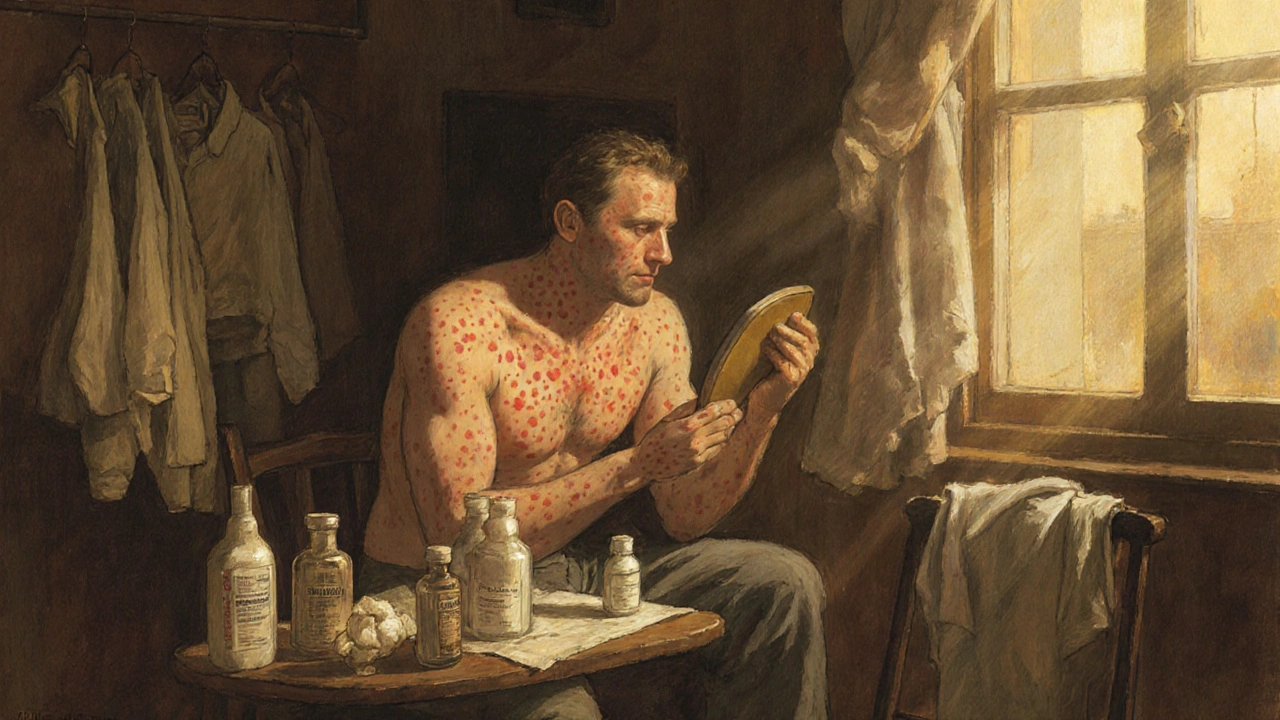
Steroid-Induced Acne and Skin Changes: Topical and Lifestyle Solutions
Steroid-induced acne appears as uniform red bumps on the chest and back after starting corticosteroids or anabolic steroids. Learn how tretinoin, antifungal washes, and lifestyle changes can manage it without stopping essential medication.