
Interstitial Lung Disease: Causes, Treatments, and What You Need to Know
When your lungs start to scar and stiffen, breathing becomes a chore—not because you’re out of shape, but because of interstitial lung disease, a group of disorders that cause inflammation and scarring in the tissue around the air sacs of the lungs. Also known as pulmonary fibrosis, it doesn’t come on suddenly. It creeps in, making simple tasks like walking to the mailbox or climbing stairs feel impossible. This isn’t just one disease. It’s a category that includes over 200 different conditions, all sharing the same outcome: thickened lung tissue that won’t let oxygen pass into your blood like it should.
Some people get it from long-term exposure to dust, chemicals, or asbestos. Others develop it after radiation therapy or from autoimmune diseases like rheumatoid arthritis or scleroderma. For many, the cause is unknown—that’s called idiopathic pulmonary fibrosis, and it’s the most common and serious form. The scarring doesn’t heal. Once it’s there, it stays. That’s why early detection matters. If you’re coughing nonstop, feeling winded during light activity, or notice your fingertips turning clubbed, don’t wait. A simple chest X-ray or high-res CT scan can show the pattern of damage.
Treatment doesn’t reverse the scarring, but it can slow it down. Medications like pirfenidone and nintedanib are approved specifically for slowing lung decline in fibrosis. Oxygen therapy helps when your blood oxygen drops too low. Pulmonary rehab teaches you how to breathe better and stay active without overdoing it. And for some, a lung transplant is the only real option left. What you won’t find in most guides are the real daily struggles: the cost of oxygen tanks, the anxiety of running out of batteries, the way your social life shrinks because even a short walk leaves you exhausted.
What you’ll find in the posts below are clear, no-nonsense breakdowns of how these diseases connect to medications, side effects, and real-world management. You’ll see how drugs like ampicillin or beta-blockers can interact with lung conditions, why certain pain meds are risky, and how generic drug access impacts long-term care. There’s no guesswork here—just facts from people who’ve lived with this, or studied it closely. Whether you’re a patient, caregiver, or just trying to understand what’s happening to your body, this collection gives you what you need to make smarter choices—without the jargon.
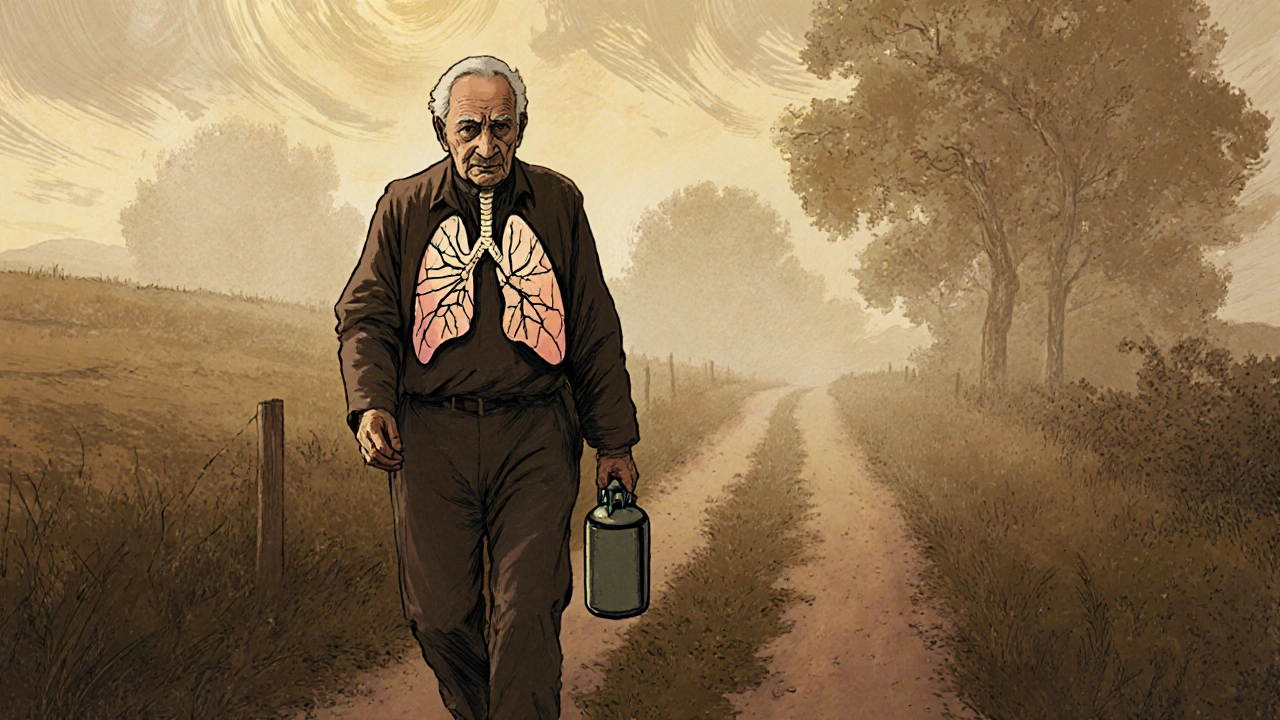
Interstitial Lung Disease: Understanding Progressive Scarring and Modern Treatment Options
Interstitial lung disease causes progressive lung scarring that leads to breathlessness and fatigue. Learn how early diagnosis, antifibrotic drugs like nintedanib and pirfenidone, and pulmonary rehab can slow progression and improve quality of life.