
Storing Medications Away from Children: Safety Best Practices
 Mar, 31 2026
Quick Summary
- Safety Gap: Over 60,000 emergency room visits yearly result from children accidentally swallowing medicines.
- Storage Standard: Keep meds at least 36 inches high and locked away, not just out of sight.
- Caps Aren't Enough: Half of children can open child-resistant caps within minutes.
- Travel Risk: Never leave medications in purses or overnight bags accessible to kids.
- Disposal: Mix unused drugs with coffee grounds before throwing them in trash.
The Hidden Danger in Your Cupboard
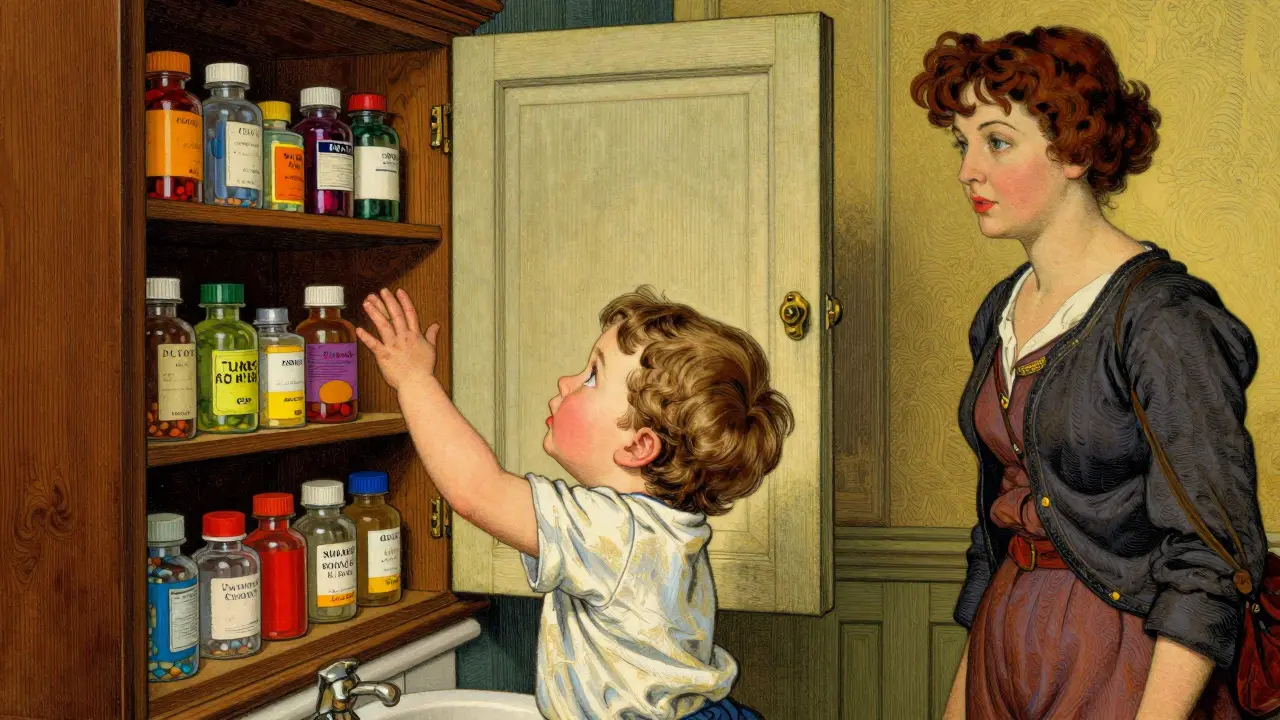
You might think your medicine cabinet is safe because it has locks on the door. Or maybe you keep everything up high where little hands can't reach. But here is a hard truth that changes everything: standard safety measures often fail when curiosity gets involved. Every year, around 60,000 children under the age of five end up in the emergency room after unintentionally ingesting medication. That averages out to roughly 165 kids every single day needing urgent medical help for something sitting in plain sight.
Pediatric Poisoning is a critical public health issue involving accidental medication ingestion by young children. While it sounds scary, it is entirely preventable with the right habits. The Centers for Disease Control and Prevention tracks these incidents closely, noting that they aren't just isolated accidents; they are predictable events caused by consistent storage failures. We often treat medicine like a normal household object rather than a potential hazard. This mindset shift is the first step toward keeping your family safe.
Think about the last time you took a pill for a headache. Did you put the bottle back on the counter while you washed your hands? Children notice that gap instantly. In fact, 78% of accidental ingestions happen during routine administration, not just from stored supplies. Kids learn that the medicine comes out of the cupboard, so they start looking there. If we don't treat every access point as a security risk, we leave a wide-open door for disaster.
Why Standard Child-Resistant Caps Fail
We trust the little bottles with the hard-to-open tops to protect our kids. It feels logical. After all, the packaging says "child-resistant." However, testing protocols reveal a stark reality. According to data analyzed by Express Scripts in late 2023, 50% of children can open these safety caps within one minute when left unsupervised. For a toddler with nothing better to do, one minute is an eternity.
Child-Resistant Packaging is specialized container design intended to prevent children from opening containers containing hazardous substances. These packages are designed to be difficult, not impossible. Manufacturers test them with 200 children aged between 42 and 51 months for ten minutes. But in a real home setting, a four-year-old doesn't stop trying after ten minutes. They keep pushing, twisting, and prying until it gives way. Relying solely on the cap creates a false sense of security.
To make things worse, some medicines look exactly like candy. Chewable vitamins or aspirin tablets resemble Skittles or SweeTarts. Dr. Susan Smolkin from Children's Mercy Hospital noted a 17% increase in accidental ingestions specifically tied to chewable medications looking edible. When a child associates bright colors with treats, your carefully hidden Tums suddenly become a snack they want to share. Comparing medicines to candy creates dangerous associations that linger in a child's mind.
The Up and Away Approach to Storage
If the bottle isn't safe enough, where does the solution lie? The answer is a strategy known as Up and Away Campaign is a public health initiative launched by the CDC to promote safe medication storage practices. This initiative emphasizes two key behaviors: storing medications high up and keeping them far away from children's reach. It was created through a partnership between government agencies and healthcare providers to standardize safety messaging across the country.
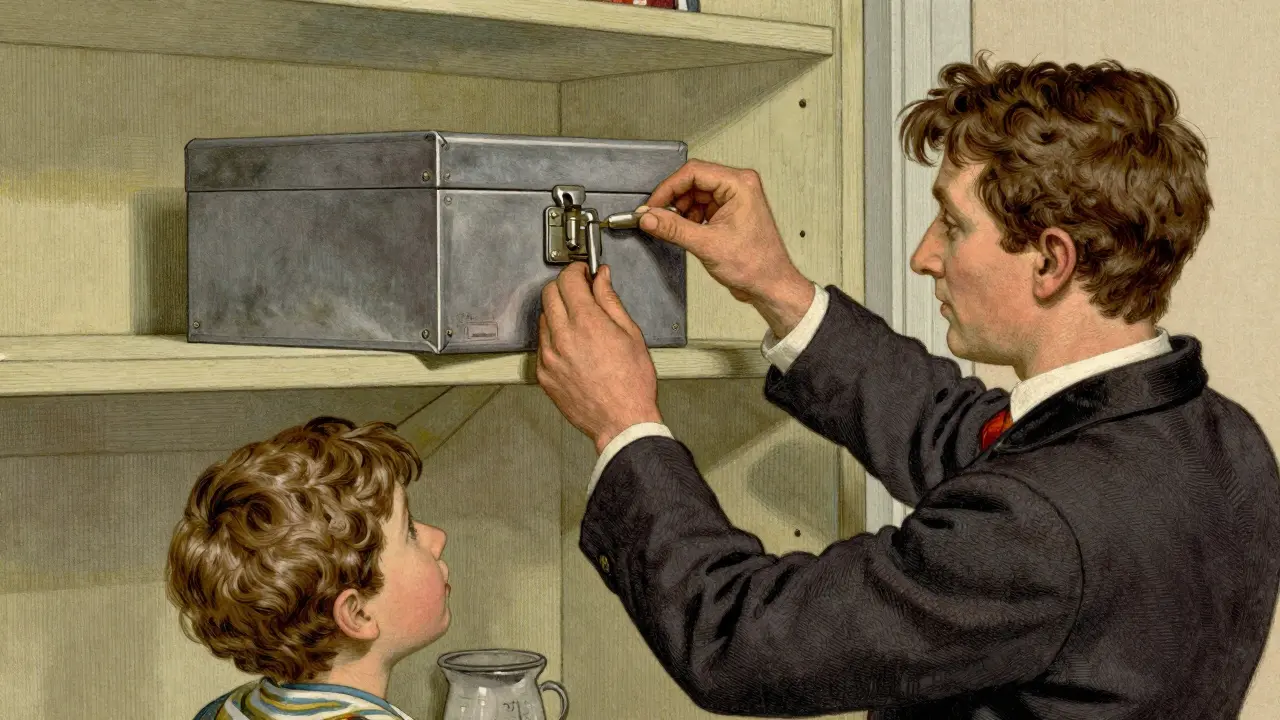
Avoid the kitchen counters and bathroom medicine chests. Bathrooms are humid places, which can degrade some medicines, but more importantly, they are usually low and easily accessed. A standard bathroom cabinet is often lower than 36 inches off the ground. Safe Kids Worldwide recommends storing medications in cabinets positioned at or above counter height, completely out of sight. This means at least 36 inches up. Even better, use a dedicated locked box. Studies show that locked cabinets provide 98% effectiveness in preventing access compared to just 72% for high shelves alone.
Storage Method
Prevention Effectiveness
Recommended Use Case
Locked Cabinet/Safe
98%
Daily storage, opioids, narcotics
High Shelf Only
72%
Secondary backup, supervised areas
Bathroom Cabinet
Low
Not recommended
Weekly Pill Organizer
45%
Risk if visible to children
Specialized medication safes with biometric locks are becoming more common, costing between $45 and $120. These offer maximum security but take slightly longer to open. You have to weigh the speed of access against safety. For daily maintenance meds, a traditional key lock is fine. For emergency items like epinephrine auto-injectors, you need immediate access. Seattle Children's Hospital suggests keeping rescue inhalers in accessible-but-secured locations that adults know instantly.
Behavioral Protocols: The Two-Minute Rule
It isn't just about where you put the bottle; it is about what you do while using it. There is a simple concept called the Two-Minute Rule. This mandates that medications should never remain unsecured for more than 120 seconds during administration. Why? Because children can climb stairs and open cabinet latches incredibly fast-often within 90 seconds.
Imagine you grab pain relievers for a fever. You sit down to measure the dose. If you step away for a phone call, even briefly, you risk leaving a path of least resistance open. Families practicing "lock-up routines" reduce accidental access by 83% according to American Academy of Family Physicians resources. This means locking the box immediately after taking a dose, not waiting until bedtime.
Another behavioral pitfall involves the grandparent factor. Surveys show that 76% of grandparents fail to lock up medications when grandchildren visit. They might think, "My grandchild knows not to touch medicine." That assumption puts the visitor at risk. Consistent communication among caregivers is vital. Everyone entering the home needs to know the location of the locked box.
Navigating Travel and Temporary Care
Holidays and vacations introduce new risks. Travel disrupts routines. Reddit parents report that 63% of near-miss incidents occur during travel when standard storage routines break down. An overnight bag sitting on the floor looks inviting. A purse in a stroller is another danger zone. A documented incident showed a 22-month-old accessing opioid medication from an unsecured overnight bag despite proper home storage.
Create a Travel Safety Kit is portable secure storage solution designed for traveling families to maintain medication safety. Portable lockboxes fit inside hotel safes. Never hand over a bottle directly to a sitter without explaining the lock mechanism. For road trips, avoid keeping medication loose in glove boxes where kids play with keys. Instead, keep them in a locked container inside the trunk or a bag you keep with you.
What about emergency medicines like Narcan? Recent guidelines recommend placing them in high cabinets with clear labeling visible to adults but inaccessible to children. Yet, 87% of opioid overdose reversals happen when Narcan is stored within 30 seconds of access distance. Balancing immediate adult access with child-proofing requires planning. Put it high but label it clearly so anyone helping you knows exactly where to look.
Proper Medication Disposal Strategies
Cleaning out your medicine cabinet is part of safety. Old prescriptions attract attention just as much as new ones. Proper disposal prevents these expired items from ending up in landfills or being found by a curious child later. Simply flushing them down the toilet isn't always recommended due to environmental concerns, though specific high-risk drugs may require flushing per FDA guidelines.
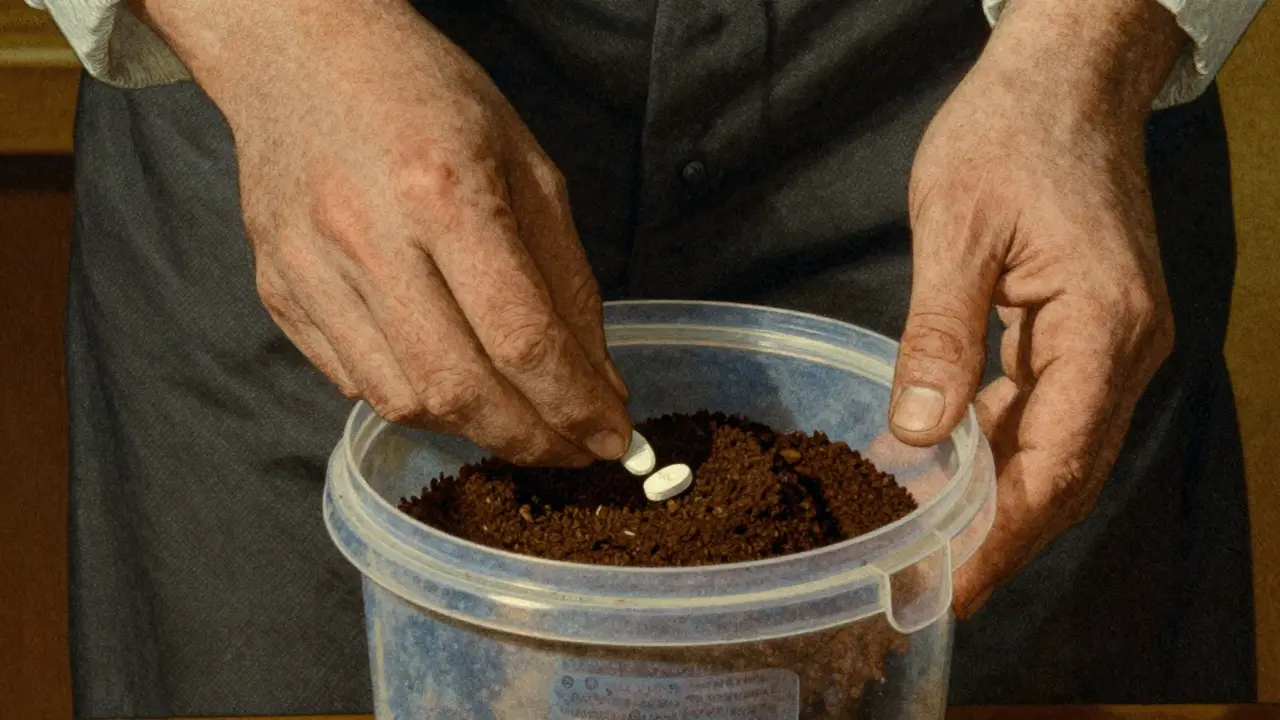
The safer method involves mixing the medication with undesirable substances like coffee grounds or cat litter. Seal this mixture in a sturdy plastic container before tossing it into the regular trash. This makes it unappealing and harder to retrieve. Alternatively, check for permanent disposal kiosks at local pharmacies. As of 2024, 78% of U.S. communities offer these services. Disposing of meds responsibly is just as critical as locking them up while in use.
Emergency Preparedness and Monitoring
Accidents can still happen despite best efforts. Households with teenagers face different challenges. Adolescents might misuse prescription meds. Monitored medication systems where teens document each dose with adult verification can reduce misuse significantly. Longitudinal data suggests this approach lowers prescription misuse by 67%.
In case of suspected ingestion, act fast. Do not wait for symptoms to appear. Call Poison Control immediately at 1-800-222-1222. Knowing the exact name and amount ingested speeds up treatment. Keeping an inventory of what is in your locked box helps emergency responders immensely. Regular safety drills keep the information fresh for all adults in the home.
Is storing medicine high on a shelf enough?
No. High shelves are less effective than locked containers. Studies show locked storage reduces access risk by 26% more than high shelves alone, as children often find ways to climb or bring furniture.
Can child-resistant caps be trusted?
Not entirely. About half of children can open them within a minute if left alone. They serve as a barrier but should never replace physical locking mechanisms.
Where should I put emergency medication like EpiPens?
Store emergency meds in secured locations that adults can access quickly, such as a high cabinet or designated lockbox known to all responsible adults.
What happens if my child touches medicine?
Call Poison Control immediately. Do not wait for symptoms. Provide details about the medication name and estimated amount touched.
How should I dispose of old pills?
Mix them with coffee grounds in a sealed container before trashing, or use permanent community disposal kiosks found at most pharmacies.
Amber Armstrong
April 1, 2026 AT 05:10I remember my mother used to tell me that if you don't see it you won't touch it but I know that isn't always true for little ones anymore. We had an incident once when I was visiting my cousin who had twins around three years old and she left her ibuprofen right on the counter while making breakfast for the family. The bottle cap was closed tight but my niece managed to find a way to twist it open before anyone realized what was happening because she had been watching her dad do it every morning without fail. It is so scary to think about how quickly things can go wrong in those short moments when you aren't paying full attention to your surroundings. My cousin cried for hours afterwards and we spent the night in the emergency room waiting for test results that came back okay eventually but the stress was immense for everyone involved in the situation. I think people underestimate how smart kids are when it comes to figuring out how to get into places they aren't supposed to be allowed. They explore everything and medicine bottles look so much more interesting than regular food items sitting around in the pantry. The point about locking things away is absolutely crucial and I wish I had started doing that much earlier in my own parenting journey when my first child started walking around the house. Even if you think you only leave the bathroom door open for thirty seconds that is enough time for a toddler to climb onto a stool and reach high shelves. We also talked about travel risks which is another area where families seem to forget safety basics while staying in hotels or visiting relatives homes frequently. You never know what kind of security is in place when you stay somewhere else and relying on hotel safes can be risky if you leave keys lying around anywhere visible. I really hope reading this helps everyone realize that keeping medicine safe requires constant vigilance and not just putting trust in caps or simple cabinet locks alone.
Victor Ortiz
April 1, 2026 AT 18:58The anecdote above is useless for actual risk assessment. Emotional stories do not correlate with empirical data regarding pediatric poisoning statistics.
Rick Jackson
April 1, 2026 AT 22:19Safety is a state of mind rather than just physical storage solutions. The philosophy of protection requires consistency.
Beccy Smart
April 2, 2026 AT 02:06It makes me sick to see how many parents ignore basic warnings just because they feel too busy for proper safety measures 😤🙄 You are lucky your kid is fine but others are not so lucky and pay with health issues. Stop being lazy and lock the box 🚫💊
sanatan kaushik
April 3, 2026 AT 06:06This article is fear mongering at its finest level and does not address real problems in our society today. Parents should know their own children behavior without needing government lectures on how to store pills. If kids swallow pills maybe stop giving them candy that looks like medicine instead. Why is everyone blaming storage when the child has access to everything anyway? You cannot watch them every single minute so stop pretending you can control nature itself.
Debbie Fradin
April 4, 2026 AT 03:56Funny how you decide that teaching safety is lecturing while actually admitting you might leave doors unlocked. Oh yes the genius move of ignoring science to claim common sense works better. Your common sense failed when your child swallowed something bad last year didn't it?
Jonathan Alexander
April 5, 2026 AT 02:47I literally broke down in tears reading this because I lost a friend to accidental ingestion and nobody talks about this tragedy openly anymore. The silence around these numbers is deafening and devastating for families everywhere.
Charles Rogers
April 6, 2026 AT 09:05The modern parent lacks discipline and fails to maintain order within their household environments effectively. We need stricter regulations on who qualifies to raise children properly in this age of digital distraction and lack of supervision standards. Locking boxes is easy but most people prefer convenience over responsibility which is unacceptable behavior.
Adryan Brown
April 7, 2026 AT 11:40We should focus on creating a culture of safety that includes all caregivers from grandparents to babysitters without placing undue guilt on any single individual. Research suggests that collaborative family approaches reduce incidents significantly more than isolated strict rules ever could achieve on their own. It is important to acknowledge that mistakes happen to good people who simply forgot where they put the bottle for a moment during a chaotic dinner service time. Having a standard location for the locked box ensures that even visitors know exactly where to look during emergency situations involving potential overdoses. Communication plans between different households sharing custody of children also play a major role in maintaining consistency regardless of location. We must prioritize understanding human error as part of the equation rather than assuming perfection is possible all the time. Education campaigns work best when they provide actionable steps that fit easily into daily routines without causing unnecessary friction in family dynamics. Balancing accessibility for adults with restriction for children is a complex puzzle requiring patience and planning. Every home is different but the principles remain universal regarding height and visibility restrictions. We can build better habits by practicing drills regularly so reacting becomes second nature during stressful moments. Ultimately community support systems help reinforce these behaviors through shared knowledge and resources available locally. Let us strive towards a safer environment together.
Christopher Curcio
April 9, 2026 AT 00:06Pharmacologically speaking, acute toxicity thresholds vary widely depending on the patient's weight class and metabolic rate of the ingested substance involved. Bioavailability increases significantly when liquid formulations are consumed rather than tablet forms which dissolve slower in gastric environments. We need more longitudinal studies tracking long term cognitive impacts of sublethal exposures in pediatric populations specifically.
Angel Ahumada
April 9, 2026 AT 20:15In a world dominated by consumerism and fast paced living the sanctity of domestic safety has become merely a checkbox exercise devoid of true meaning. We pretend protecting life matters while allowing corporations to design packaging that tricks us into false security measures. Society demands performance above survival yet expects parents to read the room without clear guidance or tools. The existential dread of a preventable tragedy looms over every household unaware of their own vulnerability in a dangerous ecosystem.
Kendell Callaway Mooney
April 11, 2026 AT 02:44If anyone needs a recommendation for affordable lockboxes that fit standard medicine cabinets just let me know I have a few links saved from reliable vendors. It is really helpful to share practical gear recommendations since cost can be a barrier for budget conscious families who want to stay safe.
dPhanen DhrubRaaj
April 11, 2026 AT 22:09in my village we keep medicines in separate wooden boxes hung high in rafters but here apartments dont allow hanging anything heavy outside windows maybe i understand why urban rules exist now. thanks for info though
Vikash Ranjan
April 12, 2026 AT 03:27You assume everyone has a spare $100 for biometric safes when rent is eating up half the income already. Not every home has structural options to bolt things securely to studs behind cheap drywall partitions either. Stop preaching luxury safety features as if poverty is the only variable controlling risk factors here.
RONALD FOWLER
April 12, 2026 AT 09:20Thanks for posting this important information for parents today.