
Rifampin and Oral Contraceptives: Why This Antibiotic Can Cause Birth Control Failure
 Mar, 24 2026
Birth Control Safety Calculator
Rifampin Birth Control Safety Calculator
Rifampin is the only antibiotic that significantly reduces effectiveness of hormonal birth control. Calculate when it's safe to resume your regular method after treatment.
When you’re prescribed rifampin for tuberculosis or a stubborn staph infection, you’re probably focused on getting better. But if you’re taking birth control pills, there’s a hidden risk you might not know about: rifampin can make your birth control completely ineffective. This isn’t a myth, a rumor, or a rare side effect. It’s a well-documented, clinically proven interaction that has led to unintended pregnancies for decades.
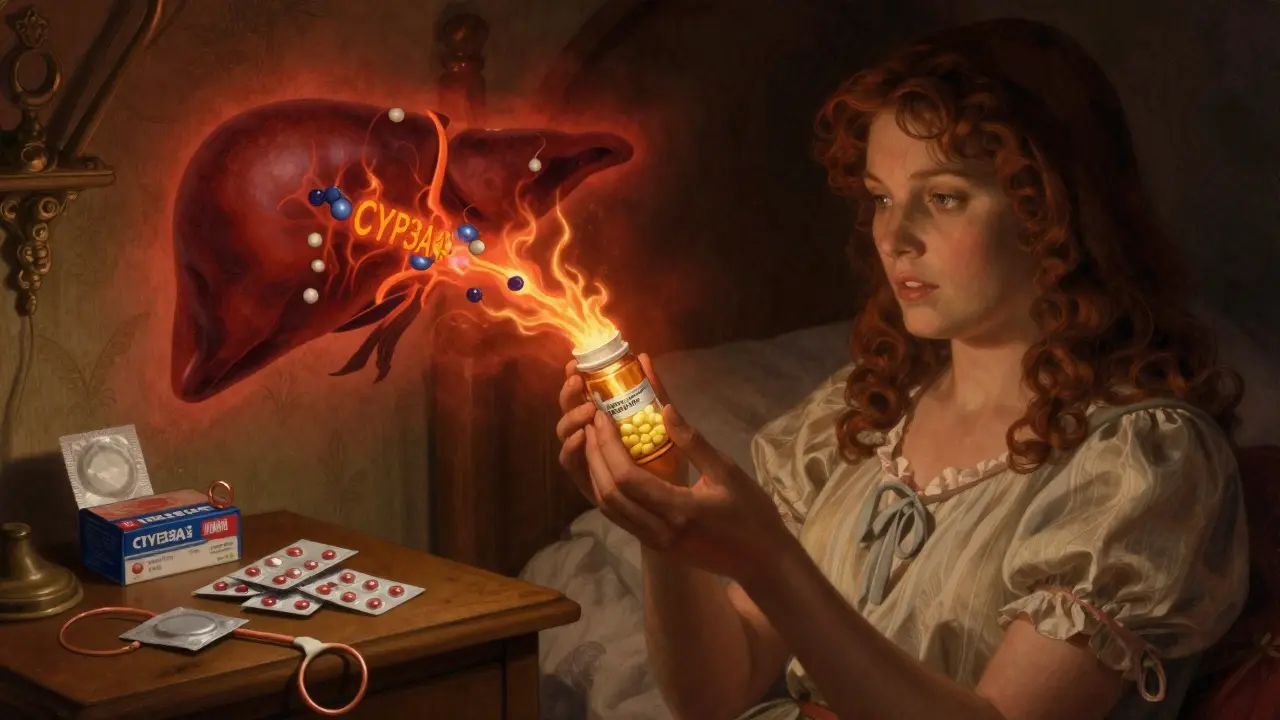
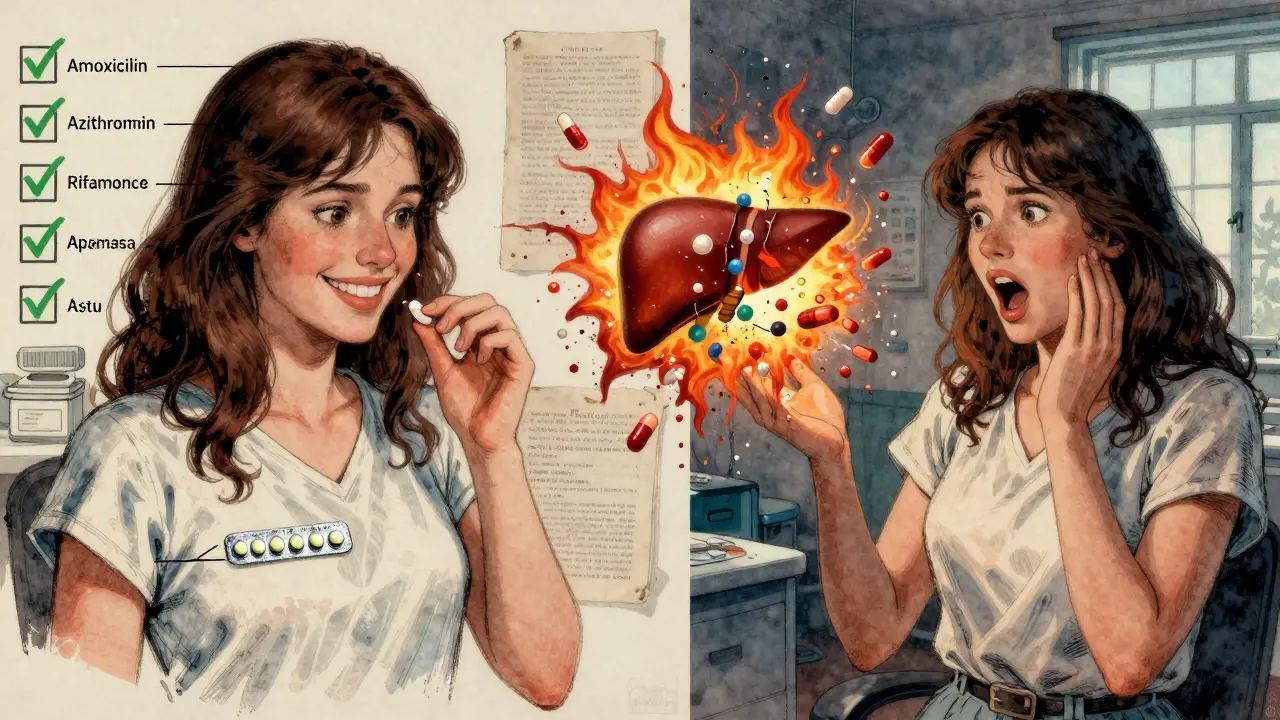
Rifampin doesn’t just work like other antibiotics. Most antibiotics - like amoxicillin, azithromycin, or doxycycline - don’t touch your birth control. But rifampin? It turns your liver into a hormone-burning machine. The drug triggers your liver enzymes to break down estrogen and progestin faster than normal, slashing their levels in your bloodstream by up to 67%. That’s not a small drop. That’s enough to stop your birth control from working at all.
How Rifampin Kills Hormonal Birth Control
Rifampin is a powerful inducer of CYP3A4, a liver enzyme that metabolizes drugs. When this enzyme gets overworked by rifampin, it starts chewing through the hormones in your pill, patch, or ring before they can do their job. Studies show that after just 24 to 48 hours of rifampin use, your body starts clearing ethinyl estradiol (the estrogen in most pills) much faster. By day 7, enzyme activity peaks. Even after you stop taking rifampin, those enzymes stay active for up to four weeks.
Here’s what that looks like in real numbers:
- Ethinyl estradiol levels drop by 37% to 67%
- Progestin levels (like levonorgestrel or norethindrone) drop by 27% to 52%
These aren’t lab curiosities. These drops are enough to trigger ovulation. In studies, up to half of women taking rifampin while on birth control showed signs of ovulation - the exact opposite of what birth control is supposed to prevent.
What Happens When Birth Control Fails
Women on rifampin have reported breakthrough bleeding, spotting, and even missed periods - early signs that their hormones are out of whack. But the real danger? Pregnancy.
Between 1970 and 1999, the UK’s Committee on Safety of Medicines received 117 reports of contraceptive failure linked to antibiotics. Guess how many involved rifampin? All of them. Not one. Not two. All 117. And that’s just the reports that got documented. The real number is likely much higher.
There’s no exact statistic on how often rifampin causes pregnancy because no one has ethically run a trial to test it directly. But we know this: women on rifampin who rely only on birth control pills have a significantly higher chance of getting pregnant than those who don’t. And for women with tuberculosis - who often have limited access to healthcare - an unintended pregnancy can be devastating.
Not All Antibiotics Are Created Equal
Let’s clear up a big myth: not every antibiotic messes with birth control. In fact, most don’t.
Penicillin? No effect. Tetracycline? No effect. Azithromycin? No effect. Erythromycin? No effect. Despite decades of anecdotal reports, controlled studies have never shown these drugs reducing hormone levels or increasing ovulation. The American College of Obstetricians and Gynecologists says it plainly: "Non-rifamycin antibiotics do not reduce oral contraceptive effectiveness."
So why do so many doctors still warn patients about all antibiotics? Because of confusion. A 2017 survey found that only 42% of primary care doctors consistently told patients about the rifampin interaction. And 28% wrongly told patients to use backup contraception for every antibiotic they took.
There’s one exception: rifabutin. It’s a cousin of rifampin, used for MAC infections in HIV patients. At standard doses (300mg daily), it reduces hormone levels by about 20-30%. It’s not as bad as rifampin, but it still carries risk. So if you’re on rifabutin, you should still use backup contraception.
What You Should Do If You’re on Rifampin
If you’re taking rifampin and you’re on hormonal birth control, here’s what you need to do - right now:
- Stop relying on the pill, patch, or ring.
- Use a non-hormonal backup method for the entire time you’re on rifampin - plus 28 days after you finish.
- Choose between a copper IUD (like ParaGard) or condoms. These are the only reliable options.
Why 28 days after? Because rifampin’s effect on liver enzymes doesn’t vanish when you stop taking it. It takes weeks for your body to reset. Skipping this window is the most common mistake.
The CDC and the American College of Obstetricians and Gynecologists both classify combined hormonal contraceptives as Category 4 - meaning "unacceptable health risk" - when used with rifampin. That’s the highest risk category. It’s not a suggestion. It’s a warning.
What About Other Birth Control Methods?
Not all hormonal methods are equally affected.
Birth control shots (Depo-Provera)? They’re still risky. The progestin dose is high, but rifampin still breaks it down faster. Use backup.
Implants (Nexplanon)? Newer data is promising. A 2023 study followed 47 women using etonogestrel implants during rifampin treatment. None got pregnant. But the sample size was small. Experts still recommend backup contraception - just in case.
Internal devices like the copper IUD? These are your best bet. They don’t rely on hormones. They work mechanically. No enzyme interference. No risk. The WHO now recommends copper IUDs as the first-line contraceptive for women needing rifampin.
Emergency contraception? If you had unprotected sex while on rifampin, don’t rely on Plan B. Its effectiveness drops too. Use a copper IUD as emergency contraception - it’s more than 99% effective, even with rifampin.

Why This Problem Still Exists
You’d think this would be common knowledge by now. But it’s not.
A 2022 study in the Journal of Women’s Health found that 63% of women prescribed rifampin received no proper counseling about birth control risks. Some doctors still think "all antibiotics" are dangerous. Others assume patients know. Many don’t even ask if the patient is on birth control.
And it’s worse in low-resource settings. In sub-Saharan Africa, where TB is common and access to IUDs or condoms is limited, women often continue pills - and get pregnant. This isn’t just a medical issue. It’s a public health crisis.
Drug makers now test every new hormonal product against rifampin before approval. The FDA and EMA require it. But even with that, warnings are often buried in fine print. Patients don’t read them. Doctors forget to mention them.
The Bottom Line
Rifampin is the only antibiotic with proven, serious, and predictable effects on birth control. If you’re taking it, your pill won’t work. Your patch won’t work. Your ring won’t work. Period.
You need a backup method - and you need it for the full course plus 28 days after. Copper IUDs are the gold standard. Condoms work too. Don’t rely on other pills, shots, or implants unless you’ve talked to your doctor.
And if you’re a clinician? Ask about birth control. Every time. Don’t assume. Don’t guess. This isn’t a rare edge case. It’s a preventable risk - and it’s happening right now.
Rama Rish
March 25, 2026 AT 21:15Kevin Siewe
March 27, 2026 AT 09:45Chris Farley
March 29, 2026 AT 04:19Darlene Gomez
March 30, 2026 AT 10:34Katie Putbrese
March 30, 2026 AT 13:59Jacob Hessler
March 31, 2026 AT 01:28Amber Gray
March 31, 2026 AT 02:25Danielle Arnold
April 1, 2026 AT 07:23