
Return to Work With Chronic Pain: Accommodations and Plans
 Dec, 30 2025
Returning to work with chronic pain is possible - if you know your rights and how to ask
Over 51 million adults in the U.S. live with chronic pain. Many of them want to work. But too many quit because they don’t know how to ask for help, or fear being seen as lazy or unreliable. The truth? Chronic pain is a recognized disability under the ADA, and employers are legally required to make reasonable changes so you can keep doing your job.
You don’t need to suffer in silence. You don’t need to choose between your health and your paycheck. With the right plan and clear communication, you can return to work - and stay there.
What counts as a reasonable accommodation?
A reasonable accommodation isn’t a luxury. It’s a practical change that lets you do your job without making your pain worse. The Job Accommodation Network (JAN) found that 56% of accommodations for chronic pain cost employers nothing. That’s right - no money needed.
Here’s what actually works:
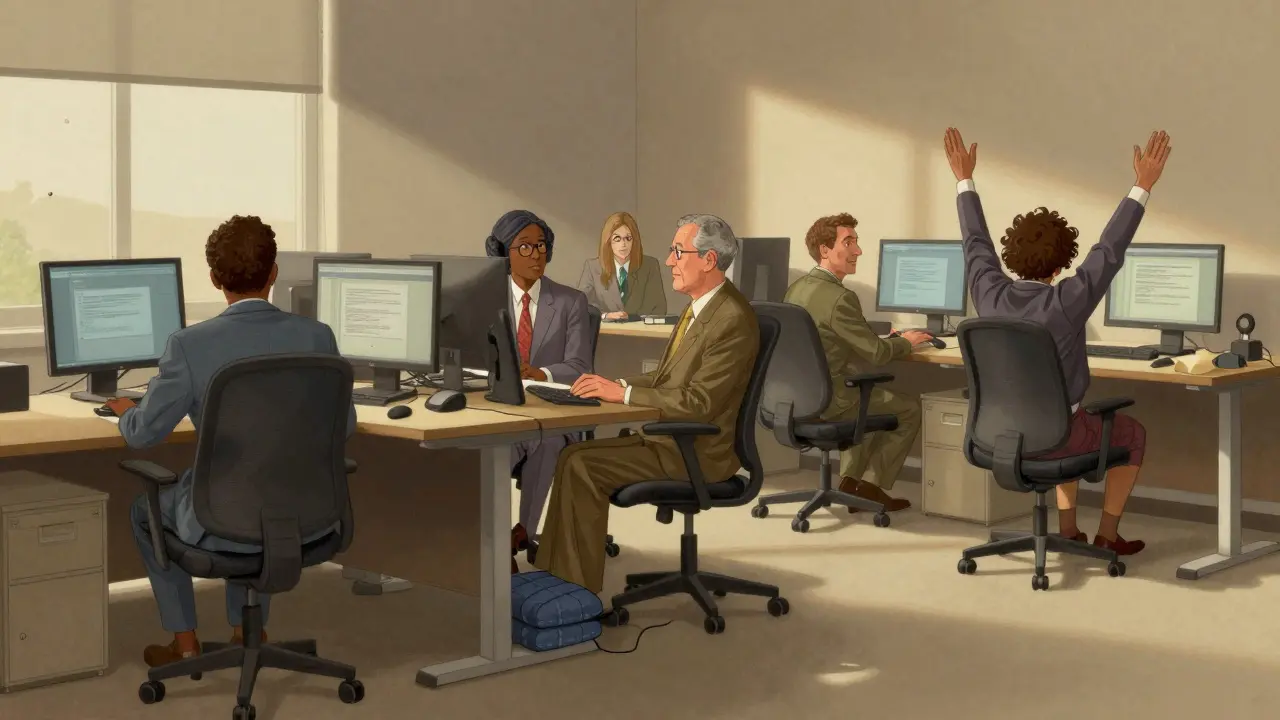
- Adjustable desks - Sit-stand desks let you shift positions throughout the day. A good one costs $300-$1,200, but many employers already have them for other employees.
- Ergonomic chairs and cushions - A cushion that supports your lower back can cut pain by 30% or more. Prices range from $50 to $200.
- Flexible hours - Starting at 10 a.m. instead of 8 a.m. lets you manage morning stiffness. Ending early to attend a physical therapy session? That’s allowed.
- Extra breaks - Taking a 10-minute walk or stretch every 90 minutes isn’t slacking. It’s preventing flare-ups. Studies show this simple change improves focus and reduces pain intensity.
- Remote work - If commuting or being in a noisy office makes your pain worse, working from home even a few days a week is a valid request.
- Voice recognition software - If typing hurts your hands or wrists, tools like Dragon NaturallySpeaking can cut keystrokes by 70%. Costs under $300.
- Relocated workspace - Moving your desk closer to the bathroom, break room, or elevator reduces walking distance. For someone who tires after 100 feet, this isn’t convenience - it’s necessity.
- Modified duties - If you can’t lift heavy boxes but can still manage emails and calls, reassigning those physical tasks is fair. You’re not getting out of work - you’re doing work you can handle.
These aren’t special favors. They’re adjustments that let you function like anyone else. The EEOC says employers must provide them - unless it causes ‘undue hardship.’ For a company with 500 employees, a $500 desk isn’t hardship. For a solo entrepreneur? Maybe. But most businesses aren’t that small.
How to ask - without sounding like you’re begging
The biggest mistake people make? Waiting until they’re in crisis. Or asking vaguely: ‘I need something for my pain.’
Be specific. Write it down. Include:
- Your diagnosis (e.g., ‘lumbar degenerative disc disease’)
- How it affects your work (e.g., ‘I cannot sit for more than 45 minutes without increased pain and numbness’)
- Exactly what you need (e.g., ‘I request a sit-stand desk and 10-minute breaks every 90 minutes’)
- Supporting documentation from your doctor
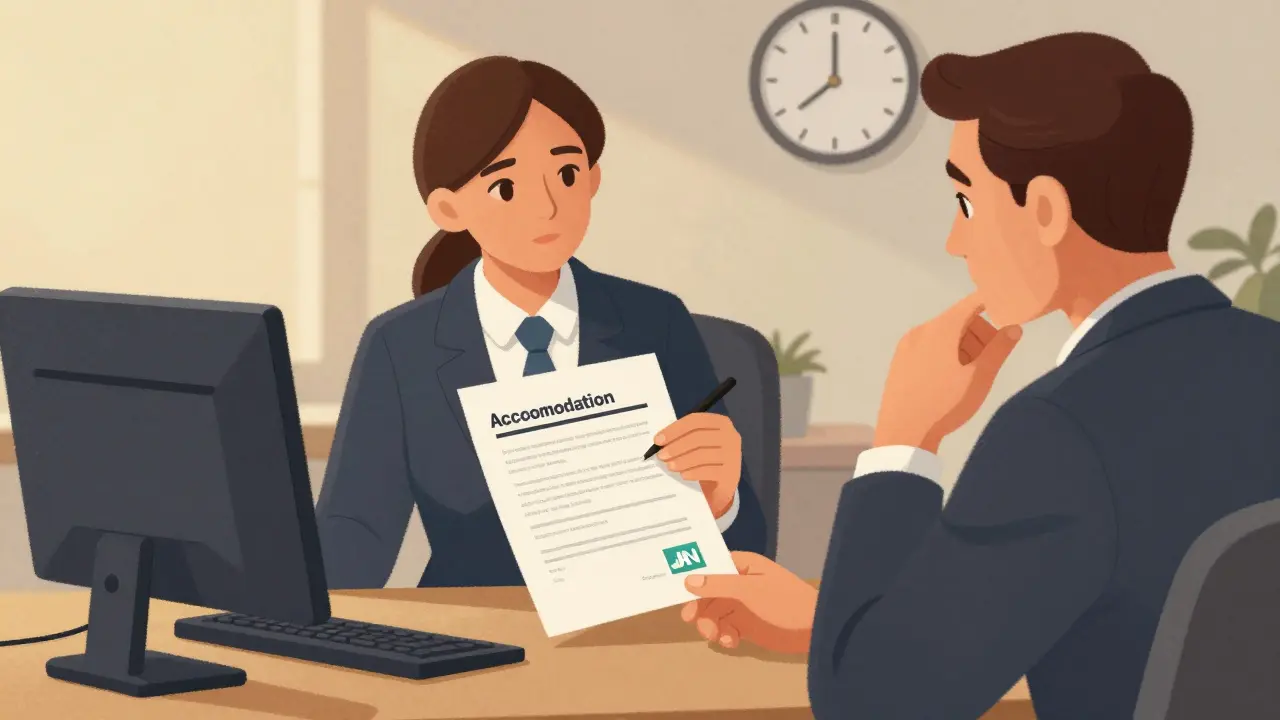
Dr. Braverman from UT Health Austin says: ‘The most effective way to seek accommodations is to put your request in writing mentioning the ADA.’ Don’t say ‘I’m in pain.’ Say ‘My condition limits my ability to sit for prolonged periods, and under the ADA, I’m requesting a sit-stand desk as a reasonable accommodation.’
When employees are specific, approval rates jump from 45% to 89%. Vague requests? They get denied 55% more often.
What if your employer says no?
They can’t say no just because they don’t like it. They can only deny if it causes ‘undue hardship’ - meaning significant difficulty or expense relative to their size, resources, and operations.
Small businesses (under 15 employees) aren’t covered by the ADA. But in California, the law applies to employers with 5 or more. Other states have similar protections. Know your state’s rules.
If your employer refuses, here’s what to do:
- Ask for a written explanation. Don’t accept a verbal ‘no.’
- Request a meeting with HR. Say you’d like to discuss alternatives.
- Call the Job Accommodation Network (JAN) at 1-800-526-7234. They’re free, confidential, and help 82% of people resolve issues without lawsuits.
- If needed, file a complaint with the EEOC. They handled a 17% increase in chronic pain accommodation claims between 2021 and 2022.
Most denials come from misunderstanding - not malice. Many employers think accommodations are permanent. They’re not. You might need a heated cushion during a flare-up, then return to your regular setup. That’s normal.
The hidden factor: your coworkers and boss
It’s not just about the desk or the schedule. It’s about culture.
Research shows employees with strong relationships at work are 2.3 times more likely to get their accommodations approved. Why? Because coworkers notice when you’re struggling. They cover for you. They speak up.
But 62% of people with chronic pain delay asking for help because they fear being judged. And 31% leave their jobs instead of speaking up.
Start small. Tell your manager: ‘I’ve been managing a long-term health issue, and I’ve found that small adjustments help me stay productive. I’d like to discuss how we can make that work.’
Frame it as a win for them: ‘I’m more focused when I can take breaks. My error rate dropped 40% after I started using voice software.’
People respond to results - not complaints.
What about FMLA? Does that help?
FMLA gives you 12 weeks of unpaid, job-protected leave. But it doesn’t give you accommodations. It’s time off - not a return-to-work plan.
Think of it this way: FMLA is your safety net. ADA is your bridge back to work.
You can use FMLA for surgery or a flare-up, then come back and ask for a standing desk or flexible hours. They’re not the same thing. You need both.
And here’s a key point: FMLA only applies if you’ve worked 1,250 hours in the last year for a company with 50+ employees within 75 miles. If you don’t qualify, ADA still does.
Gradual return: the secret weapon most people don’t know about
Going from zero to full-time in one day? That’s how most people end up back on leave.
Instead, try a graduated return to work. Start at 20-50% of your normal hours. Work from home two days a week. Take longer breaks. Slowly increase your schedule over 4-8 weeks.
Studies show this approach leads to 63% higher long-term retention than jumping back in full force.
It’s not weakness. It’s strategy. Your body needs time to adjust. So does your team.

What’s new in 2025?
Long COVID-related chronic pain is now clearly protected under the ADA. The EEOC confirmed this in 2021, and more employers are learning.
The Department of Labor’s ‘Return to Work Initiative’ launched in January 2023. It’s funding state programs to create standard RTW plans for chronic pain - meaning better support is coming.
Wearable tech is starting to be used to track pain levels objectively. Some employers now accept data from smartwatches that monitor heart rate variability and movement patterns as proof of functional limits. It’s still rare - only 7% of cases - but it’s growing.
And there’s talk of expanding FMLA to smaller companies. That could change everything for gig workers and those at small businesses.
What you can do today
You don’t need to wait for a perfect plan. Start now:
- Write down how your pain affects your work - be specific.
- Ask your doctor to write a short note outlining your limitations and recommended accommodations.
- Look up JAN’s free online tools. They have templates for accommodation requests.
- Practice what you’ll say. Say it out loud: ‘I need X to do Y.’
- Send your request in writing. Keep a copy.
You’re not asking for special treatment. You’re asking for the same chance everyone else has - to do your job without being held back by pain.
Frequently Asked Questions
Can my employer fire me because I have chronic pain?
No. Under the ADA, you cannot be fired solely because you have a chronic pain condition - as long as you can perform the essential functions of your job with or without reasonable accommodations. Employers must engage in an interactive process to find solutions. Firing someone for requesting an accommodation is illegal and can lead to an EEOC complaint.
Do I have to tell my boss about my pain?
You don’t have to disclose your diagnosis, but you do need to explain how your condition affects your work if you want accommodations. You can say, ‘I have a medical condition that affects my ability to sit for long periods,’ without naming the disease. Your doctor’s note should support your functional limitations, not your private medical history.
What if my job requires standing or lifting?
Even in physically demanding jobs, accommodations are possible. You might get a stool to rest on during breaks, a lift assist device, or modified shift patterns. The key is identifying which tasks are essential versus marginal. If you can’t lift 50 pounds every hour but can lift 20 pounds every two hours, that’s a reasonable adjustment. Employers must consider alternatives - they don’t have to let you off the hook, but they must try to help you stay on the job.
Can I get accommodations if I work remotely?
Absolutely. Remote workers need accommodations too. This could mean an ergonomic chair for your home office, noise-canceling headphones for sensory sensitivity, or flexible hours to attend telehealth appointments. The ADA covers remote work just like in-office work. Your employer must provide the tools you need to do your job - whether you’re in the office or at your kitchen table.
How long does the accommodation process take?
Federal agencies must respond within 10 business days. Private employers don’t have a strict deadline, but they must respond promptly. If you haven’t heard back in two weeks, follow up in writing. Silence isn’t approval - and delay can be a form of denial. If your request is ignored, contact JAN or file a complaint with the EEOC.
anggit marga
December 31, 2025 AT 05:36Joy Nickles
December 31, 2025 AT 11:53Emma Hooper
January 1, 2026 AT 06:21Harriet Hollingsworth
January 1, 2026 AT 10:48Deepika D
January 3, 2026 AT 09:49Chandreson Chandreas
January 5, 2026 AT 01:58Darren Pearson
January 5, 2026 AT 23:19Stewart Smith
January 6, 2026 AT 06:08Retha Dungga
January 6, 2026 AT 15:20Aaron Bales
January 6, 2026 AT 23:38Lawver Stanton
January 8, 2026 AT 04:41Sara Stinnett
January 8, 2026 AT 22:59Urvi Patel
January 10, 2026 AT 09:23Martin Viau
January 11, 2026 AT 05:08