
Pregnancy and Sleep: How to Manage Apnea, Reflux, and Positioning for Better Rest
 Dec, 26 2025
Why Sleep Gets So Hard During Pregnancy
By the third trimester, lying down shouldn’t feel like a battle. But for many pregnant women, sleep becomes a series of compromises: snoring louder than ever, heartburn flaring up at night, and finding a position that doesn’t leave your hips screaming. These aren’t just inconveniences-they’re signs of real, measurable sleep disorders that can affect both you and your baby.
Approximately 10.5% of pregnant women in their third trimester develop obstructive sleep apnea (OSA), and that number jumps to nearly 27% if you’re carrying extra weight. This isn’t normal tiredness. It’s your airway getting blocked repeatedly during sleep, dropping your oxygen levels and waking you up without you even realizing it. Left untreated, it raises your risk of preeclampsia by over twice as much, increases your chance of gestational diabetes, and makes a cesarean delivery more likely.
What Causes Sleep Apnea in Pregnancy?
It’s not just about being tired. Your body changes in ways that physically narrow your airway. Hormones like progesterone relax the muscles in your throat, making them more likely to collapse. Fluid retention swells tissues in your neck and nasal passages. Your growing belly pushes up on your diaphragm, making each breath feel shallower. Even your nose gets stuffier-something many women mistake for a cold, but it’s just pregnancy.
These changes don’t happen overnight. They build slowly, which is why most women don’t notice their sleep apnea until the second or third trimester. Snoring that started at 20 weeks? Waking up gasping? Morning headaches that won’t go away? These aren’t just signs of a bad night-they’re red flags.
How to Diagnose Sleep Apnea During Pregnancy
Don’t wait for your doctor to ask. The American College of Obstetricians and Gynecologists now recommends all pregnant women be screened at the first prenatal visit using a simple tool called the Berlin Questionnaire. If you answer yes to things like “Do you snore loudly?” or “Do you feel tired during the day even after a full night’s sleep?”-you should be referred for further testing.
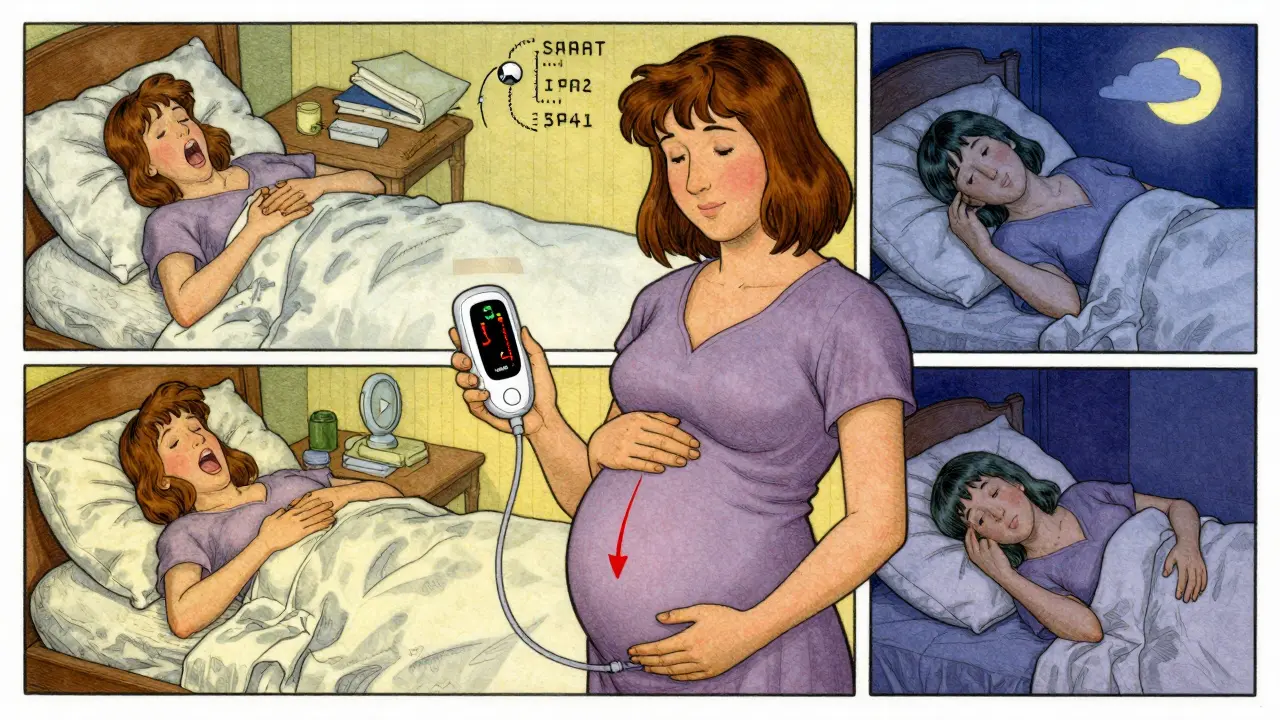
The gold standard is an overnight sleep study, either in a lab or at home. Home tests are now widely accepted and use small devices that track your breathing, oxygen levels, and heart rate while you sleep. You don’t need to be diagnosed with severe apnea to benefit from treatment-even mild cases can increase your risk of complications.
One study found that women who had symptoms for more than 14 weeks before getting tested were significantly more likely to develop high blood pressure. Early detection matters.
CPAP: The Most Effective Treatment (And How to Make It Work)
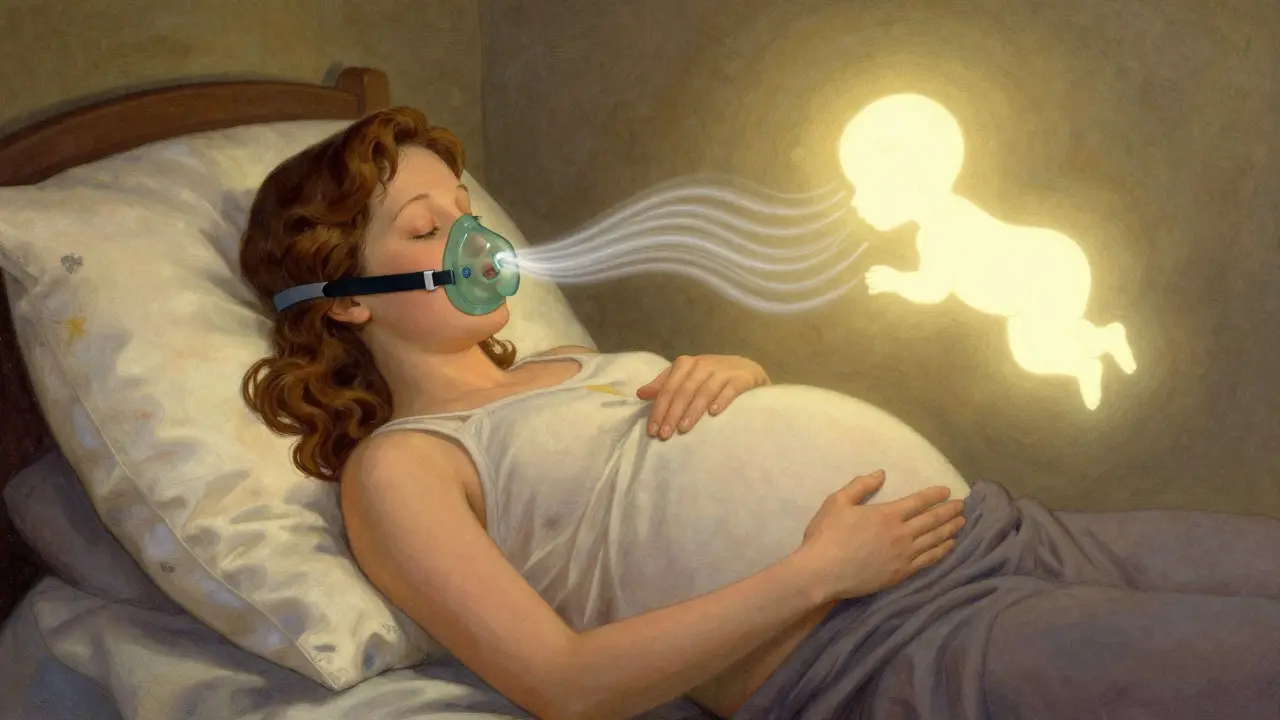
Continuous Positive Airway Pressure (CPAP) is the most proven treatment for sleep apnea during pregnancy. It works by gently pushing air through a mask to keep your airway open. Studies show that using CPAP between 24 and 28 weeks can reduce your risk of preeclampsia by up to 30% and lower your chances of gestational hypertension by 35%.
But many women quit because the mask feels uncomfortable. Here’s how to make it work:
- Use nasal pillows instead of full-face masks-less pressure on your face as it swells.
- Choose a machine with auto-titrating pressure-it adjusts as your body changes through each trimester.
- Set humidification to 37°C to fight dry, congested nasal passages.
- Try the Boppy Noggin CPAP pillow-it holds your head at the right angle so the mask doesn’t leak.
Adherence is the biggest hurdle. Only 62% of women stick with CPAP beyond four weeks. But when clinics offer a 30-minute fitting session and follow-ups at day 3 and day 7, adherence jumps to 82%. Don’t give up after the first night. It takes 7-14 days to adjust.
Positioning: The Simple Fix That Actually Works
If your apnea is mild (AHI under 15), changing your sleep position can make a big difference. Sleeping on your back increases apnea episodes by up to 50%. The left side is best-it keeps your uterus off your major blood vessels and improves oxygen flow to your baby.
Use a full-body pregnancy pillow to stay in position. A 2022 study showed this alone reduced the apnea-hypopnea index (AHI) by nearly 23% in women with mild sleep apnea. Don’t just prop yourself up with regular pillows-it can bend your neck and make breathing harder.
For best results:
- Place the pillow behind your back to prevent rolling onto your back.
- Put one between your knees to align your hips.
- Elevate your upper body 15-30 degrees using a wedge pillow (7-8 inches high), not stacked pillows.
This position also helps with reflux-more on that next.
Taming Nighttime Reflux Without Pills
Heartburn during pregnancy isn’t just annoying-it’s linked to worse sleep quality and can even worsen sleep apnea by causing throat irritation and spasms. The key is to stop treating it like a normal acid problem.
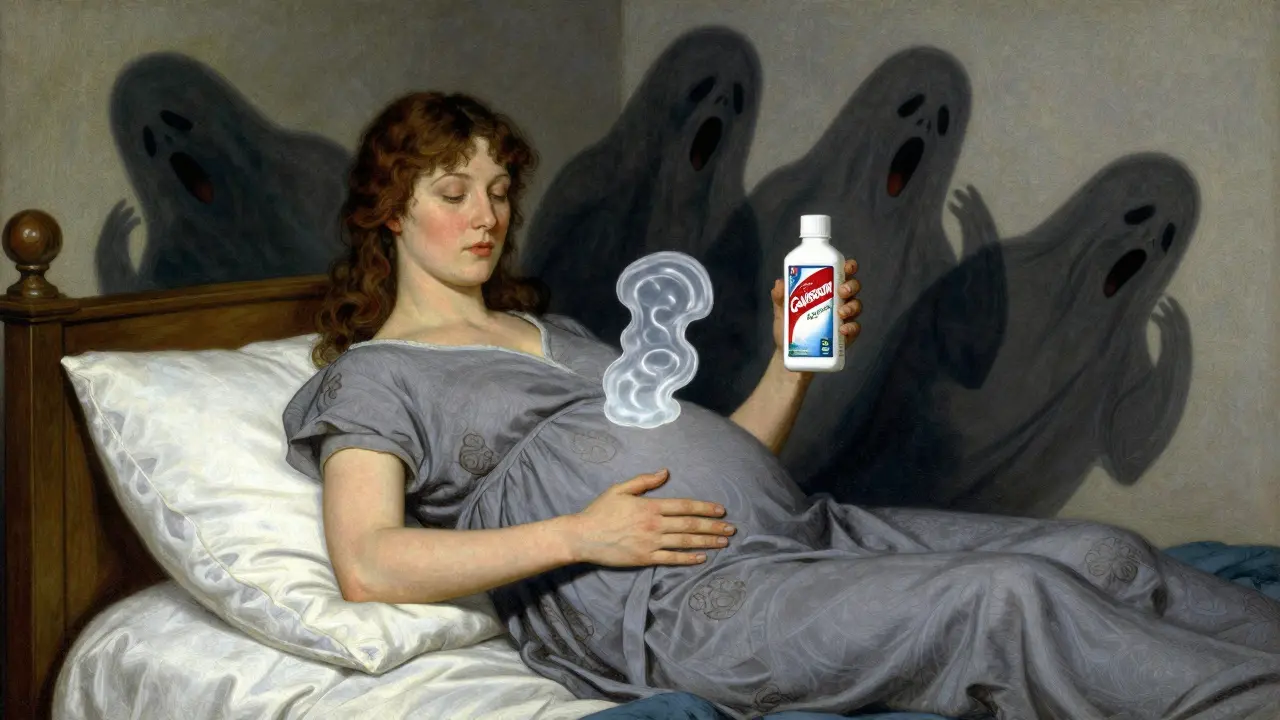
Don’t use regular antacids. They don’t last long and can interfere with nutrient absorption. Instead, use alginate-based products like Gaviscon Advance. These form a protective foam barrier over stomach contents without entering your bloodstream. One bottle (500ml) costs around $15 and lasts through most of the third trimester.
Other rules that actually work:
- Avoid eating within 3 hours of bedtime.
- Don’t lie flat. Elevate your head 6-8 inches using a wedge under your mattress-not just pillows.
- Skip spicy, fatty, or acidic foods after 6 p.m.
- Drink water between meals, not during.
One woman in a Philadelphia sleep clinic reported her nighttime heartburn disappeared within three days of switching to a wedge pillow and Gaviscon. She was sleeping 6 hours straight for the first time in months.
What Doesn’t Work (And Why)
There are a lot of products marketed for pregnancy sleep-but not all are backed by science.
Mandibular advancement devices (mouthpieces that push your jaw forward) work well for non-pregnant people with mild apnea. But during pregnancy, your jaw and temporomandibular joint are already under stress from hormonal changes. These devices can cause pain, tooth movement, or jaw locking. The 2023 joint guideline from the Society of Anesthesia and Sleep Medicine recommends against them during pregnancy.
Weight loss sounds logical, but you shouldn’t try to lose weight while pregnant. Instead, aim for weight gain within Institute of Medicine guidelines: 11.5-16 kg if you started at a normal weight, 5-9 kg if you were obese. Too much gain increases apnea risk. Too little can affect fetal growth. Work with your provider to find your sweet spot.
Over-the-counter sleep aids are a no-go. Even herbal remedies like valerian or melatonin aren’t proven safe during pregnancy. Stick to behavioral fixes-positioning, CPAP, reflux control.
When to Call Your Doctor
You don’t need to suffer in silence. Call your OB or midwife if you experience:
- Snoring that wakes you or your partner up
- Gasping or choking during sleep
- Daytime fatigue that doesn’t improve with naps
- Morning headaches or dry mouth
- High blood pressure or swelling in hands/face
These aren’t things to “tough out.” They’re signals your body needs help.
What Happens After Baby Arrives?
Many women think their sleep apnea disappears after delivery. And for some, it does-especially if they gained weight within recommended limits. But here’s the catch: 58% of women who had pregnancy-related sleep apnea develop chronic high blood pressure within 10 years, even if their apnea seems gone.
Some clinics, like Brown Health, recommend a follow-up sleep study at 12 weeks postpartum. Others suggest watching for symptoms and only testing if they return. Either way, don’t assume it’s over. Your long-term heart health is connected to what happened during pregnancy.
What’s New in 2025
The technology is catching up. In September 2023, ResMed launched the AirTouch F20 Pregnancy Edition-a CPAP mask with a softer silicone cushion designed for swollen facial tissue. It’s priced at $999, but many insurance plans now cover it under maternity care.
In June 2024, the American Academy of Sleep Medicine updated its guidelines to recommend universal screening at 28 weeks using the STOP-Bang questionnaire. That means more women will be tested, not just those who “look like they have apnea.”
Apple Watch Series 9 now has a sleep apnea detection algorithm validated in a January 2024 JAMA study with 89% accuracy for moderate to severe cases. It’s not a replacement for a sleep study, but it can alert you to patterns you might miss.
Real Stories, Real Results
On Reddit, a woman named ExpectingMom2023 wrote: “CPAP saved my third trimester. My blood pressure dropped in two weeks. The mask leaked at first, but my sleep clinic adjusted it-now I sleep 7 hours straight.”
Another user on SleepAdvisor.org said: “I used to wake up 5 times a night with heartburn. After switching to a wedge pillow and Gaviscon, I slept through the night. I didn’t realize how exhausted I was until I wasn’t anymore.”
These aren’t outliers. They’re women who took action-and got their sleep back.
Final Takeaway
Pregnancy sleep problems aren’t just about comfort. They’re medical issues with real consequences. Sleep apnea, reflux, and poor positioning are solvable. You don’t need to accept exhaustion as part of the package. Start with screening. Try positioning. Consider CPAP if needed. Treat reflux with the right tools. You’re not just sleeping for yourself-you’re protecting your baby’s health and your own future.
Ellie Stretshberry
December 27, 2025 AT 17:05Shreyash Gupta
December 28, 2025 AT 17:58josue robert figueroa salazar
December 29, 2025 AT 21:52Jody Kennedy
December 30, 2025 AT 23:09jesse chen
January 1, 2026 AT 21:39Joanne Smith
January 3, 2026 AT 21:34Sarah Holmes
January 5, 2026 AT 09:01Ryan Cheng
January 6, 2026 AT 17:09david jackson
January 8, 2026 AT 03:48Jeanette Jeffrey
January 8, 2026 AT 23:33Prasanthi Kontemukkala
January 10, 2026 AT 08:14Angela Spagnolo
January 11, 2026 AT 15:45christian ebongue
January 12, 2026 AT 06:33Alex Ragen
January 13, 2026 AT 08:00