
Pharmacy Margin Economics: How Generic Drugs Drive Profits
 Apr, 25 2026
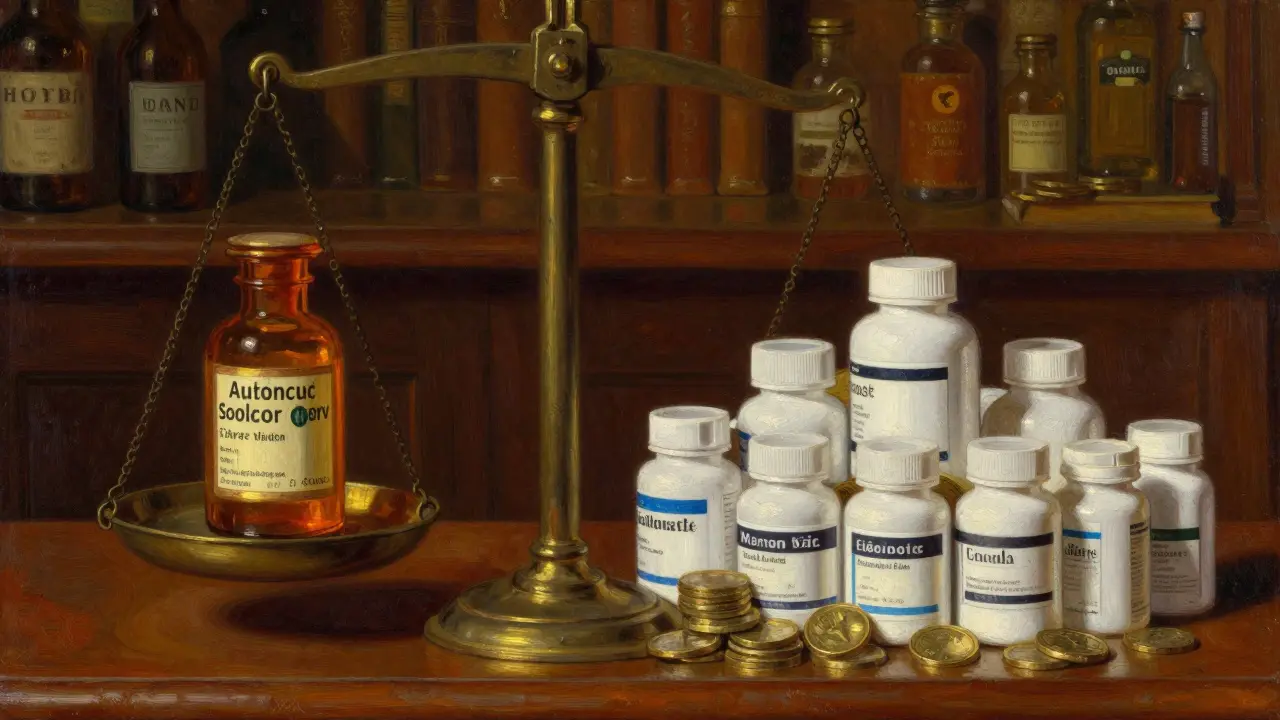
If you look at a pharmacy's balance sheet, you'll see a strange paradox. The most expensive brand-name drugs take up the vast majority of spending, yet they barely keep the lights on. For a pharmacy, the real money isn't in the high-priced blockbuster drug; it's in the cheap, white-label version. This is the core of pharmacy margin economics is the study of profit structures within the pharmaceutical supply chain, specifically focusing on the revenue gap between dispensing brand-name and generic medications. While a brand-name drug might cost a patient hundreds of dollars, the pharmacy often makes a tiny fraction of that. Meanwhile, a generic drug costing only a few dollars can yield a much higher percentage of profit. This dynamic creates a high-stakes environment where the volume of generics determines whether a pharmacy thrives or closes its doors.
The Great Margin Divide: Brands vs. Generics
To understand why pharmacies push generics, you have to look at the gross margins. In the U.S. pharmaceutical market, brand-name drugs are the heavy hitters in terms of cost, representing about 75% of overall prescription spending. However, their gross margins for the pharmacy are often dismal, averaging around 3.5%. Essentially, the pharmacy is acting as a pass-through for a high-cost product with very little reward for the effort of dispensing it.
Contrast that with generic drugs. These medications make up roughly 90% of all prescriptions filled in the U.S. While they are much cheaper for the consumer, the gross margins for pharmacies are significantly higher, averaging around 42.7%. In simple terms, pharmacies make almost twelve times more profit on a generic prescription than on a branded one. If a pharmacy only filled brand-name scripts, they would likely go bankrupt despite the high dollar amounts moving through their registers.
| Metric | Generic Drugs | Brand-Name Drugs |
|---|---|---|
| Average Gross Margin (%) | ~42.7% | ~3.5% |
| % of Total Prescriptions | ~90% | ~10% |
| % of Total Spending | ~25% | ~75% |
| Relative Profitability | Very High (Volume-driven) | Very Low (Pass-through) |
The Invisible Hand: How PBMs Control the Money
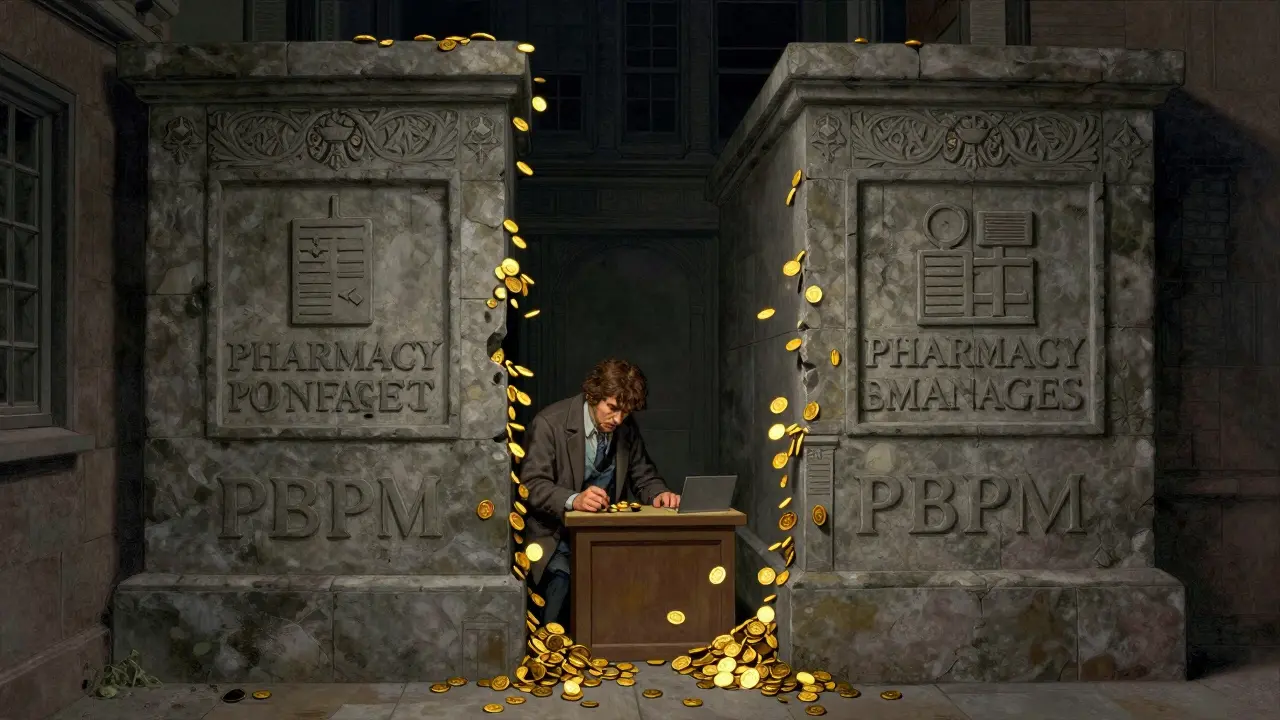
If generics are so profitable, why are so many independent pharmacies struggling? The answer lies with Pharmacy Benefit Managers, or PBMs. These are the middlemen-like CVS Caremark, Express Scripts, and OptumRx-who manage prescription drug programs for insurers and employers. PBMs control the reimbursement rates, meaning they decide how much the pharmacy actually gets paid for a drug.
PBMs often use a tactic called "spread pricing." This happens when a PBM charges a health plan a high price for a drug but reimburses the pharmacy a much lower amount, pocketing the difference. For the pharmacist, this feels like a squeeze. While the gross margin on a generic might look high on paper, the net profit-what's left after paying for staff, rent, and the drug itself-is often razor-thin. According to data from the National Association of Chain Drug Stores, the actual net profit after all expenses can drop to as low as 2% of the retail price.
Then there are "clawbacks," where a PBM decides after the fact that a pharmacy was overpaid and takes the money back. This makes financial planning nearly impossible for small business owners. It's a system where the power resides with the entity that controls the data and the contracts, not necessarily the one providing the clinical care.
The Risk of Consolidation and Single-Source Generics
For decades, the Hatch-Waxman Act ensured that once a patent expired, multiple companies would rush to create generics, driving prices down and margins up for pharmacies. But that's changing. We are seeing a massive wave of consolidation among generic manufacturers. When only one or two companies produce a specific generic drug, it becomes a "single-source generic."
When competition disappears, the economics flip. In some cases, the price of a single-source generic can actually climb higher than the original brand-name drug. This destroys the pharmacy's margin because they can't markup the drug as effectively, and the cost of acquiring the medication rises. If a pharmacy is forced to buy a generic at a premium price but is reimbursed at a fixed low rate by a PBM, they effectively lose money every time they fill that prescription.
This trend is pushing many independent pharmacies toward closure. Between 2018 and 2023, thousands of independent pharmacies shut down, unable to withstand the combination of PBM pressure and the eroding profitability of the generic market.
Alternative Business Models: Breaking the Cycle
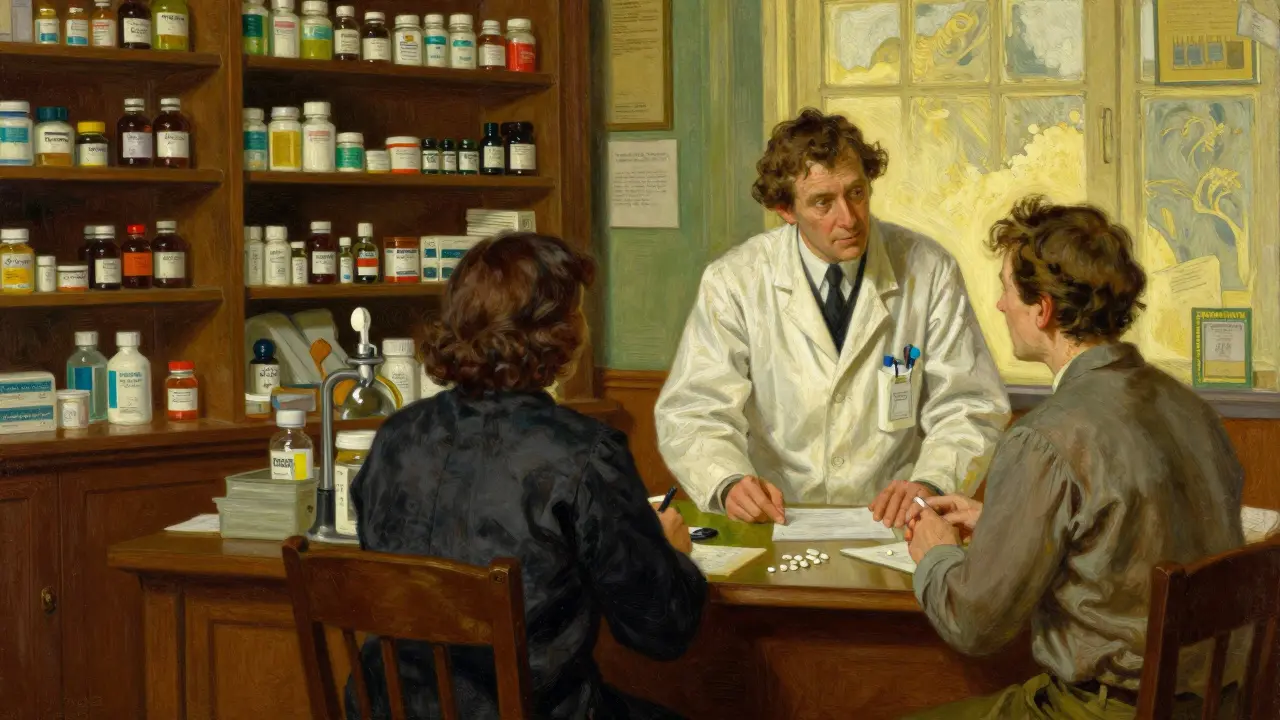
Some pharmacies are fighting back by diversifying. Instead of relying solely on the "pill-in-a-bottle" model, they are shifting toward clinical services. Medication Therapy Management (MTM) allows pharmacists to charge for their expertise and consultation rather than just the product. By becoming a healthcare provider rather than just a dispenser, they create a new revenue stream that PBMs can't easily squeeze.
We're also seeing a rise in transparent pricing. Mark Cuban Cost Plus Drug Company is a prime example. By charging a flat fee (e.g., $20 for the drug plus a small dispensing fee) and showing the exact cost of the medication, they've bypassed the opaque PBM structure entirely. This model exposes just how much of the traditional cost is "middleman markup"-estimated by some analysts to be as high as 64% of what Americans spend on prescriptions.
Other pharmacies are moving toward direct contracting. Instead of going through a PBM, they sign deals directly with local employers to provide medications for their staff. This eliminates the spread pricing issue and allows the pharmacy to capture a fair margin while lowering the overall cost for the employer.
The Future of Pharmacy Profitability
The landscape is shifting. With the Inflation Reduction Act introducing Medicare drug price negotiations, the pressure on brand-name pricing will increase. While this is generally good for patients, it adds another layer of complexity to pharmacy economics. If brand prices drop, pharmacies may rely even more heavily on generics to survive.
The survival of the community pharmacy likely depends on two things: regulatory reform of PBM practices and the ability to evolve into a specialty health hub. Those who can transition into specialty pharmacy services-handling complex, high-cost medications for chronic conditions-often find more stable reimbursement structures than those relying on high-volume, low-margin generic retail.
Why do pharmacies prefer generic drugs over brand-name ones?
It comes down to profit margins. While brand-name drugs are more expensive, pharmacies typically make a very low gross margin on them (around 3.5%). Generic drugs, however, offer much higher gross margins (averaging 42.7%), meaning the pharmacy earns significantly more profit per prescription filled, despite the lower retail price.
What is "spread pricing" and how does it affect pharmacies?
Spread pricing is a practice where a Pharmacy Benefit Manager (PBM) charges a health plan one price for a drug but pays the pharmacy a lower amount. The PBM keeps the "spread" as profit. This reduces the amount of money the pharmacy receives, tightening their net margins and making it harder to cover operational overhead.
Can generic drugs ever be more expensive than brand-name drugs?
Yes, this happens with "single-source generics." When only one manufacturer produces a generic version and there is no competition or a supply shortage, the price can spike. In some rare instances, these generics can actually cost more than the original brand-name version.
How are independent pharmacies adapting to low margins?
Many are diversifying into Medication Therapy Management (MTM), specialty pharmacy services, and cash-pay models. Some are also pursuing direct contracting with employers to bypass PBMs entirely and establish more transparent, sustainable pricing.
What is the role of the Hatch-Waxman Act in this system?
The Hatch-Waxman Act of 1984 created the modern pathway for generic drug approval. By allowing generic manufacturers to enter the market once a brand's patent expired, it fostered competition that lowered drug prices for consumers and created the high-margin generic market that pharmacies rely on today.