
Nephrotic Syndrome: Understanding Heavy Proteinuria, Swelling, and Real Treatment Options
 Dec, 9 2025
What Is Nephrotic Syndrome?
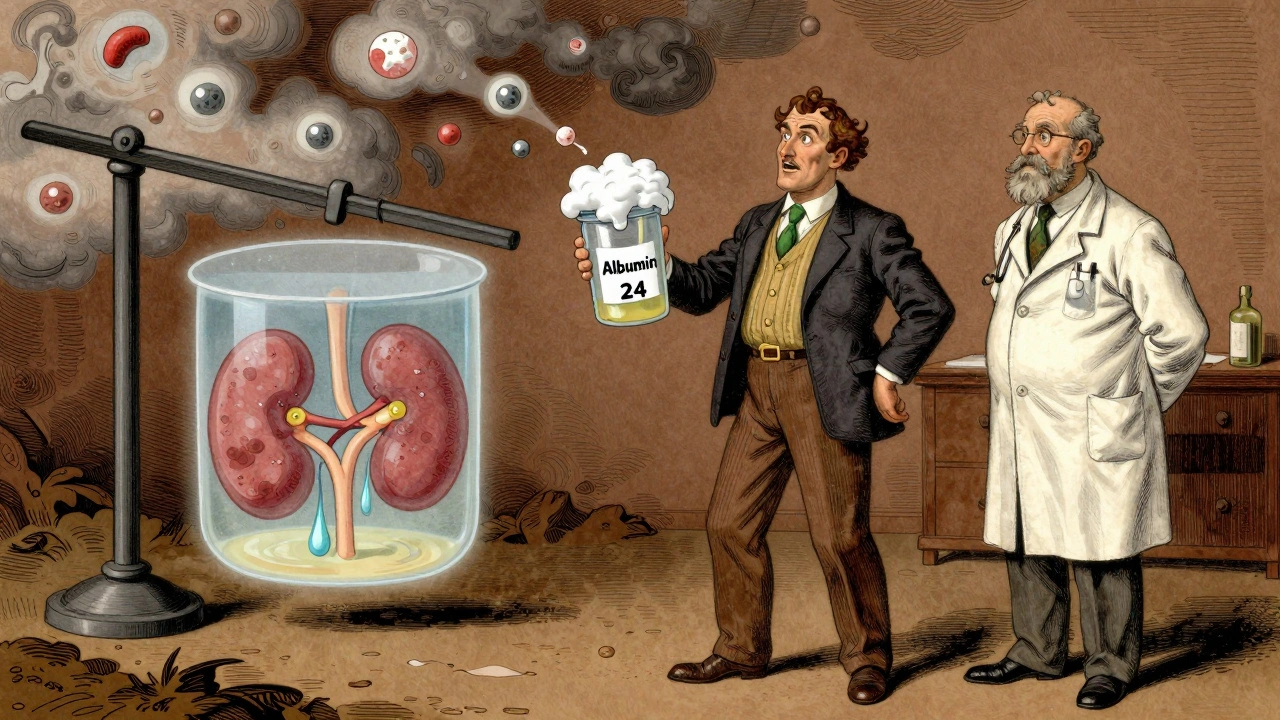
Nephrotic syndrome isn't a disease on its own-it's a set of symptoms that tell you something serious is wrong with your kidneys. The big three signs are heavy proteinuria, severe swelling (edema), and low blood protein levels. When your kidneys leak too much protein into your urine, your body loses its ability to hold onto fluids. That’s why people with this condition often look puffy, especially around the eyes in the morning, or gain weight quickly from fluid buildup in the legs, belly, or lungs.
This happens because the filtering units in the kidneys-called glomeruli-get damaged. Normally, they act like fine sieves, letting waste out but keeping proteins like albumin in the blood. When the filter breaks down, albumin escapes, and your body starts pulling fluid into tissues to balance the pressure. That’s the root of the swelling. Blood tests usually show albumin below 3.0 g/dL, cholesterol over 300 mg/dL, and protein loss exceeding 3.5 grams per day in adults.
Why Does Protein Leak Out?
The problem starts in the podocytes-special cells that wrap around the kidney’s filtering capillaries. These cells have tiny foot-like projections that connect through a structure called the slit diaphragm. Proteins like nephrin and podocin hold this structure together. When these proteins are damaged by disease, infection, or genetic mutations, the gaps widen, and proteins slip through.
In children, the most common cause is minimal change disease, where the kidney looks almost normal under a microscope, but the filter is still broken. In adults, it’s often focal segmental glomerulosclerosis (FSGS), membranous nephropathy, or diabetes. About 85% of kids with nephrotic syndrome have minimal change disease, while in adults, FSGS and membranous nephropathy each account for about 30% of cases. Diabetes is behind 20-30% of adult cases, especially in people over 65.
How Is It Diagnosed?
Doctors don’t just guess. They confirm nephrotic syndrome with three key tests:
- A 24-hour urine collection showing more than 3.5 grams of protein in adults (or over 40 mg/m²/hour in kids).
- A blood test showing serum albumin below 3.0 g/dL.
- High cholesterol and triglycerides.
They also check for signs of other kidney problems, like blood in the urine or high blood pressure. If those are present, it might be nephritic syndrome instead-where inflammation damages the kidney differently. Nephrotic syndrome doesn’t usually cause blood in the urine or high blood pressure early on. If it does, that’s a red flag for something more serious.
A kidney biopsy is often needed in adults or if the patient doesn’t respond to steroids. In kids under 10 with typical symptoms, doctors often skip the biopsy and start treatment right away because minimal change disease responds so well.
What Does It Feel Like?
People describe it differently. Parents of children often notice their kid’s eyes look swollen when they wake up-so much so that they think it’s allergies. In fact, 78% of parents report being misdiagnosed at first. Adults might notice foamy urine for the first time and ignore it, thinking it’s just from dehydration. Then comes the weight gain: 5 to 15 pounds in a week from fluid, not fat. Some feel tired, weak, or short of breath if fluid collects in the lungs.
One of the scariest parts? The risk of blood clots. When albumin drops below 2.0 g/dL, the risk of clots in the kidneys, legs, or lungs jumps 2 to 4 times. Renal vein thrombosis happens in 10-40% of adults with severe cases. That’s why some patients need blood thinners even before they start steroids.
Treatment: Steroids, Medications, and Lifestyle
The first-line treatment for children is prednisone. Most kids respond within 2 to 4 weeks. The dose is based on body surface area-around 60 mg/m² per day, up to 80 mg total. After remission, the dose is slowly lowered over 2 to 5 months. About 80-90% of kids go into remission with this approach.
Adults get similar treatment but respond less well. Only 60-70% achieve remission, and more than half relapse. For those who don’t respond, or relapse often, doctors turn to other drugs like calcineurin inhibitors-tacrolimus or cyclosporine. These suppress the immune system differently and can help reduce protein leakage.
ACE inhibitors and ARBs are used for everyone, even if they don’t have high blood pressure. These drugs lower proteinuria by 30-50% and protect the kidneys over time. The goal is to keep blood pressure under 130/80 mmHg.
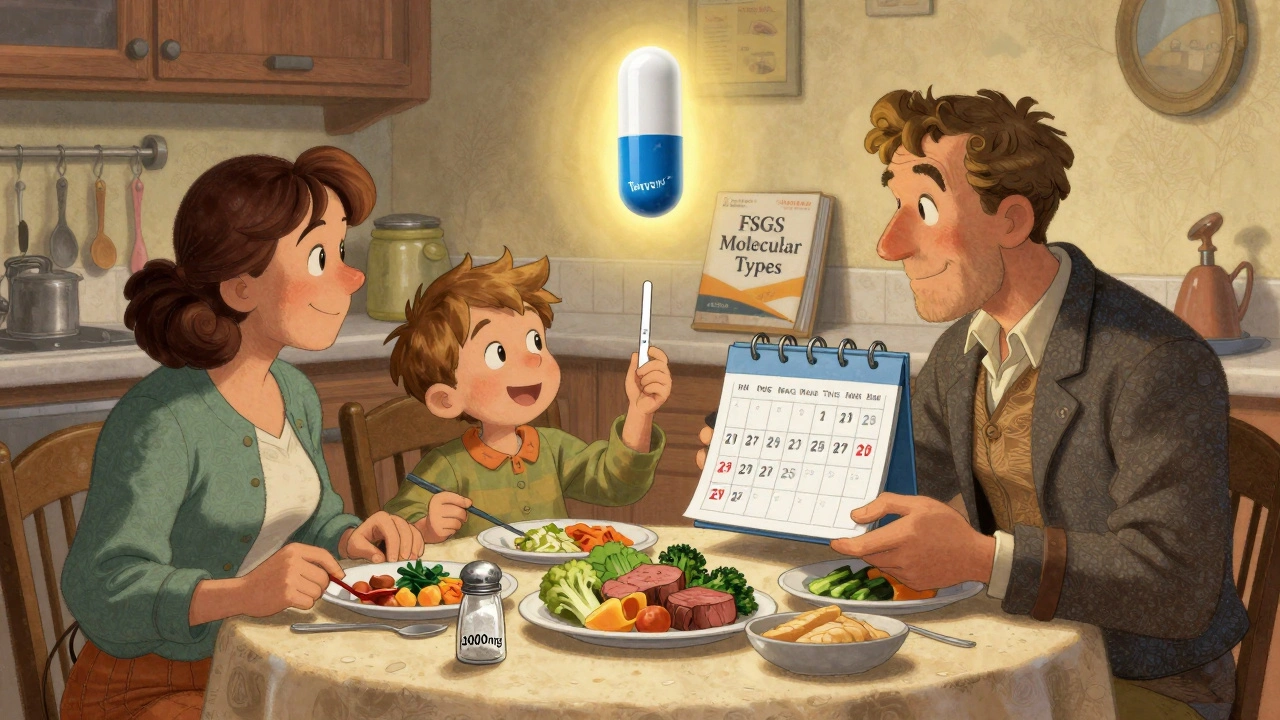
Diet matters. Cutting sodium to under 2,000 mg per day can reduce swelling by 30-50% in just a few days. Protein intake should stay at 0.8-1.0 gram per kilogram of body weight. Too much protein can make the kidneys work harder. Too little can cause muscle loss. It’s a tight balance.
Side Effects and Long-Term Risks
Steroids come with a cost. Kids often gain weight, develop a round face (moon face), and get hungrier than usual. Behavioral changes like irritability or trouble sleeping happen in about a third of patients. These side effects are temporary but hard to deal with.
Long-term, the biggest concern is kidney failure. If proteinuria stays above 1 gram per day despite treatment, the risk of ending up on dialysis increases 4.2 times. Prognosis depends on the cause:
- Minimal change disease: 95% kidney survival at 10 years.
- FSGS: 50-70% survival.
- Membranous nephropathy: 60-80% survival.
- Diabetes-related: Only 40-50% survival.
Relapses are common. In kids, viral infections like colds or flu trigger about 2-3 relapses per year. That’s why staying up to date on vaccines is critical-only inactivated vaccines are safe during steroid treatment. Live vaccines like MMR or chickenpox must be delayed until after treatment ends.
New Treatments on the Horizon
Science is moving fast. In 2023, the FDA approved budesonide (Tarpeyo) for IgA nephropathy, and it’s showing promise in some FSGS cases, cutting proteinuria by 31-59%. Another drug, sparsentan, reduced proteinuria by nearly 48% in a major 2022 study-more than double the effect of older drugs like irbesartan.
Researchers are also looking at targeted therapies. The NEPTUNE study found three distinct molecular types of FSGS, which could help doctors pick the right treatment before trying multiple drugs. Animal studies on Rho kinase inhibitors show up to 70% reduction in protein leakage, and human trials are starting soon.
Genetic testing is now recommended for children under 1 year old or those with a family history. Some forms of nephrotic syndrome are inherited, and giving steroids to these kids does more harm than good. Knowing the cause early can prevent unnecessary treatment.
What to Watch For
Monitoring is key. At home, use urine dipsticks to check for protein. Remission means three straight days of negative or trace results. A relapse is three days of 2+ or 3+ readings. Weekly checks during active disease help catch flare-ups early.
Call your doctor if you notice:
- Sudden swelling in the legs or belly
- Shortness of breath
- Severe abdominal pain (could be a blood clot)
- Fever or signs of infection
Don’t wait. Early action prevents complications.
Living With Nephrotic Syndrome
Many people live full lives with this condition. Kids with minimal change disease often outgrow it by adolescence. Adults need more careful management, but with the right meds and lifestyle, they can avoid dialysis for decades.
Support groups and patient forums show that people who track their symptoms, stick to their diet, and stay in touch with their nephrologist do the best. The hardest part isn’t the meds-it’s the uncertainty. Will it come back? Will my kidneys hold up? But with today’s tools, the outlook is better than ever.
Neelam Kumari
December 9, 2025 AT 16:50Queenie Chan
December 10, 2025 AT 09:09Stephanie Maillet
December 11, 2025 AT 06:30David Palmer
December 11, 2025 AT 06:31Aileen Ferris
December 12, 2025 AT 06:40Michelle Edwards
December 13, 2025 AT 19:44Sarah Clifford
December 14, 2025 AT 08:34Regan Mears
December 15, 2025 AT 13:31Ben Greening
December 15, 2025 AT 17:09Nikki Smellie
December 17, 2025 AT 11:35Doris Lee
December 17, 2025 AT 19:02Michaux Hyatt
December 18, 2025 AT 15:44