
Lot Number Tracking: How the FDA Identifies Problem Batches in the Food Supply
 Feb, 2 2026
Why Lot Numbers Matter More Than You Think
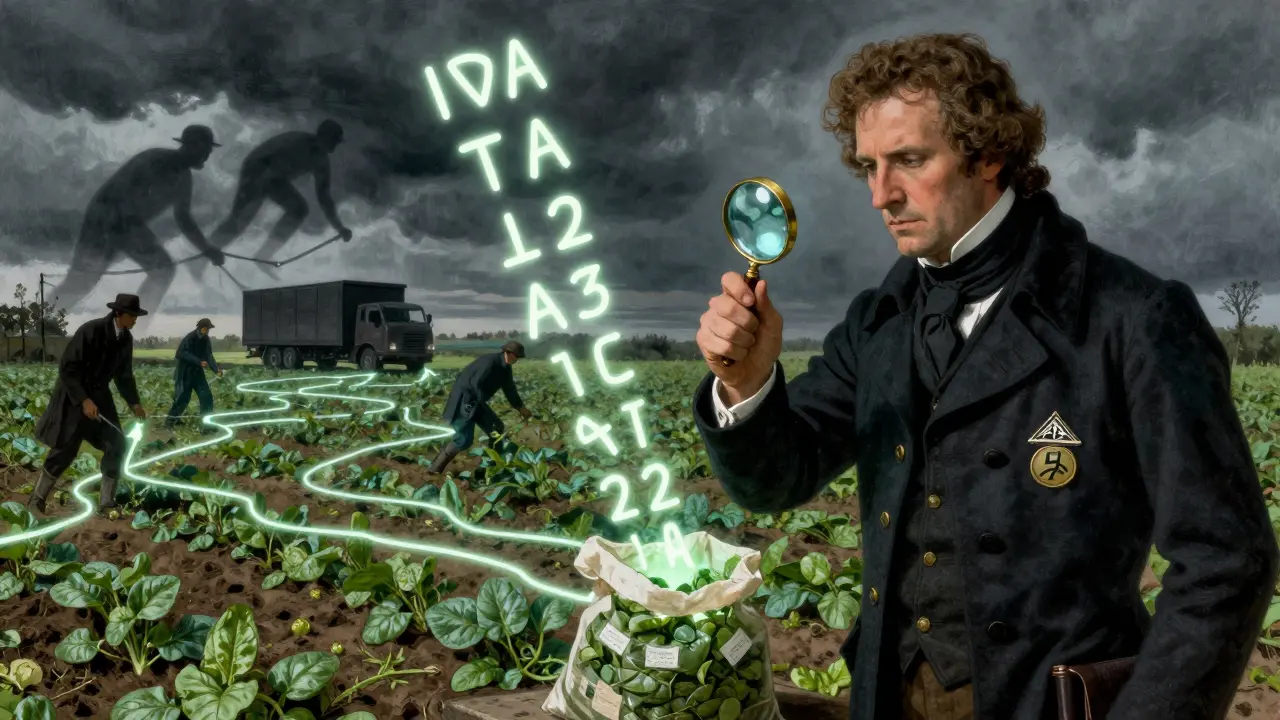
When you buy a bag of spinach or a carton of eggs, you probably don’t think about the numbers printed on the package. But those codes - called lot numbers - are the lifeline of food safety in the U.S. If something goes wrong, if a batch of food turns out to be contaminated, the FDA doesn’t guess. They don’t wait weeks. They scan that lot number and trace the product back to its source - sometimes in hours.
This isn’t science fiction. It’s the Food Traceability Rule, part of the Food Safety Modernization Act (FSMA), finalized in November 2022. The rule created the Traceability Lot Code (TLC) system, a mandatory framework that forces companies handling high-risk foods to track every step of the product’s journey. The goal? Cut foodborne illness outbreaks by 20-30% by finding contaminated products before they sicken thousands.
What Exactly Is a Traceability Lot Code (TLC)?
A TLC isn’t just any lot number. It’s a unique identifier - alphanumeric, like ‘L20260201-SPIN’ or ‘X99-4567’ - assigned at specific points in the supply chain. Unlike old-school lot codes that companies made up for internal use, TLCs must follow strict rules. They must be passed along unchanged from farm to warehouse to store, unless the food is transformed. If a tomato is sliced and packed into a salad kit, the new company must create a new TLC but still link it to the original one.
The FDA doesn’t dictate what the code looks like. A company can use a Julian date, a random string, or even its existing internal code - as long as it’s unique, documented, and traceable. The real power comes from what’s attached to it: seven Key Data Elements (KDEs). These include where the food came from, how much was shipped, who received it, and when. When an outbreak happens, the FDA can ask for all this data in 24 hours. If the records aren’t there, or aren’t organized, the company faces penalties.
Which Foods Are Covered? The Food Traceability List (FTL)
The rule doesn’t apply to everything. It targets high-risk foods where contamination spreads fast and hits hard. The FDA’s Food Traceability List (FTL) includes:
- Leafy greens (like romaine, kale, spinach)
- Tomatoes
- Onions
- Fresh-cut fruits and vegetables
- Soft cheeses (like feta, brie)
- Eggs
- Nut butters
- Specific seafoods (like shrimp, crab, lobster)
These make up about 15% of the U.S. food supply by volume. But critics say it’s not enough. Melons, sprouts, and ready-to-eat meals are still excluded, even though they’ve been linked to major outbreaks. Consumers Union pointed out in 2022 that leaving out melons is like locking the front door but leaving the back wide open.
How the FDA Uses TLCs During Outbreaks
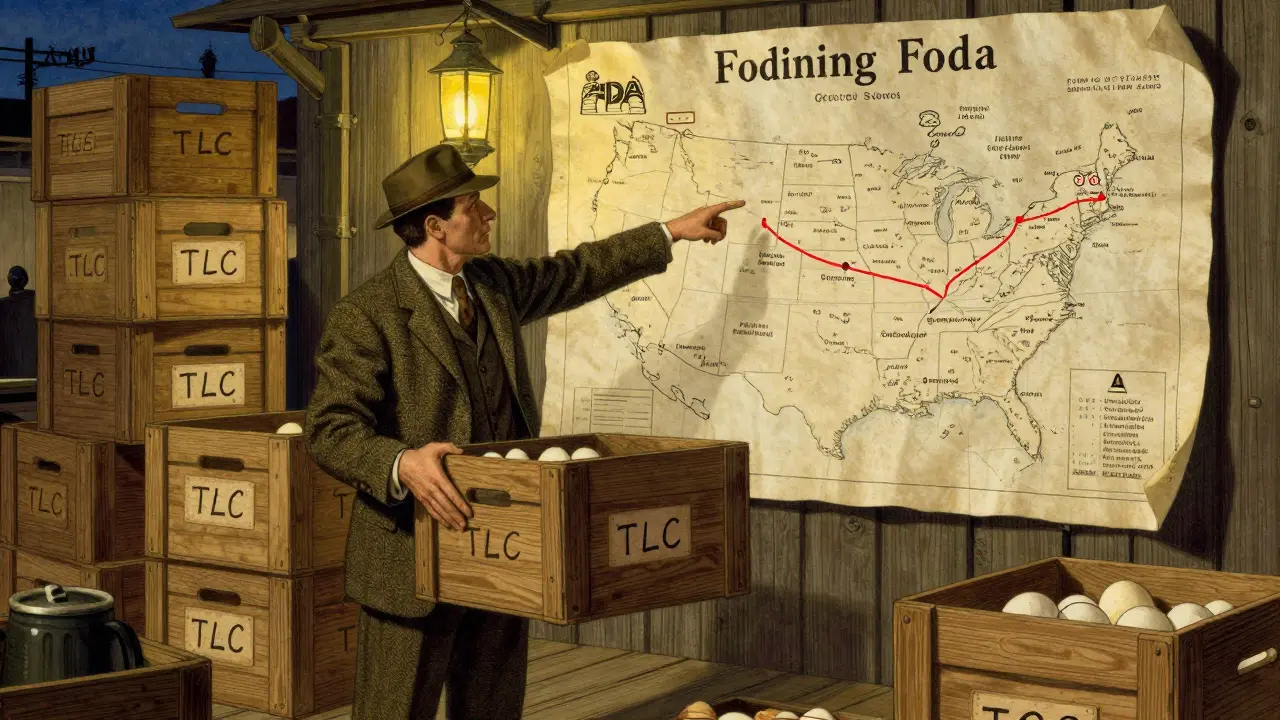
Before this rule, tracing a contaminated food could take weeks. Investigators had to call dozens of companies, dig through paper records, and piece together shipping logs - often missing links because no one kept consistent data. Now, when a person gets sick from E. coli in spinach, the CDC reports the case to the FDA. The FDA pulls the lot number from the packaging, matches it to the TLC database, and instantly sees: where the spinach was grown, who packed it, which distributor shipped it, and which stores sold it.
In a 2021 pilot program, this process dropped from 17 days to under 48 hours. That’s the difference between a few hundred illnesses and a nationwide outbreak. The FDA estimates this system could prevent 150,000 cases of foodborne illness each year. For companies, it’s a shield. If your product is clean, you can prove it fast. If it’s not, you can recall only the bad batch - not your whole line.
What Companies Have to Do (And What They Hate)
Any business that grows, processes, packs, or holds FTL foods must now have a Traceability Plan. This plan must explain how they assign TLCs, how they record KDEs, and how they share data with the next link in the chain. For big companies, this means upgrading ERP systems. For small farms, it might mean using a simple spreadsheet.
But here’s the pain point: many companies already had their own lot codes. Now they’re being asked to either convert those codes into TLCs or run two systems in parallel. Tyson Foods, one of the largest meat processors, told the FDA in 2022 that this creates chaos. The FDA responded: you don’t need two codes. If your current lot number meets the rules, use it as your TLC. That’s a win - but many companies still don’t trust the guidance.
According to a 2023 survey by the United Fresh Produce Association, 78% of member companies have already adjusted their systems. The average cost? $42,500 per company. For a small farm, that’s a big hit. That’s why the FDA extended the compliance deadline from January 2026 to July 20, 2028 - after pressure from small businesses and industry groups.
Technology Is Changing the Game
Some companies are going beyond the rules. Walmart started requiring blockchain traceability for leafy greens back in 2019. Kroger uses QR codes on packaging that link to full supply chain data. These systems aren’t required by the FDA - but they’re becoming the new standard. The FDA is funding pilot projects using IoT sensors and blockchain to track temperature and location in real time.
But tech alone won’t fix this. The biggest problem isn’t software - it’s communication. A 2023 survey found that 71% of companies struggle to get consistent TLC usage from their suppliers. If a distributor doesn’t pass along the code correctly, the chain breaks. That’s why the FDA is working on standardized data formats. A draft is expected in mid-2024.

The Bigger Picture: Global Standards and the Future
The U.S. isn’t alone. The European Union launched its Digital Product Passport in January 2023 - a similar idea but with different rules. Right now, a product shipped from the U.S. to Europe might have two different codes. That’s inefficient. The FDA held its first joint workshop with EU regulators in Brussels in March 2023 to align standards. The goal: one code, one system, global safety.
Looking ahead, the FDA is considering adding melons, sprouts, and deli meats to the FTL. Senator testimony in May 2023 confirmed these are under active review. If approved, the system will expand - and so will the pressure on small producers.
What This Means for You
As a consumer, you won’t see much change on the shelf. But you’ll feel the results. Fewer recalls. Fewer sick people. Faster answers when something goes wrong. The TLC system turns a once-blind process into a transparent one. You might even see a QR code on your lettuce that lets you trace its journey - not because it’s required, but because companies now know it builds trust.
For farmers and food businesses, this is a challenge - and an opportunity. Those who adapt early will save money on recalls, avoid fines, and earn customer loyalty. Those who wait? They risk being left behind.
Is This the End of Food Recalls?
No. But it’s the biggest step forward since the Bioterrorism Act of 2002. The TLC system doesn’t prevent contamination. It makes sure we find it fast. And in food safety, speed is everything.
What is a Traceability Lot Code (TLC)?
A Traceability Lot Code (TLC) is a unique alphanumeric identifier assigned to a batch of food on the FDA’s Food Traceability List. It must be passed along unchanged through the supply chain and linked to seven key data elements like origin, quantity, and transaction details. Unlike internal lot codes, TLCs are mandatory for high-risk foods and must be provided to the FDA within 24 hours during an investigation.
Which foods require TLC tracking?
The FDA’s Food Traceability List (FTL) includes leafy greens, tomatoes, onions, fresh-cut fruits and vegetables, soft cheeses, eggs, nut butters, and certain seafoods like shrimp and lobster. These foods are considered high-risk because they’ve been linked to major outbreaks. The list covers about 15% of the U.S. food supply by volume.
When does the FDA’s TLC rule take effect?
The rule became effective on December 13, 2022. The original compliance deadline was January 20, 2026. However, in September 2023, the FDA proposed extending this deadline by 30 months to July 20, 2028, to give businesses more time to adapt - especially small farms and processors.
Can I use my existing lot code as a TLC?
Yes. The FDA explicitly states that any existing lot code can serve as a TLC as long as it meets the requirements: it must be unique, documented, passed along through the supply chain, and linked to all required data elements. Companies don’t need to create a second code unless their current one doesn’t meet the rules.
What happens if a company doesn’t comply?
Non-compliance can lead to regulatory action, including warning letters, import alerts, or even detention of shipments. The FDA can also issue public alerts if a company fails to provide traceability records during an outbreak investigation. While enforcement is focused on education at first, penalties will increase as compliance deadlines pass.
How does TLC tracking help consumers?
TLC tracking helps ensure faster, more targeted recalls. Instead of pulling entire product lines, only the contaminated batch is removed from shelves. This reduces food waste and keeps safe products available. It also means quicker answers during outbreaks - so consumers know what’s safe to eat and what’s not.
Is blockchain required for TLC compliance?
No. Blockchain is not required by the FDA’s rule. However, some retailers like Walmart and Kroger have adopted it voluntarily to meet their own higher standards. The FDA encourages electronic record-keeping but accepts paper records as long as they’re legible and can be provided within 24 hours. Electronic records must be sortable and exportable in formats like CSV.
Are small businesses treated differently?
Yes. Small businesses qualify for free technical assistance through the FDA’s Traceability Assistance Program, launched in January 2023. The compliance deadline was extended to July 20, 2028, specifically to help smaller operations. The FDA also allows simpler methods like manual logs for very small farms, as long as the required data is recorded and retrievable.
Vatsal Srivastava
February 3, 2026 AT 17:06Brittany Marioni
February 4, 2026 AT 14:48Bob Hynes
February 5, 2026 AT 10:58Akhona Myeki
February 5, 2026 AT 23:10Chinmoy Kumar
February 6, 2026 AT 23:54Brett MacDonald
February 7, 2026 AT 07:10Sandeep Kumar
February 7, 2026 AT 08:58Gary Mitts
February 9, 2026 AT 05:50Anthony Massirman
February 9, 2026 AT 07:40Solomon Ahonsi
February 11, 2026 AT 06:59George Firican
February 11, 2026 AT 07:44phara don
February 11, 2026 AT 13:05Hannah Gliane
February 13, 2026 AT 08:08Murarikar Satishwar
February 14, 2026 AT 00:32