
Liver Transplantation Guide: Eligibility, Surgery, and Aftercare
 Apr, 6 2026
Key Takeaways
- Eligibility is based on the MELD score and a strict psychosocial evaluation.
- Surgery can involve deceased donors or living donors (who provide a portion of their liver).
- Lifelong immunosuppression is mandatory to prevent the body from rejecting the new organ.
- Recovery involves a hospital stay of 2-3 weeks and intensive follow-up labs.
Who Qualifies for a Liver Transplant?
Getting approved for a transplant isn't just about how sick you are; it's about whether you're a good candidate for the recovery process. Doctors use a combination of medical data and lifestyle assessments to decide who gets a spot on the list.The most critical tool for prioritization is the MELD score (Model for End-Stage Liver Disease). This is a numerical value ranging from 6 to 40, calculated using blood tests (like bilirubin, creatinine, and INR). If you have a score of 30, you're considered much more urgent than someone with a 15. Essentially, the higher your score, the more likely you are to receive a liver sooner because the system prioritizes those at the highest risk of dying within three months.
For those with liver cancer, the rules change. Patients with Hepatocellular Carcinoma (HCC) usually need to meet the "Milan criteria." This means they can have one tumor up to 5 cm or up to three tumors if each is smaller than 3 cm. If the cancer has spread to other organs or blood vessels, a transplant usually isn't an option because the risk of the cancer returning is too high.
Then there is the human side: the psychosocial evaluation. A team of social workers and psychologists will check if you have stable housing and a strong support system. Why? Because recovering from a transplant is an exhausting process. If you don't have someone to help you get to appointments or remind you to take your meds, the surgery could fail. There's also the controversial "6-month rule" for alcohol-related liver disease, where many centers require six months of sobriety before listing, though some experts argue three months is enough.
The Living Donor Option
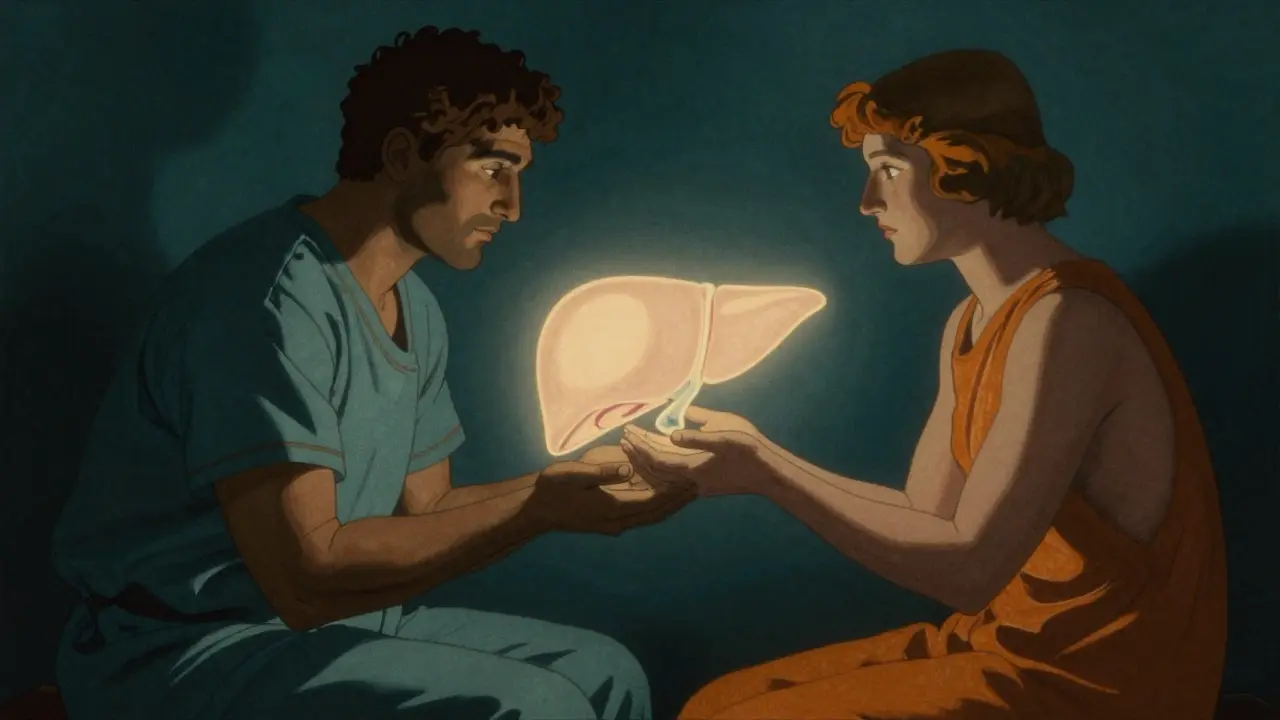
Not everyone can wait for a deceased donor. In those cases, a living donor can step in. Because the liver is the only internal organ capable of regenerating, a healthy adult can donate a portion of their liver, and both the donor's and the recipient's livers will grow back to full size within a few months.However, the requirements for donors are incredibly strict. You generally need to be between 18 and 55 years old with a BMI under 30. Surgeons also look at the "graft to recipient weight ratio"-the piece of liver being donated must be at least 0.8% of the recipient's weight to actually function. Additionally, the donor must keep at least 35% of their own liver volume to stay healthy.
| Feature | Living Donor | Deceased Donor |
|---|---|---|
| Wait Time | Short (avg. 3 months) | Long (avg. 12+ months) |
| Donor Risk | Moderate (surgical risk) | None (donor is deceased) |
| Graft Quality | Generally high/controlled | Varies (DCD vs. Brain Death) |
| Planning | Scheduled surgery | Urgent/Unpredictable call |
Inside the Surgery: What Actually Happens?
Liver transplant surgery is a marathon, typically lasting between 6 and 12 hours. It's divided into three main phases. First is the hepatectomy, where the surgeons carefully remove the diseased liver and the surrounding damaged vessels. This is the most delicate part, as the liver is heavily connected to major blood veins.Next is the "anhepatic phase." This is a brief window where the patient has no functioning liver at all. Surgeons then move to the implantation phase. In about 85% of modern cases, they use the "piggyback technique," where the donor liver is attached to the recipient's existing vena cava, which makes the blood flow more stable and the surgery safer.
If it's a living donor transplant, the surgeon removes either the right lobe (for adults) or the left lateral segment (for kids). The donor is usually back on their feet in 6 to 8 weeks, while the recipient spends about 5 to 7 days in the ICU and up to 21 days in the hospital total.
The Lifelong Battle: Immunosuppression
Once the new liver is in, the body's immune system recognizes it as a foreign object and tries to attack it. This is called rejection. To stop this, patients must start Immunosuppression therapy immediately. This isn't a short-term cure; it's a lifelong commitment to keeping the immune system "quiet."Most patients start with a "triple therapy" regimen. First, there's Tacrolimus, a powerful drug that prevents T-cell activation. Doctors monitor the levels of this drug in the blood very closely; too little and you risk rejection, too much and you can damage your kidneys. Second is Mycophenolate mofetil, which helps suppress the immune response. Third is Prednisone, a steroid used to reduce inflammation.
Recent shifts in medicine have led to "steroid-sparing" protocols. Since long-term prednisone use can cause diabetes and bone loss, about 45% of centers now try to wean patients off steroids after the first month. This has actually dropped the risk of post-transplant diabetes from 28% down to 17%.
But these drugs come with a price. Tacrolimus, while effective, can cause kidney toxicity in about 35% of patients after five years. Mycophenolate often leads to stomach issues or a drop in white blood cells. This is why the follow-up schedule is so intense: weekly blood tests for the first three months, then bi-weekly, then monthly. Missing a dose isn't just a mistake; it's a medical emergency.

Navigating the Recovery Journey
Recovery doesn't end when you leave the hospital. The first year is a steep learning curve. You'll need to become an expert in your own health, tracking every fever and every change in urine color. A fever over 100.4°F or a yellowing of the skin (jaundice) can be an early warning sign of acute rejection, which needs to be treated immediately by increasing medication doses or adding drugs like sirolimus.The financial burden is also a major hurdle. Between the medications and the constant lab work, annual costs can range from $25,000 to $30,000. Many patients find that having a dedicated transplant coordinator is the difference between success and failure. These coordinators act as the glue, helping with insurance barriers and ensuring that the patient stays compliant with their 95%+ medication adherence threshold.
Looking ahead, the field is evolving. We're seeing the use of portable perfusion devices that keep a donor liver "alive" and pumping blood for up to 24 hours, rather than just chilling it on ice. There's even research into "operational tolerance," where some pediatric patients are being weaned off immunosuppressants entirely using T-cell therapy. While we aren't there yet for most adults, the goal is a future where a transplant is a one-time surgery without a lifetime of meds.
How long is the wait for a liver transplant?
Wait times vary wildly depending on your MELD score and location. For those with high urgency (high MELD), a deceased donor liver might take around 12 months on average, though it can be shorter or longer depending on the region. If you have a compatible living donor, the wait can be as short as 3 months since the surgery can be scheduled.
What happens if I miss my immunosuppressant medication?
Missing doses is dangerous because it allows your immune system to "wake up" and recognize the donor liver as foreign. This can lead to acute rejection. If you miss a dose, you should contact your transplant team immediately. Signs of rejection include fever, jaundice, dark urine, and a general feeling of malaise.
Can anyone be a living liver donor?
No, donors must pass a rigorous screening. Generally, you must be 18-55 years old, have a BMI under 30, and be in excellent health with no history of heart, lung, or kidney disease. The surgeons also ensure that the piece being donated is large enough for the recipient but leaves the donor with at least 35% of their own liver volume.
What is a MELD score?
MELD stands for Model for End-Stage Liver Disease. It is a scoring system (6 to 40) based on blood tests (bilirubin, creatinine, and INR) that predicts the risk of death within three months. It is used by transplant centers to determine who is the sickest and needs a liver most urgently.
Does a liver transplant cure liver disease forever?
It cures the end-stage failure by replacing the organ, but it doesn't necessarily cure the cause of the disease. For example, if the failure was caused by autoimmune hepatitis or certain genetic conditions, the new liver can still be attacked. This is why lifelong immunosuppression and healthy lifestyle choices are required to protect the new graft.
Next Steps and Troubleshooting
If you are a patient: Your first step is a referral to a certified transplant center. Start organizing your medical records and begin discussing your support system (family/friends) who can help you during recovery. If you're facing insurance denials for pre-transplant evals, ask your center's social worker for assistance with advocacy.
If you are a potential donor: Contact a transplant coordinator to undergo a preliminary screening. Be prepared for a series of tests, including blood work and imaging, to ensure your liver anatomy is a match for the recipient and that the surgery won't put your own health at risk.
Post-op monitoring: Keep a daily log of your medication and temperature. If you notice sudden weight gain or swelling (ascites), notify your medical team immediately, as this could indicate graft dysfunction or a side effect of steroids.