
Kidney Failure Causes: How Diabetes, Hypertension, and Glomerulonephritis Damage Your Kidneys
 Dec, 16 2025
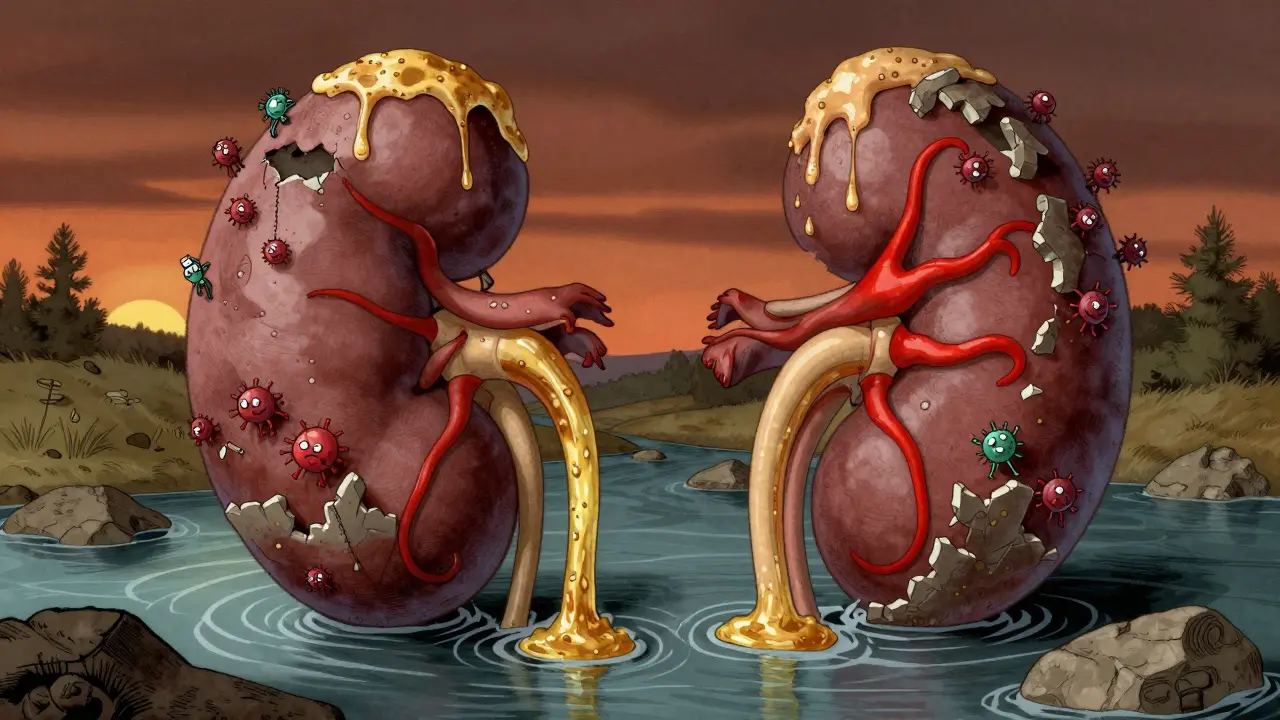
When your kidneys stop working, it’s not a sudden event. It’s a slow leak - years of unnoticed damage building up until your body can’t filter waste anymore. By the time most people feel sick, their kidneys have already lost 85-90% of their function. This is called end-stage renal disease, and it means dialysis or a transplant is the only way to stay alive. The good news? For most people, this doesn’t happen out of nowhere. Three main causes are behind nearly 80% of all kidney failure cases: diabetes, high blood pressure, and glomerulonephritis.
Diabetes: The Silent Kidney Killer
Diabetes is the number one reason people end up on dialysis. In the U.S., it causes 44% of new kidney failure cases. That’s nearly half. And it’s not just about having high sugar. It’s about what that sugar does to your kidneys over time.
When blood glucose stays too high, it forces your kidneys to work harder. Your glomeruli - the tiny filters inside your kidneys - start swelling. The walls of these filters thicken, becoming leaky. Protein begins to slip into your urine. That’s the first warning sign: albuminuria. If caught early, you can still stop it. But if ignored, the damage becomes permanent.
Studies show that within the first year of diabetes, your kidneys may already be filtering 20-40% more blood than normal. This hyperfiltration sounds like a good thing, but it’s like running your car engine at full throttle for years. Eventually, the parts wear out. By the time 30% of type 1 and 40% of type 2 diabetes patients develop kidney damage, many have already lost years of protection.
The structural changes are clear: glomerular basement membranes thicken from 300-400 nanometers to 450-650 nm. Podocytes - the cells that hold the filter together - start dying. Mitochondria in kidney cells produce 30-50% less energy within weeks of high blood sugar. That’s not just damage. That’s cellular starvation.
But here’s the hopeful part: getting your HbA1c below 7% within the first five years of diagnosis cuts your risk of kidney disease by 54%. That’s not a guess. That’s from clinical trials. And newer drugs like SGLT2 inhibitors (dapagliflozin, empagliflozin) don’t just lower blood sugar - they protect your kidneys directly. The EMPA-KIDNEY trial showed a 32% drop in kidney failure risk. That’s life-changing.
Hypertension: The Hidden Pressure Cooker
High blood pressure is the second biggest cause of kidney failure, responsible for 28% of cases. And here’s the twist: many people don’t even know they have it. Hypertension doesn’t hurt. It doesn’t make you tired. It just quietly crushes your kidneys from the inside.
When your blood pressure stays above 140/90 mmHg, the small arteries feeding your kidneys start to harden. The walls thicken. Blood flow drops by 15-25% within five years. Your glomeruli, starved of oxygen, begin to scar. This is called nephrosclerosis. In 60-70% of cases, more than a quarter of your filters are already destroyed before you feel any symptoms.
The scary part? Diabetes and high blood pressure often team up. Three out of four people with diabetes also have hypertension. Together, they accelerate kidney damage by 3.2 mL/min/1.73m² per year - nearly twice as fast as diabetes alone. That’s like two wrecking balls hitting your kidneys at once.
But controlling blood pressure can slow this down. The KDIGO guidelines recommend keeping systolic pressure below 120 mmHg for people with protein in their urine. That’s lower than most doctors used to aim for. And it works. Studies show this reduces kidney failure progression by 27%. But it’s not simple. Lowering blood pressure too fast in older adults can cause dizziness or falls. It’s a balance.
Medications like ACE inhibitors and ARBs are the go-to. They don’t just lower pressure - they reduce protein leakage and protect the filter cells. But adherence is a problem. Only 58% of patients take their blood pressure meds consistently after a year. That’s why regular check-ups and simple tools - like home blood pressure monitors - matter more than most people realize.
Glomerulonephritis: When Your Immune System Turns on Your Kidneys
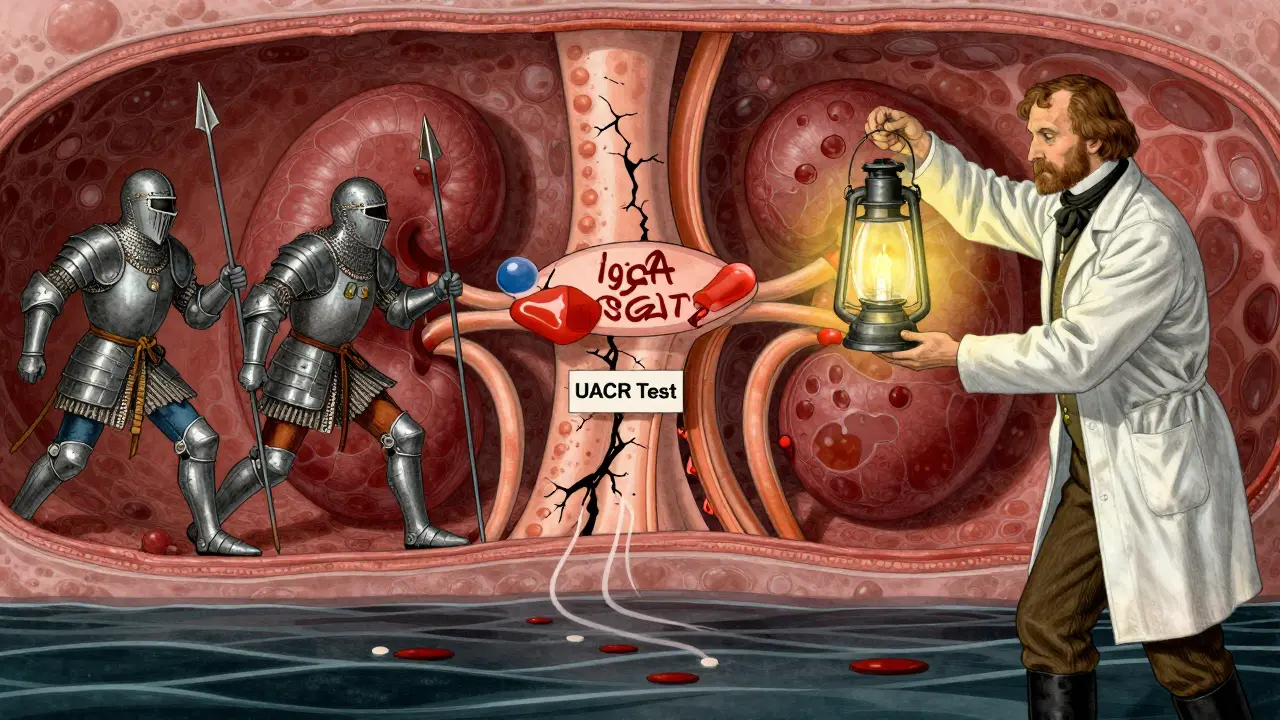
Unlike diabetes and hypertension, glomerulonephritis isn’t caused by lifestyle. It’s an autoimmune problem. Your immune system mistakes your kidney filters for invaders and attacks them. It’s rare - only 8% of kidney failure cases - but it’s complex and often missed.
The most common form is IgA nephropathy. It affects 2.5 to 4.5 people per 100,000, depending on where you live. In Asia, it’s more common. It shows up as blood or protein in the urine, often after a cold or sore throat. But because it’s usually painless, many people wait years before getting tested. One patient on Reddit saw seven doctors over 18 months before being diagnosed.
Pathology shows IgA deposits stuck in the glomeruli. Over time, these trigger scarring. About 20-40% of people with IgA nephropathy will eventually need dialysis - but only if it’s left untreated. The Oxford MEST-C score helps predict who’s at highest risk. People with the lowest score have a 50% chance of keeping their kidneys for 20 years. Those with the highest score? Only 20%.
Lupus nephritis is another type, affecting half of all lupus patients. Class IV lupus nephritis has a 28.7% chance of leading to kidney failure within 10 years. That’s why early diagnosis is critical. But testing isn’t routine. Many doctors don’t check urine for protein unless symptoms are obvious.
Treatment is different too. Instead of just lowering blood pressure, you need immunosuppressants. Rituximab, for example, cuts ESRD risk by 48% in high-risk IgA patients. But it’s not for everyone. In older patients, the infection risk from strong immune drugs can outweigh the benefits. That’s why treatment must be personalized.
How Fast Do These Conditions Progress?
Not all kidney failure moves at the same speed.
Diabetic kidney disease tends to progress fastest. From the first sign of albuminuria, it takes about 8.7 years on average to reach kidney failure. If you’re in the macroalbuminuria range (over 300 mg/g), your risk of needing dialysis in five years jumps to 44%.
Hypertensive kidney disease is slower - about 12.3 years from diagnosis to ESRD. But because it’s often silent, many people don’t know they have it until it’s advanced.
Glomerulonephritis? It’s unpredictable. Some people stay stable for decades. Others crash within five years. That’s why regular monitoring is non-negotiable. A single urine test for albumin-to-creatinine ratio (UACR) every three months can catch trouble before it’s too late.
What You Can Do - Right Now
You don’t have to wait for symptoms. Kidney damage is silent until it’s severe. Here’s what works:
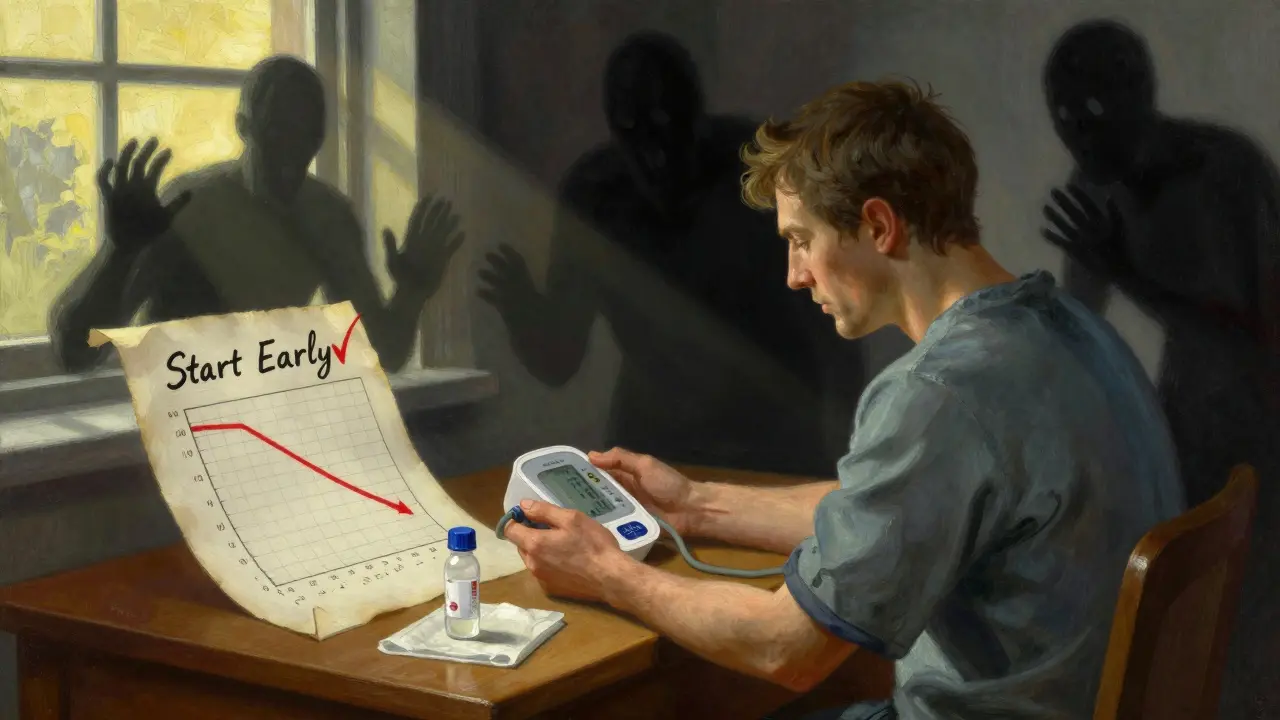
- If you have diabetes: Get your UACR tested every year. If it’s above 30 mg/g, ask about SGLT2 inhibitors. Start them early - not when your eGFR is already dropping.
- If you have high blood pressure: Aim for under 130/80. If you have protein in your urine, aim for under 120/80. Use a home monitor. Write it down.
- If you notice foamy urine, blood in urine, or unexplained swelling: Don’t brush it off. Get a urine test. It takes five minutes.
- Don’t ignore your meds. Missing doses of ACE inhibitors or SGLT2 drugs doubles your risk of kidney decline.
- Keep protein intake around 0.8 grams per kilogram of body weight. Too much adds stress. Too little causes muscle loss.
There’s new hope, too. Finerenone, approved in 2023, reduces kidney failure risk by 18% in diabetic patients with albuminuria. Sparsentan, coming soon, cuts proteinuria by nearly half in glomerulonephritis. These aren’t magic bullets - but they’re proof that science is catching up.
The Bigger Picture
Eight hundred and fifty million people worldwide have kidney disease. Most won’t know it. The cost? $124 billion a year in the U.S. alone. A single dialysis patient costs Medicare $96,000 a year. That’s more than cancer or heart failure.
But here’s the truth: 30-50% of future kidney failures could be prevented - if we act early. Not with fancy surgeries. Not with miracle drugs. With simple tests, consistent meds, and awareness.
Your kidneys don’t shout. They whisper. And if you’re listening - with your doctor, with your monitor, with your health records - you can still change the outcome.
Can kidney failure be reversed?
Once kidney damage reaches end-stage (ESRD), it can’t be reversed. But early-stage damage - especially from diabetes or hypertension - can often be slowed or even stabilized. Starting SGLT2 inhibitors or ACE inhibitors when albuminuria is first detected can prevent progression in many cases. The goal isn’t to fix the damage, but to stop it from getting worse.
Do I need to see a specialist if I have diabetes and high blood pressure?
Not always - but you should. Your primary doctor can manage early signs. But if you have persistent protein in your urine, an eGFR below 45, or if your blood pressure stays high despite three medications, it’s time for a nephrologist. They specialize in kidney protection and know which tests and drugs matter most.
Is a low-protein diet necessary for kidney health?
For people with early kidney damage, yes - but only moderately. The standard recommendation is 0.8 grams of protein per kilogram of body weight. Too much (like high-meat diets) stresses the kidneys. Too little can cause muscle loss, especially in older adults. It’s not about going vegan or cutting protein entirely - it’s about balance. A dietitian can help you find the right amount.
Can I still drink alcohol if I have kidney disease?
Moderation is key. One drink a day for women, two for men, is generally safe if your blood pressure and liver are stable. But alcohol raises blood pressure and can interfere with medications like diuretics or ACE inhibitors. If you’re on dialysis, alcohol can worsen fluid and electrolyte imbalances. Talk to your doctor - it’s not a blanket yes or no.
How often should I get my kidneys checked?
If you have diabetes or high blood pressure: get a urine test for albumin-to-creatinine ratio (UACR) every year, and a blood test for eGFR at least once a year. If you’ve already been diagnosed with early kidney damage, test every 3-6 months. If you’re healthy with no risk factors, testing every 2-3 years is fine. Don’t wait for symptoms - they come too late.
Most people think kidney disease is something that happens to older adults. But the damage starts decades before symptoms show. The best time to protect your kidneys? Today. Not tomorrow. Not when you feel tired. Now.
Victoria Rogers
December 17, 2025 AT 12:11Meghan O'Shaughnessy
December 19, 2025 AT 11:48Radhika M
December 20, 2025 AT 10:42Kent Peterson
December 20, 2025 AT 18:34Josh Potter
December 21, 2025 AT 11:38Evelyn Vélez Mejía
December 22, 2025 AT 14:17Nishant Desae
December 24, 2025 AT 01:04Kaylee Esdale
December 25, 2025 AT 06:55