
Isotretinoin and Depression: What You Need to Know About Mental Health Monitoring
 Jan, 15 2026
Isotretinoin Mood Risk Calculator
This tool assesses your individual risk of experiencing mood changes while taking isotretinoin. Based on the latest research, it identifies factors that may increase your risk and provides personalized recommendations for monitoring and care.
Isotretinoin works wonders for severe acne. For many, it’s the only thing that clears up years of stubborn, painful breakouts. But behind the clear skin, there’s a quiet, serious conversation happening in clinics and patient forums: isotretinoin and depression. Is the medication causing mood changes? Or is it just the stress of living with severe acne? The truth isn’t simple - and that’s why monitoring matters more than ever.
What Isotretinoin Actually Does
Isotretinoin is a powerful oral retinoid. It shrinks oil glands, cuts sebum production by up to 90%, and stops acne before it starts. Most people take it for 15 to 20 weeks. By the end, 85% of patients see long-term clearance, according to a 2018 study in the Journal of the American Academy of Dermatology. That’s why dermatologists still prescribe it - even after the original brand, Accutane, was pulled from the U.S. market in 2009. Today, it’s sold under generics like Claravis, Amnesteem, and Sotret, or as Roaccutane in Europe and Australia.The Controversy: Depression or Coincidence?
Since the 1990s, reports have linked isotretinoin to depression, anxiety, suicidal thoughts, and even suicide. These stories scared patients and doctors alike. In 2005, the FDA added a black box warning - the strongest possible - for psychiatric side effects. But here’s the twist: the evidence is mixed. A 2025 analysis of over 19,000 adverse event reports to the FDA found clear signals: depression was the most common psychiatric issue (47.5%), followed by suicidal ideation (17.7%) and anxiety (15%). The reporting odds ratio for depression was 3.3 - meaning patients on isotretinoin were over three times more likely to report these issues than those not taking it. But then came the 2023 JAMA Dermatology meta-analysis - a much larger study of over 1.6 million people. It found no increased relative risk of depression or suicide compared to the general population. The 1-year risk of suicide attempt was just 0.14%, lower than the rate in teens with no acne. Depression risk was 3.83%, right in line with typical adolescent rates. So why the gap? One big clue: acne itself causes depression. When your skin is covered in painful, visible lesions, you avoid eye contact, skip social events, and feel ashamed. For many, isotretinoin lifts that burden - and with it, their depression. That’s why some patients say they feel better emotionally after starting treatment. Others say the opposite. The medication might be helping, harming, or doing nothing at all - it depends on the person.When Do Mood Changes Happen?
Timing matters. Studies show that if psychiatric symptoms do appear, they usually show up between weeks 4 and 12. The median time to onset? 80 days. That’s why monitoring isn’t just a formality - it’s timed. Data from the FDA’s adverse event database shows 44% of psychiatric events happen in the first 8 weeks. That’s the most critical window. If you’re on isotretinoin, your mood might shift during this time - not because the drug is “toxic,” but because your brain is adjusting to chemical changes. The same study found that patients who had a history of mental health issues were at higher risk. So if you’ve ever been diagnosed with depression, anxiety, or bipolar disorder, you’re not just a “high-risk patient.” You’re someone who needs extra attention.What Doctors Are Doing Now
Guidelines have changed. The American Academy of Dermatology now recommends:- A baseline mental health check before starting isotretinoin - including personal and family history of depression, anxiety, or suicide attempts
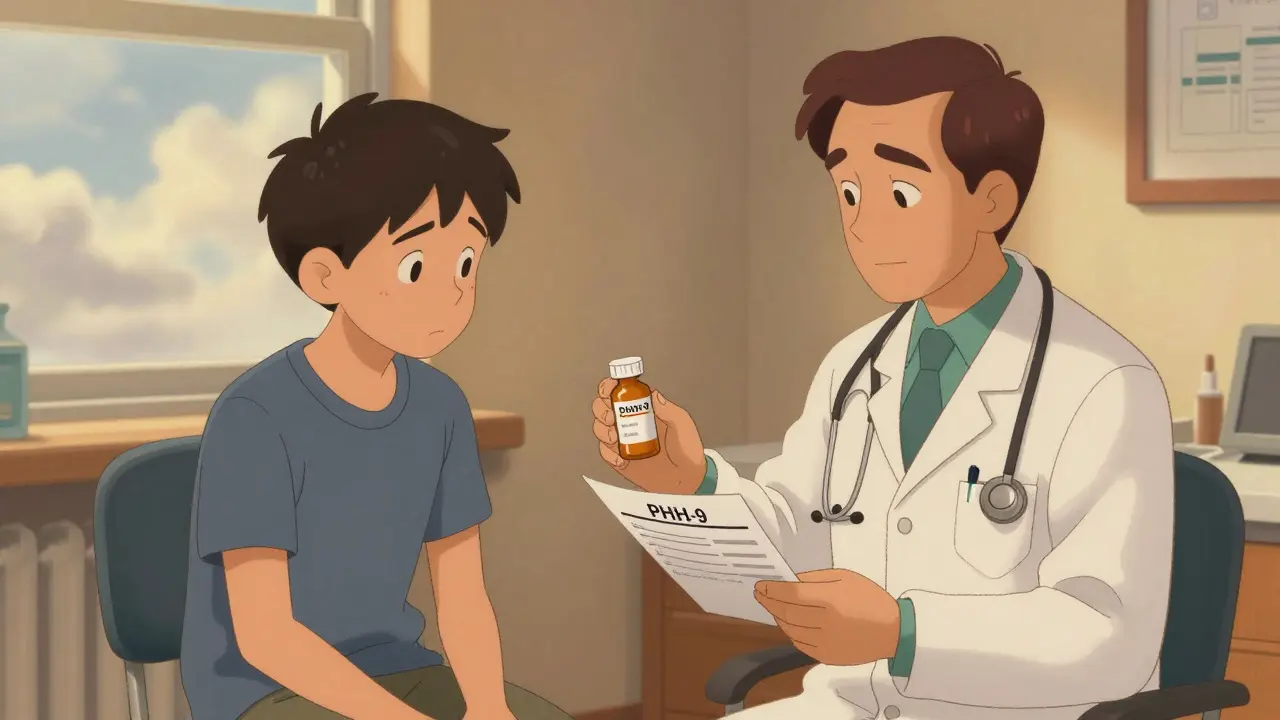
- Using a validated tool like the PHQ-9 (Patient Health Questionnaire-9) to screen for depression
- Weekly check-ins for the first 8 weeks, then every two weeks until week 16, then monthly
- A mandatory “mental health pause” at week 8 - no refills until you’ve seen your doctor in person

Red Flags You Can’t Ignore
Not every mood swing means you need to stop. But some signs are non-negotiable:- Any thoughts of suicide - even once
- Feeling hopeless, worthless, or trapped
- Extreme irritability or rage out of character
- Loss of interest in things you used to love
- Withdrawal from friends, family, or school
- Sudden emotional numbness - “I don’t feel anything anymore”
What About Other Acne Treatments?
Is isotretinoin the only acne drug linked to mood changes? No. Minocycline, a common antibiotic for acne, has been tied to depression in about 1.7% of users, according to a 2017 review in the British Journal of Dermatology. That’s lower than isotretinoin’s reported rates - but still real. Topical retinoids like tretinoin don’t carry the same risk because they don’t enter your bloodstream in significant amounts. The point isn’t to avoid isotretinoin. It’s to choose wisely. If your acne is mild, topical treatments are safer. If it’s severe, disabling, and resistant to everything else - isotretinoin might be your best shot. But only if you’re monitored properly.Real Stories: Two Sides of the Same Coin
Reddit’s r/Accutane community has 147,000 members. In a July 2024 thread, 43% reported worsening depression or anxiety. One user wrote: “Week 8 brought severe depression I’d never experienced before - constant crying, loss of interest in everything. I stopped treatment. Symptoms faded in three weeks.” But another user said: “My depression lifted dramatically on isotretinoin - likely because my severe acne was causing the depression all along.” These aren’t contradictions. They’re human experiences. The same drug can help one person and hurt another. That’s why blanket warnings don’t work. Personalized care does.
New Science: Genetic Clues and Vitamin Deficiencies
Researchers are digging deeper. A 2024 study in the Journal of Clinical Psychiatry found a genetic marker - the BDNF Val66Met polymorphism - might predict who’s more likely to develop depression on isotretinoin. People with this variant had a 68% chance of showing symptoms if they took the drug. That’s not a test you can buy yet, but it’s coming. Another surprise: 18.7% of isotretinoin users develop vitamin B12 deficiency, according to a 2022 study. Low B12 can cause fatigue, brain fog, and depression. Before blaming isotretinoin for your low mood, get your B12 checked. It’s a simple blood test. Fixing a deficiency might fix your mood - without stopping the acne treatment.What You Should Do
If you’re considering isotretinoin:- Be honest with your dermatologist about your mental health history - even if you think it’s irrelevant
- Ask for a PHQ-9 screening before you start
- Track your mood daily - even just a note in your phone: “Today I felt okay,” or “Felt numb all day”
- Don’t wait for your monthly visit if something feels off - call your doctor
- Know your red flags and act fast
- Get your B12 levels checked at week 8
- Don’t skip your check-ins - even if you feel fine
- Don’t ignore emotional changes - they’re not “in your head”
- Don’t compare your experience to others - your brain is unique
The Bottom Line
Isotretinoin isn’t a mood-altering drug. But it can trigger or unmask depression in vulnerable people. The risk is low - but not zero. The key isn’t fear. It’s awareness. With proper screening, timely check-ins, and honest communication, you can clear your skin without losing your mind.Clear skin matters. So does mental health. You don’t have to choose one over the other - if you’re monitored right.
Does isotretinoin cause depression?
Isotretinoin doesn’t cause depression in most people, but it can trigger or worsen symptoms in those who are vulnerable - especially those with a prior history of mental health issues. Studies show conflicting results: some report higher rates of depression in users, while large population studies find no increased risk compared to the general public. The key is individual risk, not blanket assumptions.
How long after starting isotretinoin can depression appear?
Psychiatric symptoms, if they occur, typically appear between weeks 4 and 12. The median time to onset is around 80 days, with 44% of cases showing up in the first 8 weeks. That’s why weekly check-ins during the first two months are critical. Waiting until your monthly visit may be too late.
Should I stop isotretinoin if I feel depressed?
If you experience suicidal thoughts, severe anxiety, or sudden emotional numbness, stop isotretinoin immediately and contact your doctor. For milder symptoms like sadness or irritability, don’t stop on your own - talk to your dermatologist. They may adjust your dose, check for vitamin deficiencies, or refer you to a mental health professional. Stopping abruptly isn’t always necessary - but ignoring symptoms is dangerous.
Can vitamin B12 deficiency mimic isotretinoin-induced depression?
Yes. About 18.7% of people on isotretinoin develop low vitamin B12 levels, which can cause fatigue, brain fog, irritability, and depression. Before assuming your mood changes are from the medication, get a simple blood test. Correcting a B12 deficiency can improve your mood without stopping treatment.
Are there alternatives to isotretinoin for severe acne?
Yes. Oral antibiotics like doxycycline or minocycline are options, though minocycline carries its own risk of depression (about 1.7% of users). Topical retinoids and hormonal therapies (like spironolactone for women) are also used. But for severe nodular acne that hasn’t responded to other treatments, isotretinoin remains the most effective option - if monitored properly.
Is isotretinoin safe for someone with a history of depression?
It can be, but only with close supervision. Studies show patients with prior psychiatric conditions are at higher risk for worsening symptoms. If you have a history of depression, your doctor should screen you thoroughly before starting, monitor you more frequently (weekly at first), and coordinate with your mental health provider. Many people with depression safely complete isotretinoin treatment - but they’re the ones who get the extra care.
Annie Choi
January 16, 2026 AT 09:44Been on isotretinoin for 11 weeks and my skin is finally clear for the first time since high school
But yeah, week 7 hit me like a truck - crying over dumb stuff, no motivation, felt like a ghost in my own body
Stopped for a week, got my B12 checked - turned out I was borderline deficient
Took supplements, came back on - mood stabilized, acne stayed gone
It’s not the drug, it’s the combo - your body’s doing a full system reset
Dan Mack
January 16, 2026 AT 19:17Big Pharma doesn’t want you to know isotretinoin was designed to suppress your emotions so you don’t question corporate control
They pulled Accutane because it worked too well - clear skin and numb minds
Now they sell generics with the same poison but call it ‘monitoring’
They’re testing your mental state so they can sell you more pills later
Trust no one - not your derm, not the FDA, not this post
It’s all a distraction from the real issue: your skin is a mirror of your soul and they’re poisoning it
Amy Vickberg
January 18, 2026 AT 11:32I get why people panic about this - I was terrified too when I started
But here’s what helped me: I tracked my mood daily like a journal
Some days were rough, sure - but most were better than before
My depression wasn’t from the drug, it was from years of hiding my face
Once I started seeing myself clearly - literally and emotionally - I felt lighter
Don’t let fear stop you from healing. Just stay aware. Talk to someone. Get your labs done.
You got this.
Nat Young
January 19, 2026 AT 13:33Let’s cut the bullshit - the FDA’s ‘black box warning’ is theater
The real risk isn’t isotretinoin, it’s the fact that 70% of dermatologists don’t know how to interpret PHQ-9 scores
And the 1.6 million person study? It’s flawed - they didn’t control for baseline depression severity
Also, vitamin B12 deficiency is real but it’s not the smoking gun - it’s a red herring
What’s actually happening is isotretinoin alters serotonin metabolism in genetically susceptible people
And yes, the BDNF Val66Met polymorphism is the key - but no one’s screening for it
So we’re treating symptoms instead of causes - classic medicine
Niki Van den Bossche
January 20, 2026 AT 20:51Isotretinoin isn’t a drug - it’s a metaphysical mirror
It doesn’t cause depression, it catalyzes the latent shadow self
When your skin clears, the ego’s armor cracks - and what emerges isn’t pathology, it’s truth
Those who weep on week 8 aren’t broken - they’re awakening
Their souls are screaming through the chemical veil
Modern medicine labels this ‘side effect’ - but it’s initiation
Are you brave enough to let the darkness in? Or will you numb it with B12 and therapy?
Jan Hess
January 21, 2026 AT 03:40My cousin did isotretinoin and came out with perfect skin and zero issues
She said she felt better emotionally because she stopped hiding
Same with my sister - acne was crushing her confidence
Don’t let fear of the unknown stop you from getting your life back
Just talk to your doc, get checked, and don’t overthink it
Most people are fine - the scary stories get all the attention
But you’re not most people - you’re stronger than you think
Iona Jane
January 23, 2026 AT 00:49They told me it was safe - then I lost 17 pounds in 3 weeks and couldn’t sleep
My therapist said I was having a psychotic break
Turns out I wasn’t - I was just reacting to a chemical bomb
My dermatologist didn’t even ask about my anxiety meds
They just handed me a script like I was ordering coffee
Now I’m off it - and I’m still terrified of my own reflection
They don’t care - they just want to sell more pills
It’s not medicine - it’s corporate violence
Jaspreet Kaur Chana
January 23, 2026 AT 01:04In India, we’ve been using isotretinoin for 20 years - no one talks about depression
Our skin issues are worse - we don’t have the luxury of overthinking
My cousin took it, got clear skin, married a girl from his village - now he’s a doctor
Yes, some people feel weird - but we don’t call it depression
We call it change - and change is scary
But if you’re scared, talk to your family, not just a doctor
And check your vitamin D - here, everyone’s low
It’s not the drug - it’s your lifestyle
Clear skin is a gift - don’t waste it by overanalyzing
Haley Graves
January 23, 2026 AT 17:04Stop scrolling and start acting
If you’re on isotretinoin and feeling off - don’t wait for your next appointment
Text your derm. Call your therapist. Go to urgent care.
Don’t let your pride cost you your mental health
I’ve seen too many people suffer in silence because they didn’t want to seem weak
You’re not weak for feeling this - you’re human
And you deserve to feel like yourself again
Do it now - not tomorrow. Not next week. Now.
Diane Hendriks
January 24, 2026 AT 10:40It is a fact that the pharmaceutical industry has systematically suppressed evidence regarding isotretinoin's neurochemical effects. The 2023 JAMA study is methodologically flawed due to its reliance on ICD-10 coding, which fails to capture subclinical depressive phenotypes. Furthermore, the PHQ-9 instrument is culturally biased toward Western affective norms and cannot reliably detect anhedonia in adolescents with chronic dermatological distress. The FDA's black box warning remains insufficient because it does not mandate longitudinal neuroimaging or serotonin transporter polymorphism analysis. Until these standards are implemented, isotretinoin prescribing constitutes a violation of the Hippocratic Oath's first principle: primum non nocere.
ellen adamina
January 25, 2026 AT 11:42I took it for 6 months - no depression, but I did feel weirdly calm
Like I didn’t care about anything anymore
Not sad - just… empty
My mom said it was the acne lifting
I think it was the drug
Got my B12 checked - fine
Got my thyroid checked - fine
Still feel a little off sometimes
Just wanted to say - if you feel numb, you’re not crazy
It’s real
And you’re not alone
Gloria Montero Puertas
January 25, 2026 AT 20:23Oh, so now we’re blaming vitamin B12? How convenient. The same people who told you ‘acne is just a phase’ are now telling you ‘your depression is just a deficiency’? Please. Isotretinoin is a neurotoxin wrapped in a marketing campaign. They don’t care about your mental health - they care about your credit score. You think they’d let you go off it if you didn’t have insurance? Wake up. The ‘monitoring’ is a loophole. The ‘guidelines’ are a cage. And you? You’re the experiment.
Tom Doan
January 27, 2026 AT 04:21How ironic that a drug designed to eradicate acne - a surface-level condition - is now being scrutinized for its potential to erode the inner self. The irony is not lost on those who understand that dermatological interventions are, at their core, existential acts. We treat the skin to avoid confronting the psyche. And yet, the psyche refuses to be ignored. Perhaps the real side effect is not depression, but clarity. And clarity, as history has shown, is often mistaken for pathology.
Sohan Jindal
January 27, 2026 AT 20:01They want you to think it’s your genes or your B12 - but it’s the Jews. They control the FDA. They control the labs. They control the doctors. Accutane was pulled because it made too many people too happy. Now they’re selling the same poison under new names and calling it ‘safe.’ They’re using your depression to sell antidepressants. It’s a cycle. And you’re part of it. Stop taking it. Fight back.
Arjun Seth
January 29, 2026 AT 04:21My brother took isotretinoin - got acne clear, then went silent for 3 months
Stopped talking to everyone, didn’t leave the house
We thought he was depressed
Turns out he had low iron - not B12, not mood disorder
Just iron deficiency
He started eating lentils, spinach, eggs - and boom, he was back
So don’t jump to conclusions
Check everything - iron, vitamin D, zinc, cortisol
It’s not always the drug
It’s your diet, your sleep, your stress
Fix the basics first - then decide