
How to Prevent Accidental Medication Poisoning in Kids and Toddlers
 Jan, 3 2026
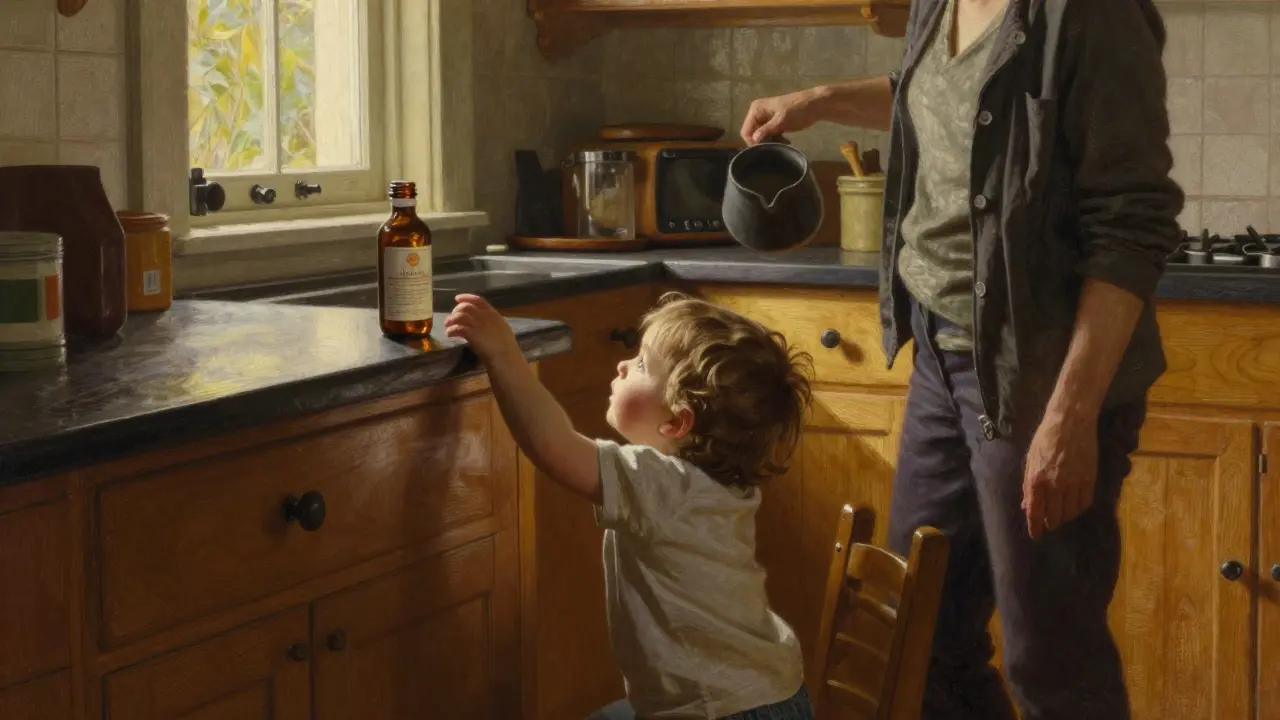
Most kids who swallow medicine by accident don’t do it because they’re curious-they do it because they saw an adult take it.
It’s not a myth. It’s data. In over 90% of cases, a child gets into medicine while a parent or caregiver is right there-maybe taking a pill after dinner, leaving a bottle on the counter, or putting a purse down on the couch. That’s not negligence. It’s human. But it’s also preventable.
Every year in the U.S. alone, poison control centers handle over 2 million calls about children exposed to medications. Most of these aren’t from stolen bottles or broken locks. They’re from simple mistakes: a medicine left in a coat pocket, a bottle of Tylenol on the nightstand, a grandparent’s pills in a purse. And the most dangerous part? Kids don’t know the difference between medicine and candy.
Where kids find medicine (and why your "safe" spots aren’t safe)
Think your medicine cabinet is enough? Think again. Children as young as 18 months can climb onto chairs, pull open drawers, and reach shelves that seem high to you. A 2022 study from UCSF Benioff Children’s Hospital found that 78% of poisonings happen with items stored below 4 feet-right at toddler eye level.
Common hidden dangers:
- Medications in purses, bags, or coat pockets (30% of exposures come from visitors’ belongings)
- Medicine bottles on bedside tables or bathroom counters
- Pills left on the kitchen counter after taking them
- Medicine stored in drawers that aren’t locked
- Transferred pills into pill organizers, snack containers, or water bottles
Nationwide Children’s Hospital reports that 25% of poisonings happen because the medicine was taken out of its original container. A child sees a colorful bottle labeled "vitamins" and assumes it’s safe. That’s why keeping medicine in its original packaging isn’t just a rule-it’s a lifesaver.
The 3 things you must do to lock down your medicine
Child-resistant caps? They’re not childproof. That’s the first thing every expert agrees on. You need layers of protection.
- Lock it up-Use cabinets with magnetic or automatic-locking latches that engage when closed. Install them at least 54 inches above the floor. Don’t rely on high shelves. Kids climb. They use toilets, chairs, and countertops like ladders.
- Keep it original-Never transfer pills or liquids into other containers. Even if it’s a cute pill organizer, it’s a hazard. Original bottles have warning labels, dosage info, and child-resistant caps that work together.
- Never call it candy-Saying "this is medicine, it tastes like candy" is a disaster waiting to happen. Studies show this increases the chance of a child taking it without asking by 3.2 times. Say it plainly: "This is medicine. Only adults give it to you."
One parent in Perth told me her 2-year-old swallowed 10 melatonin gummies because she called them "sleepy bears" to get him to take them. He ended up in the ER. That’s not rare. That’s predictable.
The most dangerous medicines in your home
Not all medications are equally risky. The top offenders in poisonings are:
- Acetaminophen (Tylenol)-Overdose can cause liver failure. A few extra teaspoons can be deadly for a toddler.
- Ibuprofen (Advil, Motrin)-Too much can cause stomach bleeding or kidney damage.
- Aspirin-Never give to children under 18. It can trigger Reye’s syndrome, a rare but deadly condition.
- Liquid nicotine (from e-cigarettes)-As little as 0.5 mL can kill a toddler. Store it like a weapon. Locked. Out of reach. Even if you think you’ll only use it once a day.
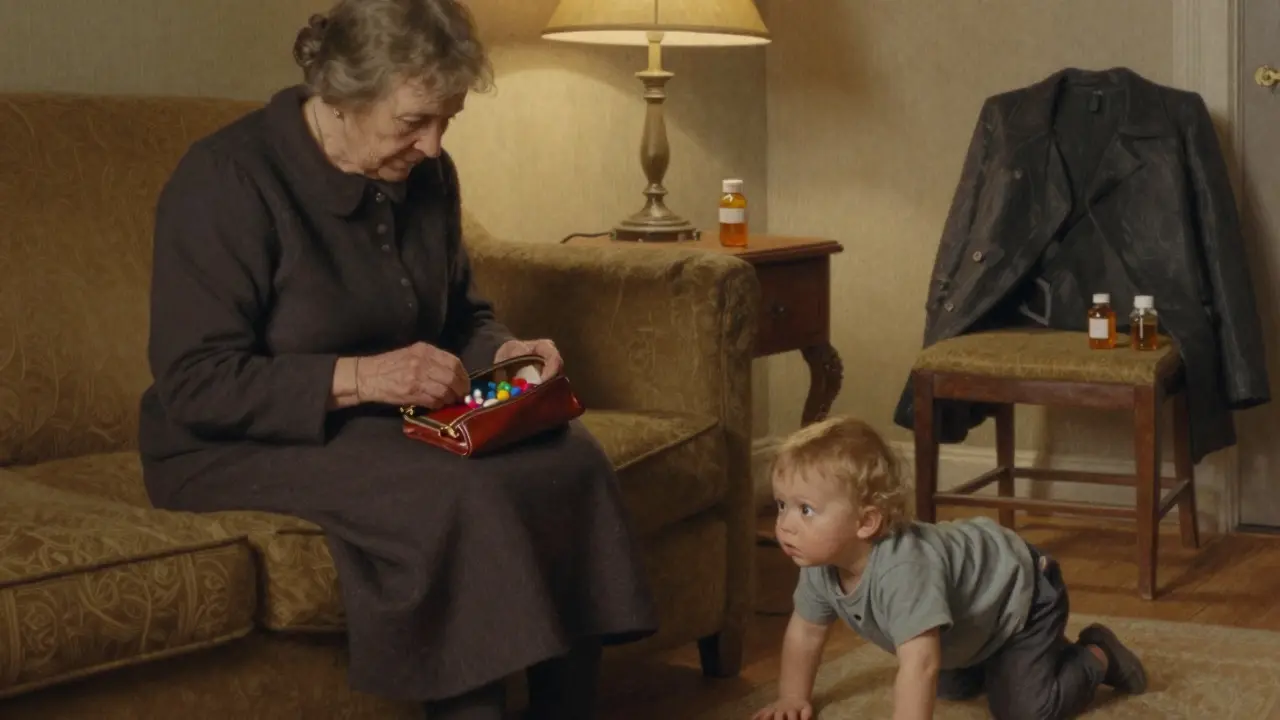
And don’t forget prescription meds. A single pill of a blood pressure or heart medication can be fatal to a child. If you have elderly relatives visiting, make sure their meds aren’t sitting on the nightstand. Grandparents are involved in 35% of medication exposures because their pills are left out in plain sight.
Why kitchen spoons are killing your child
Medication errors cause 68% of dosing mistakes. And 42% of those happen because someone used a kitchen spoon.
A teaspoon isn’t a teaspoon. One household spoon might hold 3 mL. Another might hold 5 mL. That’s a 40% difference. If you’re giving 5 mL of medicine and use the wrong spoon, your child could get 7 mL-or 10 mL. That’s an overdose.
Always use the measuring tool that comes with the medicine. It’s usually a syringe, dropper, or cup with exact milliliter markings. If you lost it? Go to the pharmacy. They’ll give you a new one for free. No excuses.
When accidents happen-what to do right now
Time matters. If you think your child swallowed medicine, don’t wait. Don’t call your friend. Don’t Google it. Don’t try to make them throw up.
Call 1-800-222-1222 immediately. That’s the Poison Help hotline. It’s free. It’s 24/7. They’ve handled over 2 million cases since 2023. They know exactly what to do.
Here’s what to do while you wait:
- Keep the medicine bottle handy-bring it to the phone or show it to the operator.
- Write down what was taken, how much, and when.
- Don’t induce vomiting unless told to.
- If your child is unconscious, not breathing, or having seizures-call 911 right away.
Post the Poison Help number on your fridge, near the phone, and on your phone’s emergency contact list. Homes with the number posted respond 47% faster in emergencies.
Special risks: visitors, travel, and changing routines
Accidents spike when routines break. Holidays, visits from grandparents, trips to the beach-these are peak times for poisonings.
Before visitors arrive:
- Ask them to keep all medications in their bags and not leave them on tables or nightstands.
- Put a lockbox in your guest room if they take regular meds.
- Keep your own meds locked away-even if you’re used to leaving them out.
When traveling:
- Never pack medicine in a carry-on that your child can reach.
- Use a small lockable pill case for daily doses.
- Keep a copy of the prescription and dosage info in your phone.
What’s next? Smart tech and community help
Some pharmacies now offer free childproof lockboxes for families with toddlers under 3. One program in Queensland saw a 41% drop in accidental exposures after handing out these boxes.
There are also smart pill bottles in testing that send alerts to your phone if the cap is opened when it shouldn’t be. Pilot programs show a 63% reduction in unsupervised access.
But tech isn’t the fix. Behavior is. The most effective prevention is still the same: lock it, keep it original, never call it candy, and know the Poison Help number.
Get down on the floor. Look around.
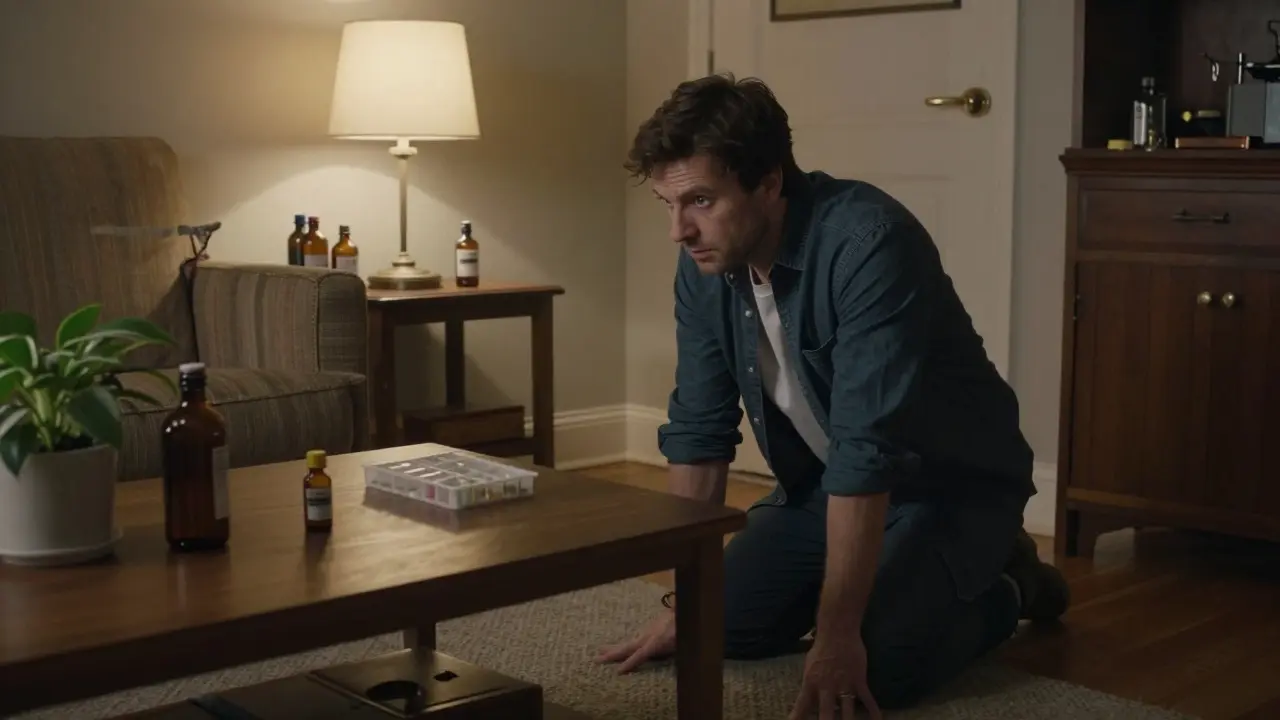
Do this right now. Get on your hands and knees. Look at your home from your child’s height. Where are the bottles? What’s within reach? What looks like candy? What’s labeled wrong?
That’s your real safety check. Not a checklist. Not a reminder. A full sweep. Because when it comes to kids and medicine, one moment of distraction can change everything.
Can child-resistant caps alone prevent poisoning?
No. Child-resistant caps are designed to slow down older children and adults-not toddlers. Many kids figure out how to open them within minutes. Always store medicine in a locked cabinet, even if it’s in a child-resistant bottle.
What should I do if my child swallows medicine but seems fine?
Call Poison Help at 1-800-222-1222 immediately. Many poisons don’t cause symptoms right away. Acetaminophen, for example, can damage the liver over 24-48 hours. Waiting to see if they "look okay" can be deadly.
Is it safe to store medicine in the bathroom?
Not if it’s on the counter or in an unlocked cabinet. Bathrooms are high-humidity environments that can degrade medicine, and they’re full of climbable surfaces like toilets and sinks. Store medicine in a locked cabinet outside the bathroom if possible.
Can I use a pill organizer for my toddler’s medicine?
Only if you keep the original bottle locked away and use the organizer as a daily dispenser-not a storage container. Never let your child see the organizer as a snack box. Always return unused pills to the original bottle and lock it immediately.
Why is liquid nicotine so dangerous for toddlers?
A single e-cigarette cartridge can contain enough liquid nicotine to kill a child. Just 0.5 mL can cause seizures, breathing failure, or death. Store it like you would gunpowder-locked, away from children, and never left unattended.
What to do next
Start today. Lock one cabinet. Throw out any old or unlabeled pills. Write the Poison Help number on your mirror. Talk to your partner, your parents, your babysitter-everyone who spends time with your child.
Accidental poisoning isn’t about being careless. It’s about not knowing what’s dangerous. Now you know. Use that knowledge. Your child’s life depends on it.
Joy F
January 4, 2026 AT 05:58Let’s be real-this isn’t about childproofing. It’s about systemic neglect wrapped in performative parenting. We’ve turned caregiving into a compliance checklist while ignoring the deeper rot: our culture normalizes pharmaceutical dependency. You lock the cabinet? Great. But why are we medicating toddlers for crying? Why are grandparents walking around with beta-blockers in their purses like it’s a goddamn accessory? This isn’t prevention-it’s damage control for a broken system.
And don’t get me started on ‘child-resistant caps.’ That’s corporate theater. The same companies that sell you Tylenol also market gummy vitamins shaped like dinosaurs. They want you to think you’re safe while they profit from the chaos. It’s not negligence. It’s capitalism.
Meanwhile, the Poison Help hotline gets 2 million calls a year and we’re still acting like this is a parenting fail instead of a public health crisis. Where’s the federal mandate? Where’s the funding for lockboxes in every WIC office? No, we’d rather shame moms for leaving a pill on the counter than fix the infrastructure that made that possible.
And yes-I’ve seen it. A neighbor’s kid swallowed a whole bottle of melatonin gummies because the mom called them ‘sleepy bears.’ She cried for days. But she didn’t get therapy. She got a blog post. We don’t fix systems. We fix guilt.
veronica guillen giles
January 5, 2026 AT 14:39Oh sweet mercy. You’re telling me you didn’t already know this? 😒 Like, I get it-you’re trying to be helpful. But honestly? This feels like a PSA from 2008. Every pediatrician’s office has this exact flyer taped to the wall next to the ‘Don’t Let Your Kid Eat the Christmas Tree’ sign.
And yet… here we are. Still having this conversation. Because some people still store Advil next to the cereal. Or worse-use a soup spoon to measure syrup. Like, who are these people? Are they real? Or just cautionary tales invented by overworked ER nurses?
Anyway. Lock it. Keep it original. Don’t call it candy. Write the number on your fridge. Do it. Now. Your kid’s not gonna thank you. But the ER nurse will.
JUNE OHM
January 7, 2026 AT 07:29THIS IS A GOVERNMENT TRAP. 🚨
They want you to lock up your meds so they can track you. That’s why they push these lockboxes-they’re RFID-enabled. I read it on a forum. One guy said his pill bottle pinged his phone after his kid touched it. That’s not safety. That’s surveillance.
And why do they keep saying ‘liquid nicotine kills toddlers’? Because Big Pharma wants you scared so you’ll buy their ‘safe’ e-cigs. But the real killer? Fluoride in the water. That’s what’s turning kids into zombies. Not Tylenol. Not nicotine. WATER. 🧪💧
Also, why do they say ‘call Poison Help’? Who funds that number? It’s probably the same people who make the pills. Don’t trust them. Call your local militia. They know the truth.
And don’t even get me started on the ‘pill organizers’-they’re planting microchips. I saw a video. A kid swallowed one. His stomach glowed on X-ray. That’s not medicine. That’s Project Monarch.
LOCK YOUR MEDS? NO. BURN YOUR MEDS. THEN BURN THE LOCKBOX. FREEDOM FIRST.
Philip Leth
January 9, 2026 AT 04:27My grandma used to keep her heart pills in a mason jar on the windowsill. Said it looked pretty. She’d forget she had them there until she’d grab it for her tea. One day, my cousin-then 19 months-drank the whole thing. Didn’t die. But he was in the hospital for three days.
Now? I lock everything. Even my own. My kid’s got a taste for shiny things. And if it’s got a cap? She’ll figure it out. I’ve seen her. She’s got the focus of a ninja.
And yeah-I used a kitchen spoon once. Once. Never again. I bought a syringe for $1.50 at CVS. Best money I ever spent.
Don’t wait for a tragedy. Just lock it. Now. Your kid’s not gonna remember you being ‘overprotective.’ They’ll remember being alive.
Angela Goree
January 9, 2026 AT 13:03STOP. STOP. STOP. You think this is about parenting? NO. This is about the collapse of American values. We let our kids roam free, we let strangers into our homes, we let our elders leave pills lying around like confetti-and then we blame the MOM?!
Who let the grandparents in? Who let the visitors bring their meds? Who didn’t install a 7-foot lockbox with a biometric scanner?! This isn’t negligence-it’s treason against the family unit!
And why are we still using MILLILITERS?! Who even uses that? We’re in AMERICA. Use teaspoons! Or better yet-use the cap! It’s marked! It’s right there! Why are we making this harder?!?
Also-why is this article so long?! I scrolled for 12 minutes! Who wrote this?! Some bureaucrat with a thesaurus?! Get to the point!!
LOCK IT. KEEP IT ORIGINAL. DON’T CALL IT CANDY. CALL 1-800-222-1222. DONE. STOP TALKING. START LOCKING.
Tiffany Channell
January 9, 2026 AT 13:20Let’s cut through the noise: this article is a masterclass in victim-blaming disguised as prevention. You list every possible mistake-bags, nightstands, pill organizers-and act like the parent is the problem. But where’s the data on how many of these parents work two jobs? Where’s the mention of housing insecurity? Of single parents who don’t have time to install magnetic locks because they’re still cleaning up vomit from 3 a.m.?
And ‘never call it candy’? That’s a middle-class luxury. What do you say to a 2-year-old who won’t take medicine? ‘This is medicine, only adults give it to you’? Good luck with that. I’ve seen parents bribe with cookies, juice, cartoons. You think they’re evil? No-they’re exhausted.
The real issue? We’ve outsourced child safety to individual families while defunding public health. Lockboxes? Free? Only in Queensland? In America, you pay $40 for one and wait six weeks for shipping. That’s not prevention. That’s privilege.
This isn’t about forgetting a pill on the counter. It’s about a society that expects mothers to be perfect while giving them nothing to succeed.
Ian Detrick
January 10, 2026 AT 10:29I used to think safety was about rules. Then I watched my nephew climb onto the toilet to grab a bottle from the medicine cabinet. He didn’t know it was medicine. He thought it was a toy. Because it was shiny. Because it had a cap that clicked. Because his aunt called it ‘the blue magic.’
That’s when I realized: safety isn’t about locks. It’s about perception. It’s about how we talk to kids. It’s about whether we treat medicine like a tool or a treat.
So now? I don’t just lock it. I talk about it. I say, ‘This is medicine. It helps people. But it’s not for kids.’ I show him the bottle. I let him hold it. I explain why it’s locked. Not to scare him. To teach him.
It’s not about control. It’s about respect. And yeah-I keep the Poison Help number on my phone. But I also keep my hands open. Because sometimes, the best lock is a conversation.
Angela Fisher
January 12, 2026 AT 07:47They’re lying to you. Every single word. The government doesn’t care about your kids. They want you scared so you’ll take more pills. That’s why they say ‘Tylenol can kill’-because they make the antidote. And the antidote? It’s expensive. And patented. And only available if you call 1-800-222-1222. Who owns that number? A pharmaceutical conglomerate. They’re not helping you. They’re harvesting your data. And your fear.
And the ‘original packaging’? That’s a lie too. The original bottle has a barcode. That barcode tracks your purchase. Your location. Your child’s age. Your prescription history. They’re building a profile. And soon? Your insurance will raise your rates because your kid ‘exposed’ themselves to meds. That’s not prevention. That’s discrimination.
Also-why is everyone so obsessed with ‘liquid nicotine’? Because they’re trying to make you hate vaping. But what about the sugar in the gummy vitamins? That’s poisoning too. But no one talks about that. Why? Because Big Sugar owns the FDA.
And the ‘pill organizers’? They’re bugged. I know a guy. His kid swallowed one. The next day, his phone started playing whispering voices. He called the police. They said it was ‘psychotic episode.’ But he knew. The pill box was talking to them.
Don’t trust the system. Burn your meds. Move to the woods. Live off the land. Your child will be safer there.
Neela Sharma
January 12, 2026 AT 22:03My mother used to say: "A child sees what they are allowed to see."
So I stopped hiding my pills. I started showing them. I let my daughter hold my blood pressure bottle. I said, "This is medicine. It helps Mama. But it is not for you. It is heavy. It is serious. Like a knife. Like fire. Like love."
She didn’t touch it again.
Locking things away makes them magic. Talking about them makes them real.
And yes-I keep the poison number on my fridge. But I also keep my voice open. My hands open. My heart open.
Because safety isn’t a lock. It’s a language.
Speak it gently. Speak it often.