
How to Manage Weight Gain While Taking Psychotropic Medications
 Jan, 13 2026
Psychotropic Medication Weight Gain Calculator
How This Tool Works
This calculator estimates weight gain risk based on clinical data from the article. Select your current medication to see average 1-year weight change, then get personalized alternatives.
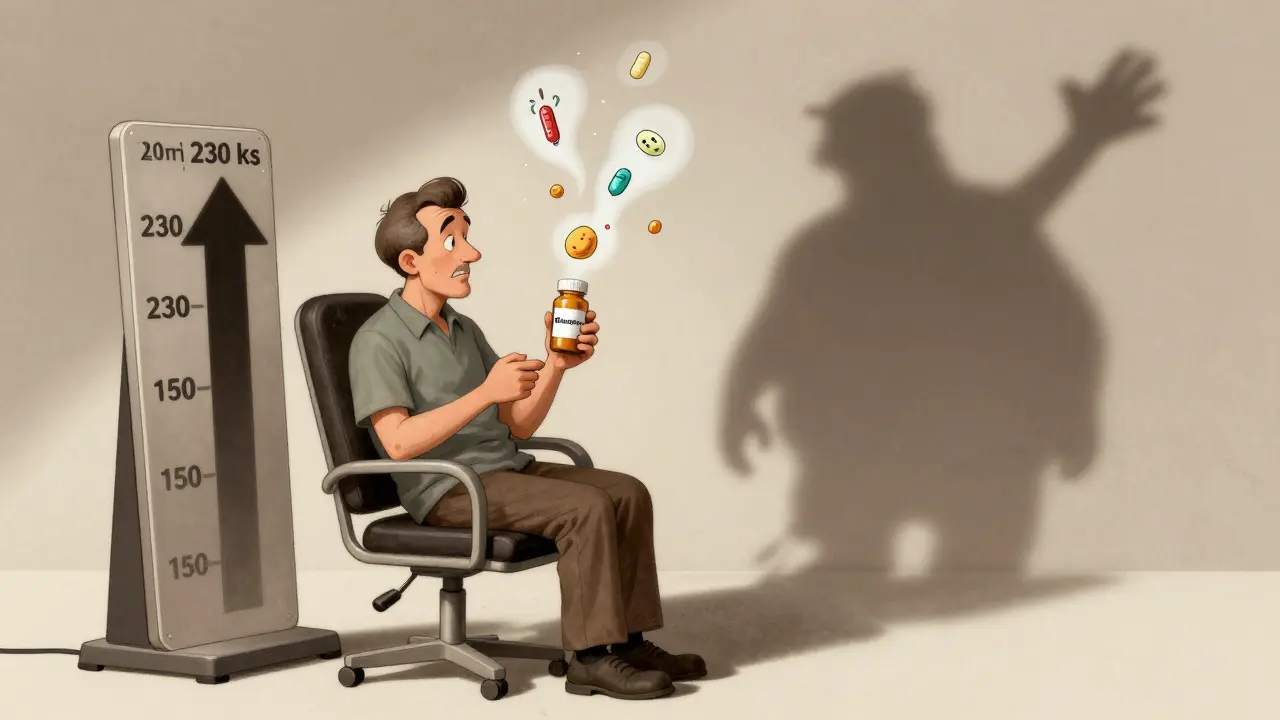
When you start taking psychotropic medications for depression, bipolar disorder, or schizophrenia, the goal is to feel better-less anxious, more stable, able to function again. But for many people, the relief comes with an unexpected side effect: weight gain. It’s not just about clothes fitting tighter. This weight gain is tied to real health risks-higher chances of diabetes, heart disease, and even shorter life expectancy. The good news? You don’t have to accept it as inevitable. With the right strategy, you can manage your weight without giving up the medication that helps you stay well.
Why Psychotropic Medications Cause Weight Gain
Not all psychiatric drugs affect weight the same way. The biggest culprits are second-generation antipsychotics like olanzapine and clozapine. These medications work by blocking certain brain receptors-especially histamine-1 and serotonin-2C-which control appetite and metabolism. When these receptors are blocked, your body thinks it’s starving, even when it’s not. You feel hungrier, crave carbs, and burn fewer calories at rest.Studies show that within the first 10 weeks of starting olanzapine, people gain an average of 4 kg. By the end of the first year, some gain up to 10 kg. Even medications considered "milder," like quetiapine or risperidone, still cause noticeable weight gain in about 20-30% of users. Antidepressants like mirtazapine and paroxetine are also known for increasing appetite. Mood stabilizers like lithium and valproate can slow metabolism and cause fluid retention.
It’s not just about eating more. These drugs change how your body stores fat and processes sugar. Blood sugar levels rise, triglycerides climb, and insulin resistance develops. This isn’t just "getting heavier"-it’s metabolic syndrome, a cluster of conditions that raise your risk of heart attack and stroke.
Which Medications Are Least Likely to Cause Weight Gain?
If you’re starting a new medication or considering a switch, knowing which ones are safer for your weight matters. Not all antipsychotics are created equal.Here’s a clear breakdown based on clinical data:
| Medication Class | Medication | Weight Gain Risk | Average Weight Change (1 year) |
|---|---|---|---|
| Second-Generation Antipsychotics | Clozapine | Very High | +7 to 10 kg |
| Second-Generation Antipsychotics | Olanzapine | Very High | +6 to 9 kg |
| Second-Generation Antipsychotics | Quetiapine | Moderate | +3 to 5 kg |
| Second-Generation Antipsychotics | Risperidone | Moderate | +2 to 4 kg |
| Second-Generation Antipsychotics | Aripiprazole | Low | +0.5 to 1.5 kg |
| Second-Generation Antipsychotics | Lurasidone | Very Low | +0.75 kg |
| Second-Generation Antipsychotics | Paliperidone | Very Low | Minimal change |
| Antidepressants | Mirtazapine | High | +3 to 6 kg |
| Antidepressants | Paroxetine | High | +2 to 5 kg |
| Antidepressants | Fluoxetine | Low | +0 to 1 kg |
| Mood Stabilizers | Lithium | Moderate | +2 to 4 kg |
| Mood Stabilizers | Valproate | Moderate | +3 to 5 kg |
For people struggling with weight gain, switching from olanzapine to lurasidone or aripiprazole can mean the difference between gaining 8 kg and gaining less than 1 kg. That’s not just a number-it’s a lower risk of diabetes, better blood pressure, and more energy to move throughout the day.
Weight Loss Is Harder When You’re on These Medications
If you’ve tried dieting or exercising to lose weight while on psychotropic meds, you might have noticed something frustrating: it’s much harder than it is for someone not on these drugs. That’s not your fault. These medications create biological resistance.A 2016 study of 885 people in a weight-loss program found that those taking psychotropic medications lost 1.6% less weight over 12 months than those not on them. Only 63% of medicated patients hit the 5% weight loss goal-compared to 71% of those not taking these drugs. Even fewer (32% vs. 41%) reached the 10% mark that’s linked to major health improvements.
Why? The drugs alter hunger signals, slow metabolism, and increase fat storage. Your body fights weight loss harder than usual. Standard diets and workout plans often fail because they don’t account for this biological barrier.

What Actually Works: Proven Strategies
You need more than willpower. You need a targeted plan. Experts agree on three proven approaches:- Switch to a lower-risk medication-if your symptoms allow it. Moving from olanzapine to lurasidone or aripiprazole can prevent further gain or even lead to slow weight loss over time.
- Add metformin-a diabetes drug that’s now widely used off-label for this purpose. Multiple trials show it helps people lose 2-4 kg over 6 months. It improves insulin sensitivity and reduces cravings.
- Use topiramate-an anti-seizure medication that also suppresses appetite. Studies show it can lead to 3-5 kg of weight loss in people gaining weight from antipsychotics.
But here’s the catch: switching meds or adding new drugs isn’t always safe. Stopping or changing your antipsychotic can trigger relapse. That’s why this decision must be made with your psychiatrist-not on your own.
Non-Drug Strategies That Make a Difference
Medication changes aren’t always possible. That’s where lifestyle changes become critical. But not just any diet or gym routine. You need one designed for your situation.Successful programs include:
- Structured meal planning-focusing on protein and fiber to keep you full longer, while cutting back on processed carbs that spike hunger.
- Weekly behavioral counseling-helping you recognize emotional eating triggers and build routines that work around fatigue or low motivation.
- Exercise tailored to your energy levels-even 20 minutes of walking three times a week helps. Strength training twice a week boosts metabolism and protects muscle mass.
- Regular monitoring-tracking weight, waist size, and blood pressure every 3 months. Early detection prevents bigger problems.
People who work with a team-psychiatrist, dietitian, and exercise specialist-see the best results. One program in Australia reported that patients using this team approach lost 3-5 kg more over a year than those trying alone.
New Tools and Emerging Options
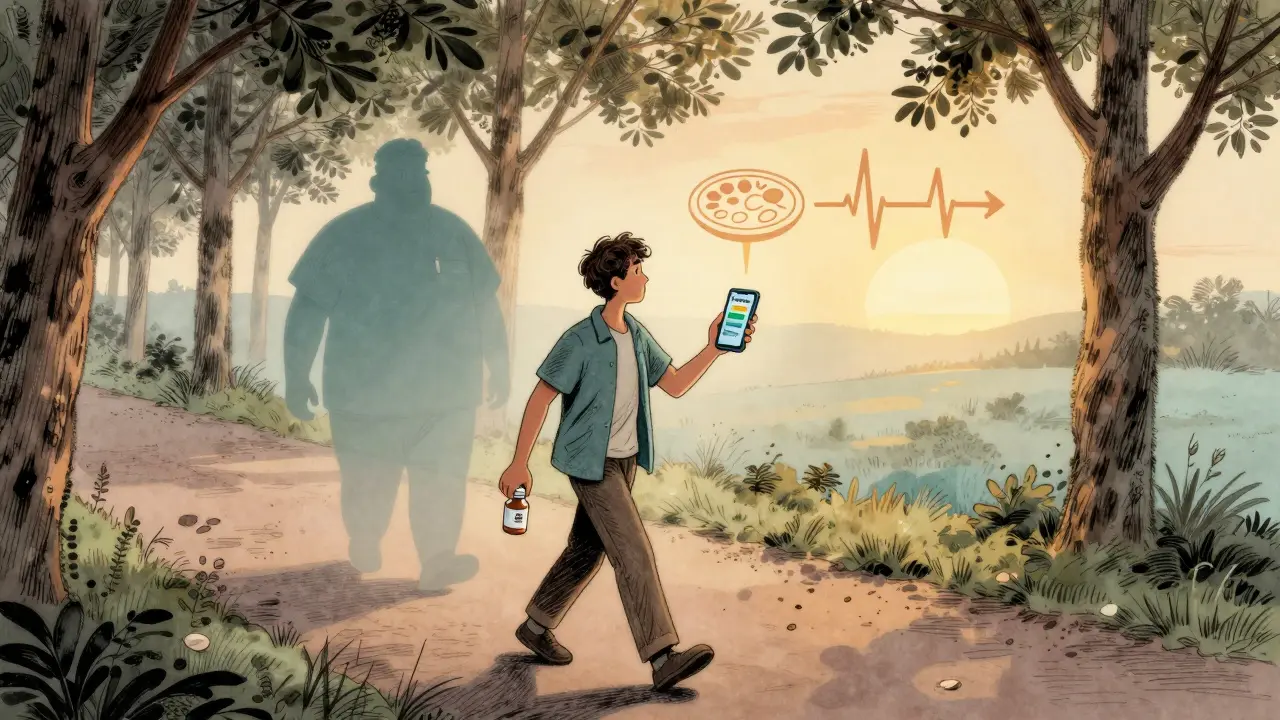
The field is evolving. Newer medications like cariprazine (approved in 2015) and lurasidone (2010) were designed to be gentler on metabolism. Even better, researchers are now testing drugs originally made for diabetes and obesity on psychiatric patients.GLP-1 receptor agonists-like semaglutide (Wegovy) and liraglutide (Saxenda)-are showing promise. In early trials, patients lost 5-8% of their body weight. These drugs reduce appetite and slow stomach emptying. They’re not yet approved for this use in Australia, but clinical trials are underway.
Digital tools are helping too. The FDA-cleared Moodivator app, launched in 2021, combines food logging, mood tracking, and personalized coaching. A 2022 study found users lost 3.2% more weight than those using standard methods.
What to Do Next
If you’re on a psychotropic medication and noticing weight gain, here’s your action plan:- Track your weight and waist size every month. Write it down.
- Ask your psychiatrist: "Is there a lower-risk alternative for my condition?" Don’t assume you’re stuck with what you’re on.
- Request a metabolic check-up: blood sugar, cholesterol, triglycerides, and blood pressure.
- Ask for a referral to a dietitian who understands psychiatric medications.
- Consider metformin-ask your doctor if it’s appropriate for you.
- Start moving, even a little. Walk after meals. Stretch daily. Build consistency, not intensity.
Weight gain from psychiatric meds is common, but it’s not a life sentence. With the right support and strategy, you can protect your mental health and your physical health at the same time.
Can I stop my psychotropic medication to lose weight?
No. Stopping your medication without medical supervision can lead to relapse, hospitalization, or worsening symptoms. Weight gain is a side effect, not a reason to quit treatment. Instead, talk to your psychiatrist about switching to a lower-risk medication or adding a weight-management strategy like metformin.
Does everyone gain weight on antipsychotics?
No. While 30-50% of people on high-risk medications like olanzapine gain significant weight, others gain little or nothing. Genetics play a role-some people have variations in the MC4R gene that make them more or less susceptible. Lifestyle, activity level, and diet also influence outcomes. It’s not guaranteed, but it’s common enough to plan for.
How long does it take to lose weight gained from psychotropic drugs?
It takes longer than usual. Because these drugs slow metabolism and increase fat storage, losing weight requires more consistent effort. With a combination of metformin, diet changes, and exercise, most people see noticeable loss after 3-6 months. A 5-10% weight loss over 12 months is a realistic and healthy goal.
Is metformin safe to take with antipsychotics?
Yes. Metformin is widely used off-label for antipsychotic-induced weight gain and has a strong safety record. Common side effects include mild stomach upset, which usually improves over time. It doesn’t cause low blood sugar in people without diabetes. Always start under medical supervision and get kidney function checked before beginning.
Why don’t doctors always talk about weight gain upfront?
Many clinicians focus first on stabilizing psychiatric symptoms, and weight gain is seen as a secondary issue. But guidelines from the American Psychiatric Association now recommend discussing weight risks at the start of treatment. If your doctor hasn’t brought it up, ask. You have the right to know all potential side effects and how to manage them.
Nelly Oruko
January 14, 2026 AT 06:53This is one of those posts that makes you realize how broken our system is. We prioritize symptom control over whole-person care. Weight gain isn’t just a side effect-it’s a betrayal of trust when no one warns you. I’ve been on olanzapine for 4 years. Lost 12kg after switching to lurasidone. But it took me 18 months to find a psychiatrist who even listened.
Why is metabolic health still an afterthought in psychiatry? We treat the mind like it exists in a vacuum. It doesn’t. The body screams. And no one hears it until the diabetes diagnosis hits.
vishnu priyanka
January 14, 2026 AT 06:54Bro, in India we call this ‘medication belly’ 😅. My cousin on risperidone gained 20kg in 6 months. His mom started giving him bitter gourd juice and chai with ginger. He lost 8kg without changing meds. Not science, but soul. Sometimes the old ways still work when the system forgets to care.
Angel Tiestos lopez
January 15, 2026 AT 13:50Metformin is basically the unsung hero of psych med side effects 🙌. I started it after gaining 15lbs on quetiapine. First month: bloated. Second month: cravings vanished. Third month: jeans fit again. It’s not magic-it’s biology. But why do docs act like it’s some shady supplement? It’s FDA-approved for diabetes, and we’re using it like it’s witchcraft.
Also, lurasidone is a GODSEND. I switched from olanzapine and felt like I got my body back. Like, I could walk up stairs without panting. 🥹
Alan Lin
January 16, 2026 AT 09:52Let’s be brutally honest: if you’re gaining weight on antipsychotics, it’s not ‘just’ a side effect-it’s a failure of clinical oversight. You are not weak. You are not lazy. You are being poisoned by outdated prescribing habits.
Doctors who don’t discuss metabolic risk at initiation are negligent. Period. The APA guidelines have existed for a decade. If your provider hasn’t mentioned metformin, weight monitoring, or alternative meds within the first 6 weeks-you need a new doctor. This isn’t ‘patient education.’ This is medical malpractice in slow motion.
Pankaj Singh
January 17, 2026 AT 06:22Everyone’s acting like this is news. It’s 2024. We’ve known olanzapine turns people into sacks of flour since 2003. People still get prescribed it like it’s Advil. And now they cry about ‘weight gain’ like it’s a surprise? You don’t get to be shocked when you swallow a metabolic bomb and then blame your willpower.
Also, metformin? Of course it works. It’s a glucose regulator. Duh. Stop treating biology like it’s a moral failing.
Robin Williams
January 19, 2026 AT 00:28Y’all, I was on mirtazapine for 2 years. Gained 30lbs. Felt like a balloon with anxiety. Then I started walking 20 mins after dinner-no diet, no pills. Just movement. And I added protein to every meal. No magic. Just consistency.
It’s not about perfection. It’s about showing up for yourself when your brain is telling you to quit. You’re not broken. You’re just medicated. And you deserve better than ‘just accept it.’
Go for a walk. Right now. I’ll wait. 💪
Kimberly Mitchell
January 20, 2026 AT 14:38While I appreciate the data-driven approach, I must emphasize the ethical imperative of pharmaceutical accountability. The normalization of metabolic syndrome as an acceptable trade-off for psychiatric stabilization constitutes a systemic violation of the Hippocratic Oath. Furthermore, the proliferation of off-label metformin usage without standardized protocols introduces significant pharmacovigilance concerns. We must institutionalize metabolic monitoring as a mandatory component of psychopharmacological treatment algorithms-not an afterthought.
Vinaypriy Wane
January 21, 2026 AT 01:17I’ve been on lithium for 7 years. Gained 18kg. My knees hurt. I stopped going out. Then I found a dietitian who specialized in psych meds. She didn’t tell me to ‘eat less.’ She told me to eat differently. More fiber. Less sugar. More water. And I started taking metformin under supervision.
It’s been 14 months. I’ve lost 11kg. My bloodwork is normal. I’m not ‘cured.’ But I’m alive. And I’m not alone. If you’re reading this-you’re not alone either. You deserve to feel safe in your own skin.
Ask for help. Please.
Diana Campos Ortiz
January 22, 2026 AT 14:41My therapist said: ‘Your body is holding onto weight because it’s scared.’ I didn’t get it until I stopped fighting it.
Instead of ‘losing weight,’ I started ‘caring for my body.’ I made tea in the morning. Walked to the corner store. Slept when tired. Didn’t weigh myself for 3 months.
I lost 6lbs. Not because I tried. But because I stopped punishing myself.
Medication saved my life. I’m not gonna hate my body for helping me survive.
John Tran
January 24, 2026 AT 02:44Okay, so let me get this straight-we’re supposed to swap out life-saving meds for ‘lower-risk’ ones that might not even work as well, just because Big Pharma wants us to be skinny? And then we’re supposed to take a diabetes drug that makes your stomach feel like it’s being eaten by wasps, just so we can fit into jeans again?
And don’t even get me started on this ‘lurasidone is magic’ nonsense. Have you read the side effect profile? Dizziness, akathisia, nausea-oh, and it’s expensive as hell. So now we’re trading weight gain for financial ruin and restless legs?
This whole post feels like a wellness influencer’s dream. But real life isn’t a Pinterest board. You can’t ‘optimize’ your mental illness. You survive it. And sometimes, surviving means carrying extra weight. And that’s okay. I’m not a metric. I’m a human.
mike swinchoski
January 24, 2026 AT 13:22People who say ‘just switch meds’ don’t know what they’re talking about. I tried switching from olanzapine to aripiprazole. Had a psychotic break in 3 weeks. Now I’m back on the ‘fat-making’ drug. And I’m not sorry. My mind is stable. My body? It’s a sacrifice I made for sanity. You think I want this? No. But I’d rather be heavy and alive than thin and in a hospital.
Stop shaming people. This isn’t a diet blog. It’s survival.
Gregory Parschauer
January 25, 2026 AT 13:18Let’s be clear: the entire psychiatric establishment is complicit in this slow-motion genocide. We are medicating people into metabolic collapse while patting ourselves on the back for ‘stabilizing’ them. And then we blame patients for not ‘being disciplined.’
GLP-1 agonists? That’s not progress-that’s pharmaceutical capitalism at its finest. We’re turning people into walking insulin pumps while ignoring the root cause: a system that values productivity over humanity.
And don’t even get me started on that ‘Moodivator’ app. Another tech bro monetizing trauma. You think a smartphone app can fix what institutional neglect created? Wake up.
Trevor Whipple
January 26, 2026 AT 12:26Metformin is literally the only reason I’m still here. I was on clozapine. Gained 40lbs. Got prediabetic. My doc laughed when I asked about metformin. Said ‘you’re not diabetic.’ I said ‘I will be.’ He gave me a script the next week.
Now I’m down 25lbs. Not because I’m strong. Because I was lucky enough to find someone who listened.
So if you’re reading this and your doctor won’t help you? Keep asking. Keep pushing. You’re not being dramatic. You’re being smart.