
How to Communicate Generic Substitution to Pediatric and Senior Patients
 Dec, 23 2025
When a pharmacist swaps a brand-name pill for a generic version, it’s not just a change in packaging. For kids and older adults, this swap can mean the difference between taking medicine regularly and stopping it altogether. The FDA says generics are bioequivalent to brand-name drugs - meaning they work the same way in the body. But that doesn’t mean they feel the same. And for vulnerable patients, how you explain this change matters more than you think.
Why Generic Substitution Isn’t Just a Cost Swap
Generic drugs save the U.S. healthcare system over $370 billion a year. That’s huge. But behind that number are real people - a toddler who refuses to swallow a bitter liquid, or an 80-year-old who stops taking her blood pressure pill because it looks different this month. The truth is, generics aren’t always identical. They have the same active ingredient, but fillers, dyes, and taste agents can vary. For a child with sensory sensitivities, that means a medication they once tolerated becomes impossible to take. For seniors on multiple drugs, a change in shape or color can trigger confusion, fear, or even a mistaken belief that the new pill is weaker.What’s Different for Pediatric Patients
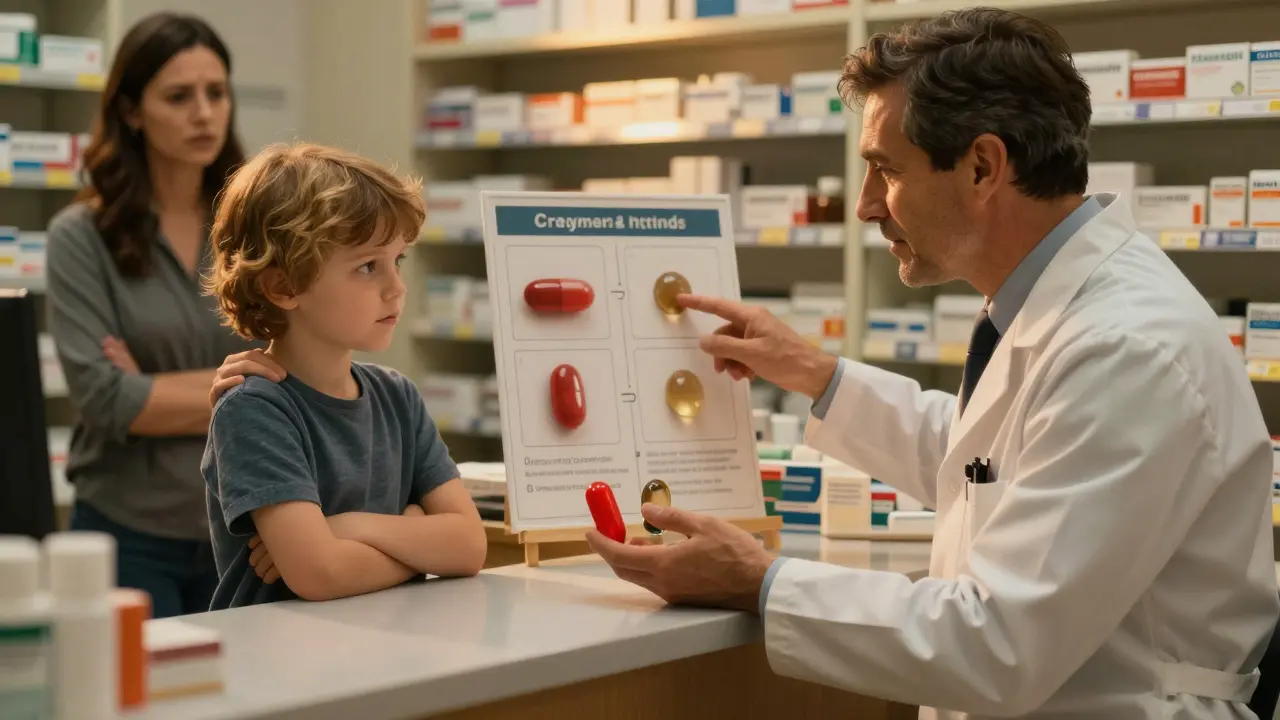
Pediatric formulations are designed for tiny mouths and developing bodies. Brand-name versions often come as sweetened suspensions, chewable tablets, or easy-to-swallow capsules. Generics? Many don’t. According to the FDA, only 32% of generic pediatric medications come in child-friendly forms, compared to 68% of brand-name versions. That gap isn’t just inconvenient - it’s dangerous. Parents report that their kids refuse generics because of taste. One mother on Reddit said her 2-year-old threw up every time he took the generic amoxicillin, but swallowed the brand-name version without issue. He wasn’t allergic. He just hated the bitterness. That’s not a parenting problem - it’s a formulation problem. Doctors and pharmacists need to ask: Is this child’s medication available in a form they can actually take? If the generic doesn’t come in a liquid or chewable version, and the child relies on it, switching could mean missed doses, worsening symptoms, or hospital visits. The American Academy of Pediatrics says providers should discuss whether the patient is a suitable candidate for substitution - not assume it’s safe just because the active ingredient matches.What’s Different for Senior Patients
Seniors take an average of 4.8 prescription drugs. Many have memory issues, vision loss, or trouble reading small print. When their blood pressure pill changes shape, color, or size three times in six months, they don’t see a generic - they see a new drug. A 78-year-old man in an AARP forum said he stopped taking his pill because he thought it was a different medication. His doctor had to explain each change individually. The nocebo effect is real here. If a senior is told, “This is the same medicine, just cheaper,” they may start noticing side effects that weren’t there before - headaches, dizziness, nausea - even if the drug is chemically identical. A 2021 study found 58% of seniors reported new side effects after switching to generics, compared to 42% of younger adults. That’s not the drug’s fault. It’s the message. Seniors also need consistency. Switching between different generic brands over time creates chaos. One month, the pill is blue and oval. The next, it’s white and round. The next, it’s green and capsule-shaped. No wonder patients get confused. The American Geriatrics Society recommends using large-print labels, involving caregivers, and never changing the pill without warning.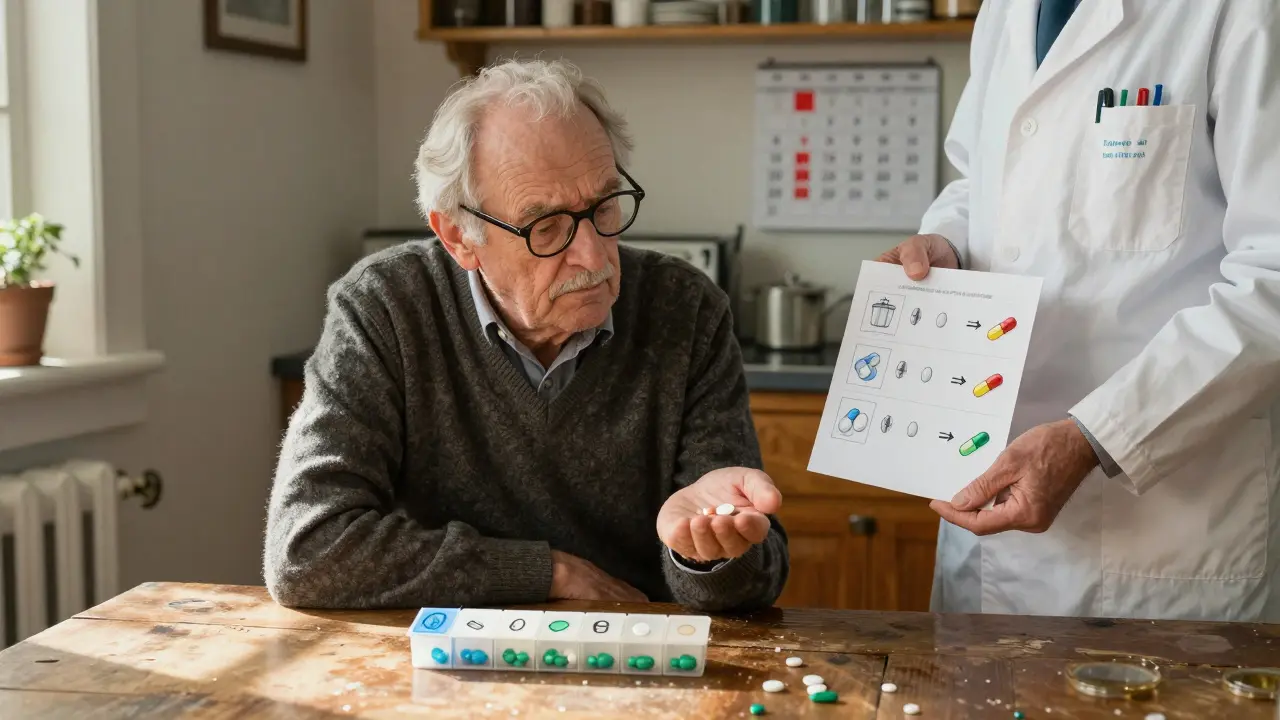
How to Talk About It - The Right Way
Saying “This is the same thing” is not enough. You’re not just giving information - you’re managing expectations. Here’s how to do it right:- Start with empathy: “I know it’s strange seeing a different-looking pill. Let me explain why it’s safe.”
- Use plain language: Avoid words like “bioequivalent.” Say: “This pill has the same active ingredient as your old one, and it works the same way in your body.”
- Explain the difference: “The color and shape changed because it’s made by a different company. But the medicine inside is the same.”
- Use the teach-back method: Ask the patient or caregiver to repeat back what they understood. “Can you tell me how you’ll know this pill is safe to take?”
- Offer visuals: Show a side-by-side photo of the old and new pill. For seniors, use large-print cards with images and simple labels.
- Address cost concerns: For seniors, acknowledge savings: “This saves you $25 a month. But if you notice anything unusual, let us know right away.”
What to Avoid
Don’t assume the patient understands. Don’t rush. Don’t say, “It’s just a generic.” That phrase carries baggage. Many people equate “generic” with “low quality.” Avoid automatic substitution without consent in high-risk cases. For drugs with a narrow therapeutic index - like seizure medications, blood thinners, or thyroid pills - even small changes in absorption can cause serious harm. A 2017 Danish study found patients on generic epilepsy drugs had seizure relapses after switching, even when the generic met FDA standards. Don’t wait for the patient to notice the change. Proactively explain it before they pick up the prescription. A pilot program showed this reduced complaints by 47%.
What’s Changing in 2025
The FDA launched its Generic Drug Communications Initiative in 2023, requiring manufacturers to include clear notes about formulation differences in patient materials. In 2024, the American Society of Health-System Pharmacists updated its guidelines to require population-specific counseling for seniors and children. Twenty-eight states are now considering laws to block automatic generic substitution for high-risk drugs in these groups. That’s progress. But until every pharmacy has a standardized script for these conversations, patients will keep falling through the cracks.Real-World Impact
A 2018 study found that when pharmacists simply said, “This is the same,” 37% of patients stopped taking their meds. But when they used teach-back and visual aids, medication errors dropped by 29%. Adherence improved. Hospital visits went down. Costs fell - not because of the generic, but because of the conversation. For a child with asthma, a well-explained switch means fewer emergency room trips. For a senior with heart failure, it means staying out of the hospital. It’s not about saving money. It’s about saving trust.Final Thought
Generics are safe. But safety isn’t just about chemistry. It’s about clarity. It’s about listening. It’s about recognizing that a pill isn’t just a chemical - it’s part of someone’s daily life, their routine, their peace of mind. If you’re a pharmacist, doctor, or caregiver: don’t just fill the prescription. Explain it. Ask questions. Watch for hesitation. Offer options. Because sometimes, the most powerful medicine isn’t in the bottle - it’s in the words you use to hand it over.Are generic drugs really as effective as brand-name drugs for children?
Yes, generics have the same active ingredient and must meet FDA bioequivalence standards, meaning they work the same way in the body. But for children, the issue isn’t always the medicine - it’s the form. Many generics don’t come in liquid, chewable, or flavored versions that kids can take easily. If a child refuses the generic because of taste or texture, it’s not because the drug doesn’t work - it’s because they can’t take it. Always check if a child-friendly version exists before switching.
Why do seniors stop taking their generic medications?
Seniors often stop because the pill looks different - color, shape, size - and they think it’s a new drug. Some experience side effects they didn’t have before, not because the drug changed, but because they expected it to. This is called the nocebo effect. Poor communication, lack of warning, and inconsistent packaging make it worse. Seniors on multiple medications may also confuse pills if they change frequently. Proactive counseling and consistent labeling help prevent this.
Can pharmacists switch a child’s medication without telling the parent?
In most states, pharmacists can legally substitute generics without parental consent for small-molecule drugs. But ethically, they shouldn’t - especially for children. The American Academy of Pediatrics recommends discussing substitution with caregivers first. If the child’s current medication is a liquid or chewable form, and the generic isn’t, switching could lead to missed doses. Always ask: Is this switch safe for this child’s age and ability to take the medicine?
What should I do if my senior loved one refuses a generic pill?
Don’t force it. First, check if the pill changed in appearance or if they’ve had multiple switches. Ask them what concerns them - is it the color? The size? The taste? Then, contact the prescribing doctor or pharmacist. Many times, the same generic can be ordered in a different form, or the brand-name version can be kept if it’s medically necessary. Some insurers allow exceptions for patients with documented issues. Never assume refusal means noncompliance - it often means confusion or fear.
Are there any drugs that shouldn’t be switched to generics for seniors or kids?
Yes. Drugs with a narrow therapeutic index - where small changes in blood levels can cause serious problems - should be handled carefully. Examples include seizure medications (like phenytoin), blood thinners (warfarin), thyroid meds (levothyroxine), and some heart drugs. Even if generics meet FDA standards, some patients experience relapses or side effects after switching. Many states are now considering laws to restrict automatic substitution for these drugs in children and seniors. Always ask your doctor if the medication falls into this category.
How can I help my child take a generic medicine they dislike?
Try mixing the liquid with a small amount of applesauce, yogurt, or juice (if the drug allows it). Some pharmacies offer flavoring services for generics. If taste is the issue, ask your doctor if a different generic manufacturer makes a version with a better flavor - not all generics are the same. If nothing works, ask if the brand-name version can be kept on file with your insurance. Many insurers will approve it for children with documented refusal or intolerance.
Is it safe to switch back to the brand-name drug if the generic causes problems?
Yes - and you should. If your child or senior loved one has trouble taking the generic, experiences new side effects, or stops taking the medication, talk to their doctor. The goal isn’t to save money at the cost of safety. Many insurers will cover the brand-name version if there’s documented medical need. Don’t wait for a crisis. If the generic isn’t working for them, it’s not working - no matter what the label says.
Wilton Holliday
December 24, 2025 AT 17:44Just had to switch my niece's amoxicillin to generic last week. She’s 3 and used to scarf it down like candy. Now? She screams, spits, and hides under the table. We didn’t even get a heads-up from the pharmacy. Took us three days to figure out it was the taste. I called the doc, they got us the brand-name version on exception. Seriously, if you’re gonna swap meds for kids, at least warn the parents. 😔
Harsh Khandelwal
December 25, 2025 AT 00:34lol so now the FDA’s gonna babysit every pill? 🤡 Big Pharma’s been lying to us for decades, now they wanna control generics too? ‘Oh no, the pill is a different shade!’ Yeah, and your bank account’s gonna turn green when you pay $200 for a bottle of insulin. Let people figure it out. If grandma can’t tell her pills apart, maybe she shouldn’t be taking 12 of them. #FreeMarketMedicine
Andy Grace
December 25, 2025 AT 07:28I work in a rural pharmacy. We had an 82-year-old woman come in crying because her blood pressure pill went from blue oval to white circle. She thought she was being poisoned. We printed out side-by-side photos, sat with her for 15 minutes, and had her son call the doctor. She’s been fine since. It’s not about the drug. It’s about dignity. A little patience goes further than any script.
Abby Polhill
December 26, 2025 AT 06:42As someone who’s been in the med admin game for 12 years, I’ve seen the ‘same active ingredient’ myth break down more times than I can count. The fillers? Totally different. The dissolution profiles? Sometimes wildly off. And for seniors on polypharmacy? It’s a minefield. We’re not talking about aspirin here-we’re talking about warfarin, levothyroxine, phenytoin. You don’t just swap those like coffee creamers. The system’s broken. We need mandatory counseling. Period.
Ajay Sangani
December 26, 2025 AT 12:50you know… i think we forget that medicine isnt just chemestry… its ritual. for a senior, taking a pill is part of their day, their rhythm. change the shape, the color, the taste… its like waking up in a house you dont recognize. its not fear of the drug… its fear of losing control. maybe the real question is… why do we treat people like machines? we fix the pill… but we dont fix the humanity around it.
Pankaj Chaudhary IPS
December 28, 2025 AT 00:31As a former healthcare officer in India, I’ve seen this exact issue in slums and villages. Patients stop taking medicine because the tablet changed color. No one explained it. No one showed them. No one cared. This isn’t a US problem-it’s a global failure of communication. We need community health workers to walk families through every switch. Simple. Human. Effective. Stop outsourcing empathy to algorithms.
Aurora Daisy
December 29, 2025 AT 18:28Oh look, the FDA finally realized that people are sentient beings. Took them 70 years. Meanwhile, in the UK, we’ve had pharmacist-led counseling for decades. But sure, let’s make this a ‘pilot program’ in the US. Because nothing says progress like reinventing the wheel while the patients bleed out.
Paula Villete
December 30, 2025 AT 15:07my 78-year-old mom stopped her blood thinner because the generic was ‘too pink’. she said it looked ‘sickly’. i laughed… then cried. she’s right. it looked wrong. we called the pharmacy. they had the same generic in a different color. we switched back. no one asked her how she felt. they just assumed. this isn’t science. it’s negligence wrapped in a cost-saving bow. 🤦♀️
Georgia Brach
December 31, 2025 AT 11:03Let’s be honest: the entire generic substitution system is a regulatory farce. Bioequivalence doesn’t mean clinical equivalence. The FDA’s standards are laughably low. And now we’re supposed to trust pharmacists to explain it? Most can’t even pronounce ‘therapeutic index’. This isn’t about communication-it’s about systemic failure masked as consumer empowerment. The real solution? Stop forcing generics on vulnerable populations entirely. Let the market handle it. Or better yet, let patients pay more and get consistency.