
How Generics Are Shaping Global Healthcare Spending in 2026
 Jan, 1 2026
By 2025, the world will spend over $1.6 trillion on medicines. That’s more than the entire GDP of Canada. And yet, billions of people still can’t afford the pills they need. The reason? A broken system where brand-name drugs drive costs sky-high, and generics - the quiet heroes - are the only thing holding it together.
Generics Are the Backbone of Affordable Care
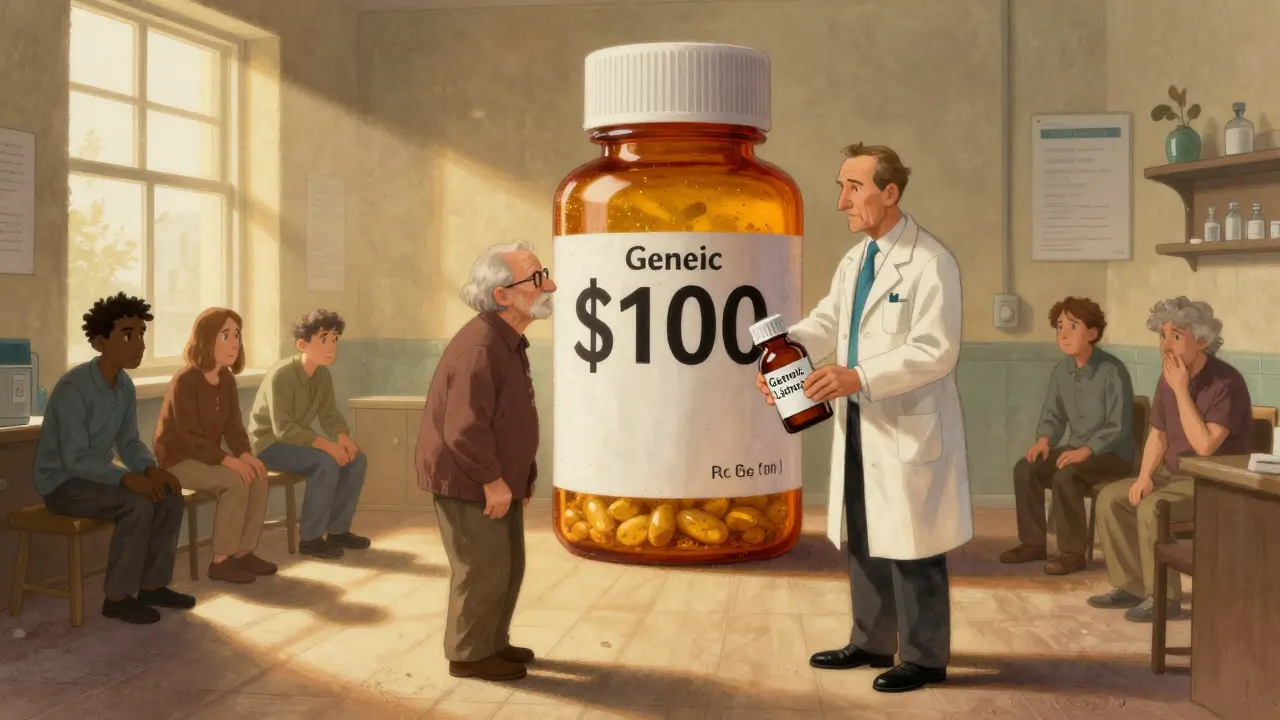
When you walk into a pharmacy in Germany, Japan, or even Brazil, more than 80% of the prescriptions you see are for generic drugs. These aren’t cheap knockoffs. They’re exact copies of brand-name medicines, approved by regulators, tested for safety, and sold at a fraction of the price. In the U.S., a 30-day supply of generic lisinopril for high blood pressure costs $4. The brand version? Over $100.
Generics don’t just save money - they save lives. In low-income countries where out-of-pocket spending makes up over 75% of healthcare costs, generics are the difference between treating diabetes and letting it kill someone. In Nigeria, Afghanistan, and Turkmenistan, families pay for medicine themselves. No insurance. No safety net. Without generics, those countries would be stuck with medicines no one can afford.
Why Drug Prices Keep Rising - Even When Generics Are Around
It’s not that generics aren’t working. It’s that the system is rigged against them. The biggest cost drivers today aren’t old drugs. They’re new ones - especially in oncology, immunology, and obesity. Drugs like semaglutide (Wegovy) or pembrolizumab (Keytruda) cost tens of thousands of dollars a year. And there are no generics yet.
Patents lock these drugs in. Companies spend billions developing them, then charge what the market will bear. The U.S. market alone is projected to spend $1.7 trillion on prescription drugs by 2033. That’s more than double what it spent in 2025. And while generics held down costs for decades, they can’t compete with these new, complex biologics. Biosimilars - the cheaper versions of biologic drugs - are starting to appear, but adoption is slow. Doctors don’t trust them. Insurers don’t push them. Patients don’t know they exist.

The U.S. Is the Exception - Not the Rule
The United States spends more on healthcare than any other country. In 2025, it will spend $5.6 trillion - nearly 18% of its GDP. Compare that to Germany (11.7%) or Japan (11.3%). And the biggest reason? Drug prices.
In most high-income countries, governments negotiate drug prices. In the U.S., pharmacies and insurers do. And they lose. The result? Americans pay 2 to 3 times more for the same drugs than people in Canada or the UK. Even when generics are available, they’re often priced higher than they should be. A 2024 PwC report found U.S. drug spending jumped $50 billion in just one year. Much of that growth came from specialty drugs with no generic alternatives.
Meanwhile, out-of-pocket costs for patients are climbing. By 2033, the average American will pay $231 per year just for prescriptions - up from $177 in 2025. That’s a 30% increase. Generics could stop this. But only if they’re accessible, affordable, and promoted.
Emerging Markets Are Changing the Game
China, India, and Brazil are no longer just consumers of generics. They’re making them. India alone supplies over 50% of the world’s generic drugs. Chinese manufacturers are now producing complex biosimilars at a fraction of Western prices.
But here’s the twist: as these countries get richer, they’re buying more brand-name drugs. In 2022, China’s medicine market grew faster than any other major economy. Why? Because people who couldn’t afford medicine before are now able to - and they want the latest treatments. This shift means generics are no longer just about survival. They’re becoming tools for cost control in systems that are finally expanding.
That’s a big deal. In the past, generics were the only option. Now, they’re the smart choice. Governments in these countries are starting to push generic substitution policies. Hospitals are switching formularies. Insurers are offering lower co-pays for generics. The economic logic is clear: spend less on drugs, spend more on care.
Where Generics Are Failing - And Why
Generics aren’t magic. They can’t fix everything.
In countries like Lebanon and Malawi, public healthcare spending dropped by over 40% after the pandemic. Hospitals ran out of medicine. People died because the system collapsed. Generics were still available - but there was no money to buy them. No supply chain. No trained staff. No refrigeration for insulin.
And in mental health, the problem is worse. Two-thirds of insurers expect demand for psychiatric services to spike over the next three years. But most antidepressants and antipsychotics are generic. So why are costs still rising? Because of poor access. In rural Africa or the American South, you can have the cheapest drug in the world - but if there’s no doctor to prescribe it, or no pharmacy to fill it, it doesn’t matter.
Generics need more than price. They need systems. Training. Distribution. Trust.
The Future: Generics as a Strategic Tool
By 2026, the global healthcare system will be under more pressure than ever. Medical costs are rising 10.4% on average worldwide. In the Middle East and Africa, they’re climbing over 12%. The workforce is shrinking. Aging populations are growing. And new drugs keep getting more expensive.
Generics are no longer just a cost-cutting trick. They’re a core part of health policy. Countries that use them well - like Thailand, Brazil, and South Africa - have lower mortality rates and better access. Countries that ignore them - like the U.S. - pay more, get less, and leave millions behind.
The next step? Policy change. Governments must enforce generic substitution rules. Insurers must reward doctors who prescribe them. Pharmacies must stock them. Patients must be educated. And manufacturers must stop hiding behind patents that outlast their usefulness.
Generics aren’t the future of healthcare. They’re the present. And if we don’t protect them, the next decade will be even more unaffordable than the last.
Angela Goree
January 3, 2026 AT 01:39Generics? Please. The U.S. doesn't need cheap pills-we need American-made innovation! Why are we letting India and China dictate our medicine prices? We built this system, and now we're letting foreign labs profit off our suffering?!
Lori Jackson
January 4, 2026 AT 00:11It’s not merely a matter of cost arbitrage-it’s a systemic failure of value-based pharmacoeconomics. The biologics ecosystem is fundamentally misaligned with the neoliberal market paradigm, and the absence of robust biosimilar uptake reflects a pathological aversion to risk mitigation among prescribers and payers alike.
Wren Hamley
January 5, 2026 AT 00:57Wait-so generics are the unsung heroes, but the real villain is the patent treadmill? That’s wild. I never thought about how a 20-year patent on a cancer drug locks out competition while people die waiting. It’s like the pharma industry turned medicine into a monopoly game, and we’re all stuck with the ‘Go to Jail’ card.
Sarah Little
January 5, 2026 AT 18:20Have you considered the role of pharmacy benefit managers in inflating generic prices? They’re the middlemen who squeeze manufacturers and then charge patients more-even for $4 lisinopril. It’s not the generics, it’s the middlemen.
innocent massawe
January 6, 2026 AT 02:10Here in Nigeria, we see generics every day-no fancy ads, no brand names. Just a little white pill that keeps my mum alive. I don’t care where it’s made. I just care that it works. 😊
veronica guillen giles
January 7, 2026 AT 06:27Oh wow, the U.S. spends $5.6 trillion on healthcare? And you’re surprised people can’t afford pills? Honey, we’ve been running a healthcare Ponzi scheme since the ‘80s. Generics aren’t the solution-they’re the Band-Aid on a hemorrhaging artery.
Ian Ring
January 8, 2026 AT 20:55Interesting analysis. I’ve seen firsthand how biosimilars are slowly gaining traction in the NHS-especially with younger GPs. But patient trust takes time. Education, not regulation, is the key. And yes-yes-generics are the present. Not the future. The future is already here.
erica yabut
January 9, 2026 AT 06:40Let’s be real-India’s generics are a joke. Half of them aren’t even bioequivalent. And you’re telling me we should trust a factory in Hyderabad more than Pfizer? Please. I’ve got a PhD in pharmacology, and I’ve seen the data.
Tru Vista
January 10, 2026 AT 20:57Generics don't fix supply chains. Duh.