
Healthcare Provider Reporting: What Doctors and Nurses Must Report and When
 Feb, 7 2026
When a doctor or nurse spots something wrong-like a child with unexplained bruises, an elderly patient with bedsores and no family nearby, or a colleague showing up to work drunk-they don’t just have a moral duty to act. In most places, they have a legal one. Mandatory reporting isn’t optional. It’s baked into the job. And getting it wrong can cost a license, a career, or even a life.
What Exactly Do Doctors and Nurses Have to Report?
There are three main categories of mandatory reporting that affect nearly every clinician in the U.S.: child abuse, elder and vulnerable adult abuse, and public health threats. Some states add more, like domestic violence or human trafficking. But these three are universal.
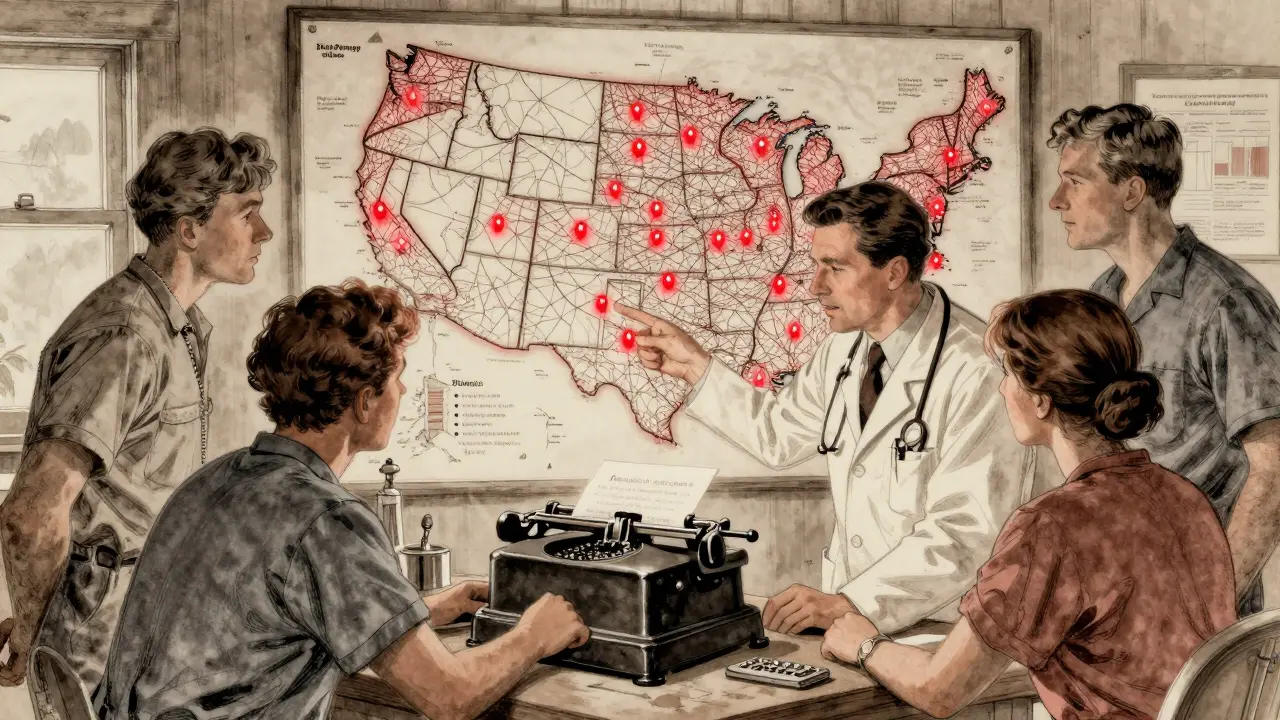
Child abuse reporting is required in all 50 states. You don’t need proof. You don’t need a confession. You just need reasonable suspicion. That could be a child who flinches when touched, a story that doesn’t add up, or injuries that don’t match the explanation. In 18 states, including California and Minnesota, you must report within 36 to 48 hours. In 12 states like Texas and Florida, the law says immediately-usually meaning within 24 hours. The clock starts ticking the moment you suspect it.
Elder abuse reporting is trickier. Only 14 states require all healthcare workers to report it. In 26 states, only staff at nursing homes or hospitals must report. In 10 states, there’s no legal requirement at all. But if you work in California, New York, or Minnesota, you’re legally bound to report signs of neglect, financial exploitation, or physical harm-no matter where the abuse happened. The details matter: you’ll need the victim’s location, the type of abuse, and your contact info. Missing one piece can delay intervention.
Public health reporting is more automated. The CDC tracks 57 notifiable diseases, from anthrax to Zika. For diseases like measles or syphilis, you have 24 to 72 hours. For anthrax or botulism? You have one hour. Most hospitals now use electronic systems that auto-fill reports. But if you’re in a small clinic or a telehealth setting, you still need to know the rules. A missed report can spark an outbreak.
When Reporting a Colleague Is Required
Reporting a coworker isn’t just about ethics-it’s often the law. In 42 states, healthcare institutions must report misconduct by licensed staff. In Minnesota, the Chief Nursing Executive has 30 days to report a nurse who’s impaired, falsifying records, or practicing unsafely. In Nebraska, it’s the same rule. But here’s the catch: in many places, individual nurses and doctors aren’t legally required to report their peers-only their supervisors are.
That creates a dangerous gray zone. A nurse who sees a colleague administering the wrong dose might stay quiet, thinking, “It’s not my job to report.” But if that colleague later harms a patient, the silent nurse could face liability. Some states, like Utah, offer legal protection: “You can’t be fired for reporting.” Others don’t. A 2021 study found 8% of nurses who reported unsafe practices were demoted, reassigned, or harassed-even when they were protected by law.
That’s why many hospitals now require mandatory training. Residency programs spend 8 to 12 hours on this topic. Nurses get annual refresher courses. But if you work in a small practice or move between states, you’re on your own. Knowing your state’s rules isn’t optional-it’s survival.
The HIPAA Paradox: Privacy vs. Public Safety
Every healthcare worker learns HIPAA: your patient’s information is private. No sharing. No exceptions. Except… there are exceptions. The law explicitly allows you to report abuse, neglect, and public health threats-even without patient consent. But many providers still panic. They worry about lawsuits. They fear losing trust.
A 2020 survey by the American Medical Association found 68% of doctors said mandatory reporting made patients less likely to disclose sensitive issues. One pediatrician told a Reddit forum: “I had a teen stop treatment for opioid use because they were scared I’d report them to child services.” That’s the cost of the system: people hide problems because they fear consequences.
But here’s the flip side: a 2019 JAMA study found states with mandatory reporting identified 37% more child abuse cases than states without. In Michigan, a nurse’s timely report stopped a cycle of abuse that had already killed two siblings. In Minnesota, a physician reported a nurse giving insulin at the wrong time-preventing a fatal error. The system works. But it’s messy. And it’s heavy on the people doing the reporting.
What Happens When You Get It Wrong?
There are two ways to fail: reporting too late, or not reporting at all. Both can lead to license suspension, fines, or even criminal charges. In 2023, a telehealth provider based in Oregon was suspended after failing to report child abuse in a case involving a patient in Nevada. Oregon law didn’t require it-but Nevada did. The provider didn’t know.
That’s the biggest problem: the rules change by state. A doctor working remotely for a clinic in California, Texas, and Florida has to juggle three different sets of rules. A 2022 survey by the American Telemedicine Association found 42% of telehealth providers were confused about which state’s laws applied. And with 22 million healthcare workers in the U.S., that’s a lot of confusion.
Malpractice claims are rising because of reporting failures. In 2021, 12% of claims against physicians involved alleged failure to report. One case: a doctor missed signs of elder abuse in a patient with dementia. The patient died. The family sued. The doctor lost their license.
How to Stay Compliant in a Patchwork System
You can’t memorize all 50 state laws. But you can build a system.
- Know your state’s list. Go to your state’s health department website. Most have a downloadable guide. California’s is 40 pages. Minnesota’s is 12. Print it. Keep it in your badge holder.
- Use institutional tools. Hospitals with good compliance programs have online portals, 24/7 hotlines, and automated alerts. Washington State offers a hotline: 1-800-252-0230. Only 14 states do. Ask your HR department if your facility has one.
- Document everything. Even if you’re not required to report, write down your concerns. Date it. Note who you told. This protects you if someone else ignores it.
- Train annually. If your hospital doesn’t offer mandatory reporting training, ask for it. The Accreditation Council for Graduate Medical Education says all residency programs should include it. You’re entitled.
- Know the gray areas. Is a broken rib from a fall abuse? Is a diabetic patient being neglected because they’re homeless? Reasonable suspicion isn’t black and white. When in doubt, report. You won’t be penalized for over-reporting.
What’s Changing in 2025?
The system is slowly getting smarter. By 2025, the Department of Health and Human Services plans to roll out a national electronic reporting system for public health data. That means fewer forms, faster alerts, and fewer missed cases.
AI tools are being tested, too. At Massachusetts General Hospital, a pilot program used AI to scan patient charts for signs of abuse. It cut reporting errors by 38%. That doesn’t replace judgment-but it helps. If your hospital uses an AI assistant, learn how it works.
States are also expanding what counts as reportable. Between 2019 and 2022, 18 states added human trafficking as a mandatory reportable condition. More will follow. And with telehealth growing 300% since 2020, federal pressure is building to create one set of rules across state lines. The Uniform Health Care Reporting Act, proposed in 2021, could be the first step.
But for now, it’s still a patchwork. And if you’re a doctor or nurse, you’re the one holding the pieces together.
Why This Matters More Than You Think
This isn’t about bureaucracy. It’s about survival. A child who’s reported early has a 70% better chance of being placed in safety. An elderly person whose abuse is caught early lives 2.5 years longer on average. A nurse who reports a colleague doesn’t just protect a patient-they protect the entire profession.
But it’s exhausting. The average report takes 2.7 hours to complete. Nurses report anxiety about legal consequences. Doctors say they dread the paperwork. And when you’re already short-staffed, overworked, and emotionally drained, reporting feels like another burden.
But here’s the truth: if you don’t do it, someone else will have to pay the price. A child. A patient. A family. The system isn’t perfect. But it’s the only one we have. And right now, it depends on you.
THANGAVEL PARASAKTHI
February 9, 2026 AT 01:30Man, this post hit different. I’m an RN in Bangalore, and we don’t have half these rules here. We see kids with bruises all the time-parents say they fell off a bike, but the pattern? Nah. We report anyway. No law says we have to, but if you don’t, you sleep with that kid’s face in your head forever.
Also, HIPAA? More like HIPAA-who-cares-when-kids-die. I’ve seen nurses get fired for reporting. Then the same hospital gets sued a year later. Irony’s a bitch.
Frank Baumann
February 9, 2026 AT 11:58LET ME TELL YOU SOMETHING-this whole system is a fucking circus. I work in ER in Texas. I had a 7-year-old come in with a spiral fracture. Dad said ‘he fell down the stairs.’ The kid didn’t cry. Didn’t flinch. Just stared at the ceiling like he’d seen this before. I reported. Got a call from admin 45 minutes later saying ‘don’t make waves, he’s a local football coach’s son.’
So I called CPS myself. Didn’t tell anyone. Now I’m on administrative probation. But that kid? He’s in foster care. And I don’t regret it. Not one damn bit. They can take my badge. I’ll still sleep at night.
Also-why is no one talking about how nurses get targeted when they report? You think the hospital cares about the kid? Nah. They care about the lawsuit. And the insurance premiums. And the goddamn PR team.
And don’t even get me started on telehealth. I had a telehealth doc in Florida miss a case because the kid was in Arizona. WHO IS EVEN RESPONSIBLE HERE?!
Scott Conner
February 9, 2026 AT 17:40so i’ve been a nurse for 12 years and i’ve reported 17 cases. 3 were false alarms. 14 saved lives. one kid i reported? turned out his mom was trafficking him to a ring in mexico. we caught it because he kept drawing the same house over and over. same windows. same door. no one else noticed. but i did.
the real issue? we’re not trained to spot patterns. we’re trained to do vitals and chart meds. the ‘reasonable suspicion’ thing? it’s a guess. and we get blamed if we’re wrong. but if we’re right? no medal. no bonus. just ‘good job.’
also-why is there no app for this? like a quick checklist? i’ve got 5 minutes between patients. i can’t read a 40-page pdf. someone build this. i’ll beta test it.
Susan Kwan
February 9, 2026 AT 23:32Ohhh so now we’re romanticizing mandatory reporting like it’s some noble crusade? Let me guess-you’re the kind of person who thinks ‘reporting’ is the moral high ground but never asks why the system is so broken?
Here’s the truth: hospitals don’t want you to report. They want you to *manage*. They train you to ‘observe’ and ‘document’ and ‘wait for HR.’ And when you finally report? They bury it. Or reassign you. Or ‘restructure your role.’
And the 8% of nurses who got punished for reporting? That’s the tip of the iceberg. The rest? They’re ghosted. Quietly. No press. No headlines. Just a resignation letter with ‘personal reasons’ and a LinkedIn post that says ‘excited for new opportunities.’
So no. I don’t want to hear about how ‘the system works.’ It works for the lawyers. Not for us.
Random Guy
February 10, 2026 AT 10:53so like… i work in a clinic and last week i saw a guy with 17 bruises on his back. he said he got into a fight. i was like ‘dude, you’re 68 and you got into a fight with a 20-year-old?’
so i reported. and then my boss said ‘you’re going to get us sued.’
so i reported again. and then they took my badge away for 3 days.
so i called the cops myself.
now i’m on unpaid leave.
but the guy? he’s in a shelter.
so yeah. i’m the problem. not the abuser. not the system. ME.
also i’m 23 and i have 3 cats. i’m not okay.
Simon Critchley
February 10, 2026 AT 10:55Let’s get technical. The CDC’s notifiable diseases list is a relic of 1980s epidemiology. We’re in 2025 and we’re still using manual triggers? No wonder 42% of telehealth providers are confused.
Here’s the real bottleneck: interoperability. No one’s talking about how EHRs don’t auto-flag abuse indicators because the ICD-10 codes are too vague. ‘S06.0X1A’ for concussion? Cool. But ‘S02.5XXA’ for femur fracture in a 3-year-old? That’s not flagged. Why? Because it’s not coded as ‘possible abuse.’
AI can fix this. But only if the data layers are cleaned. And that requires federal mandates. Which won’t happen until someone dies in a state that didn’t report. Which, spoiler alert? Already happened.
Also-emoticons? 😔
Joshua Smith
February 11, 2026 AT 08:34Just wanted to say thank you for writing this. I’ve been a new grad nurse for 8 months and I was terrified to report anything. Felt like I’d be the one in trouble.
But last week I saw a woman with burns on her arms that matched the shape of a curling iron. She said her cat knocked it over. I didn’t say anything. Just held her hand. Then I called the social worker on my break. She cried. Said she’d never told anyone.
Turns out, she’d been reporting for years. No one listened.
So I guess what I’m saying is: you’re not alone. And even if it feels small? It matters.
Patrick Jarillon
February 12, 2026 AT 11:37Okay, but what if this is all a government psyop? What if child abuse reports are just a way to remove kids from ‘unpatriotic’ homes? I’ve seen videos-CPS agents in black SUVs, no badges, no warrants. And why do they always target single moms? Why do the reports spike after elections?
And what about the 10 states with no reporting law? Are they the ones who see the truth? Maybe they’re the ones who know this is all a scam to fund bureaucrats.
Also, I heard the CDC is using these reports to build a national database for future vaccine mandates. That’s why they’re pushing AI. That’s why they want one federal law.
Wake up, people. This isn’t about safety. It’s about control.
Randy Harkins
February 13, 2026 AT 18:38This was so well written. I cried reading the part about the nurse who reported the insulin error. That’s my hero.
I work in a rural clinic. We don’t have AI. We don’t have hotlines. We have a laminated sheet from 2018 taped to the fridge.
But we report. Every time. Even if it takes 3 hours. Even if we’re exhausted. Even if we get yelled at.
Because one day, someone’s kid is going to be safe because we didn’t look away.
And if you’re reading this and you’re scared? You’re not weak. You’re human. But you’re also the only one who can do it.
❤️
Camille Hall
February 13, 2026 AT 22:27As a nurse educator, I teach this every semester. And I always start with: ‘You are not a cop. You are not a judge. You are not a detective.’
You’re a witness.
And witnesses don’t need proof. They just need to say what they saw.
I had a student last year who didn’t report because she thought she’d ‘ruin a family.’ I showed her a photo of the same child, two years later-after the report. He was smiling. In a classroom. With a backpack.
That’s the only thing that matters.
Don’t overthink it. Just report.
And if you’re afraid? Call the hotline. Ask for guidance. They’re there to help you-not punish you.
Ritteka Goyal
February 15, 2026 AT 02:30Bro this is so dumb. In India we have like 5000 cases a day of child abuse and no one reports because no one cares. But here you guys are like ‘oh we have laws’ like that fixes anything? You have more lawyers than nurses. And still kids die.
Also I saw a nurse in Delhi get fired for reporting a doctor who was stealing meds. Then the hospital gave the doctor a raise.
So what’s the point? You think reporting in the US is better? You think your system isn’t just another way to blame the nurse?
It’s all the same. Just different colors on the forms.
Also I use emojis sometimes 😅
Monica Warnick
February 16, 2026 AT 01:40I used to be the one who reported everything. Then I got labeled ‘difficult.’ Then I got moved to night shift. Then I got passed over for promotion. Then my manager said ‘maybe you’re seeing things.’
So now I don’t report.
Not because I don’t care. Because I care too much.
I used to think I was brave. Now I think I was naive.
And I’m not the only one.
There’s a whole generation of nurses who just… don’t say anything anymore.
And that’s the real tragedy.