
Generic Drug Prices Over Time: Year-by-Year Changes and What’s Really Happening
 Feb, 9 2026
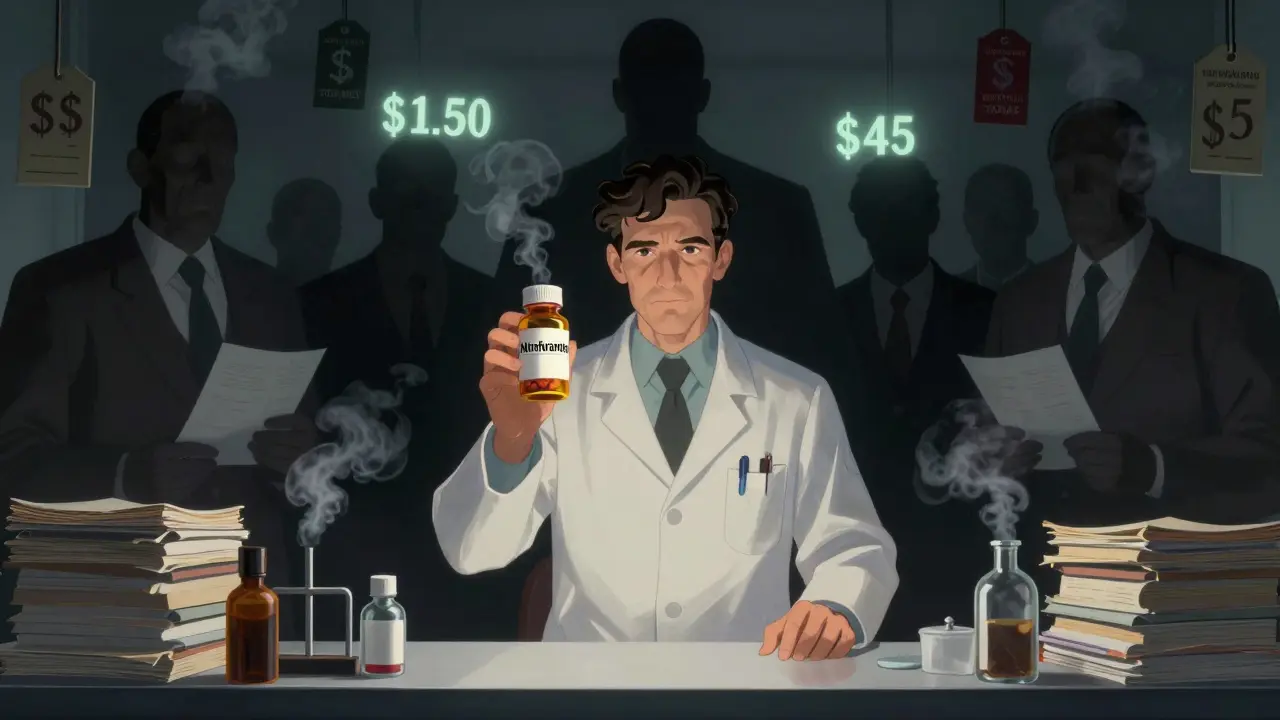
When you pick up a generic prescription, you expect to save money. That’s the whole point. But over the last decade, the savings haven’t been steady. Some years, your $4 pill becomes $45. Other years, the same drug drops to $1.50. It’s not random. It’s a system shaped by competition, supply chains, and corporate decisions you never see. If you’ve ever been shocked by a pharmacy bill for a generic drug, you’re not imagining it. Here’s what’s really going on with generic drug prices year by year.
How Generic Drugs Used to Work (And Why It Changed)
Back in the 2000s, when a brand-name drug lost its patent, the market opened up. Dozens of companies rushed to make the same pill. More companies meant more competition. More competition meant prices crashed. In 2005, a generic version of a popular blood pressure drug might have cost 80% less than the brand. By 2010, with five manufacturers making it, the price dropped another 50%. That’s how it was supposed to work: patent expires → generics flood in → prices fall fast.
But something shifted. By 2015, the number of companies making generics started shrinking. Instead of 150 manufacturers, there were 80. By 2023, the top five companies controlled over half the market. That’s not competition. That’s consolidation. And when there are only one or two companies left making a drug, they don’t have to compete on price anymore. They can raise it.
The Year-by-Year Roller Coaster
Looking at data from 2013 to 2023, generic drug prices didn’t move in a straight line. They jumped, dipped, and sometimes exploded.
- 2013-2014: Over 8% of generic prescriptions saw price hikes between 100% and 500%. One drug, nitrofurantoin, jumped 1,272% in five years. Why? Only three manufacturers made it. One left the market. The others raised prices.
- 2017: The FDA approved 843 new generic drugs - the most in history. Prices for those drugs dropped an average of 65% in the first year. Savings? $8.8 billion.
- 2020: After years of decline, prices started creeping up again. Why? Supply chain problems. A factory in India failed an FDA inspection. The drug vanished from shelves. When it came back, the price was 40% higher.
- 2022-2023: The average generic drug price increased by 5.2% in 2022, then 4.9% in 2023. Sounds small? Not when you’re talking about 90% of all prescriptions. But here’s the twist: 40% of generic drugs saw price increases over 30%. Meanwhile, others like levothyroxine dropped 87% in the same period.
- 2024: A new Medicaid rule removed a cap on rebates, and suddenly 20+ brand-name drugs dropped in price. But generics? Not so much. The market is too concentrated to respond quickly.
There’s no single trend. Some generics get cheaper every year. Others turn into financial traps.
Why Some Generics Are Still Cheap - And Others Aren’t
Not all generic drugs are created equal. It depends on how many companies can make them.
Here’s what the data shows:
| Number of Manufacturers | Average Price as % of Brand-Name Drug |
|---|---|
| 1 | 90% |
| 2 | 65% |
| 3 | 52% |
| 4 or more | 15% |
That’s the magic number: four or more manufacturers. Once you hit that, prices collapse. But 40% of approved generics have three or fewer makers. That’s a red flag. These are the drugs that get expensive. Drugs like lisinopril, metformin, and atorvastatin are still cheap because dozens of companies make them. But drugs for rare conditions, older heart medications, or niche antibiotics? Those are the ones that spike.
The Real Cost to Patients
It’s not just about what the pharmacy charges. It’s about what people can afford.
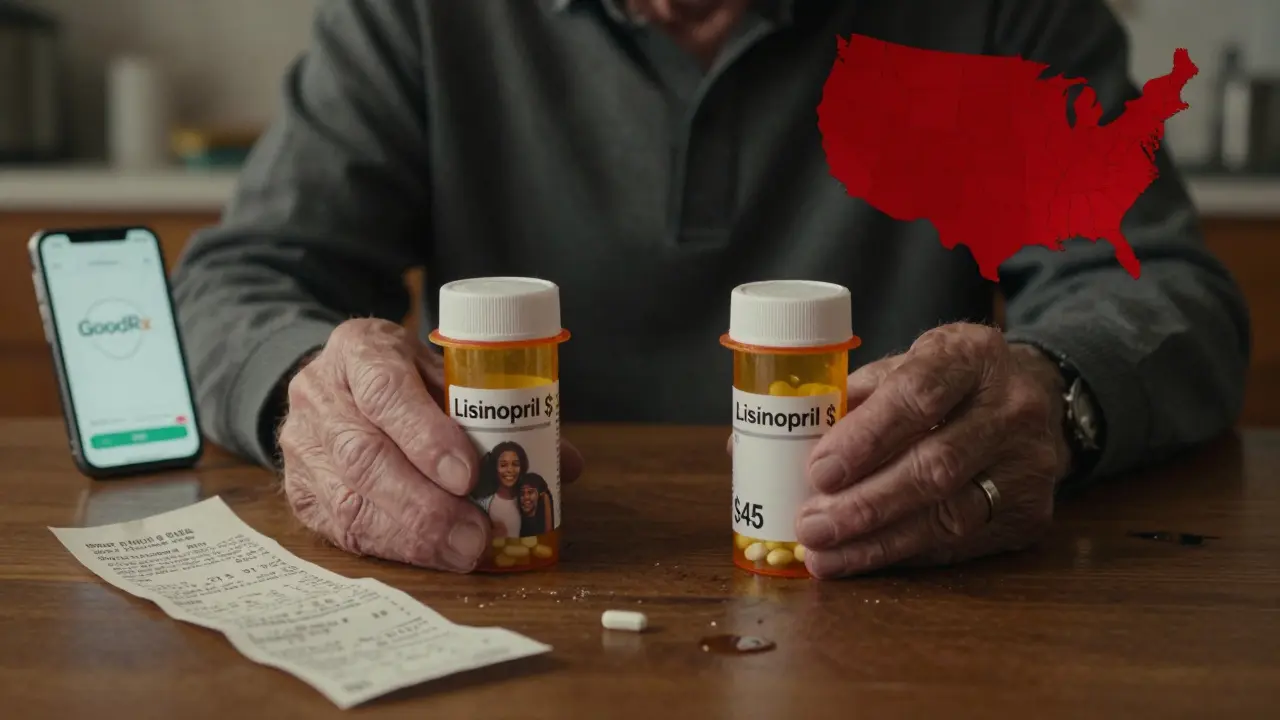
In 2024, 37% of Medicare beneficiaries taking generics said they skipped doses because of cost. One user on Reddit shared that their generic lisinopril went from $4 to $45 at Walmart over 18 months. GoodRx data confirms: that drug’s cash price jumped 247% between January 2022 and December 2023.
Independent pharmacies are getting crushed. Forty-two percent of them say they’ve lost money on at least 15% of their generic inventory because prices shifted too fast. One week, a drug is profitable. The next, it’s a loss leader. And they can’t just stop selling it - patients need it.
Meanwhile, people using GoodRx still save an average of $112.50 per prescription. That’s real relief. But it’s not a fix. It’s a workaround.
What’s Driving the Volatility?
It’s not just greed. It’s a broken system.
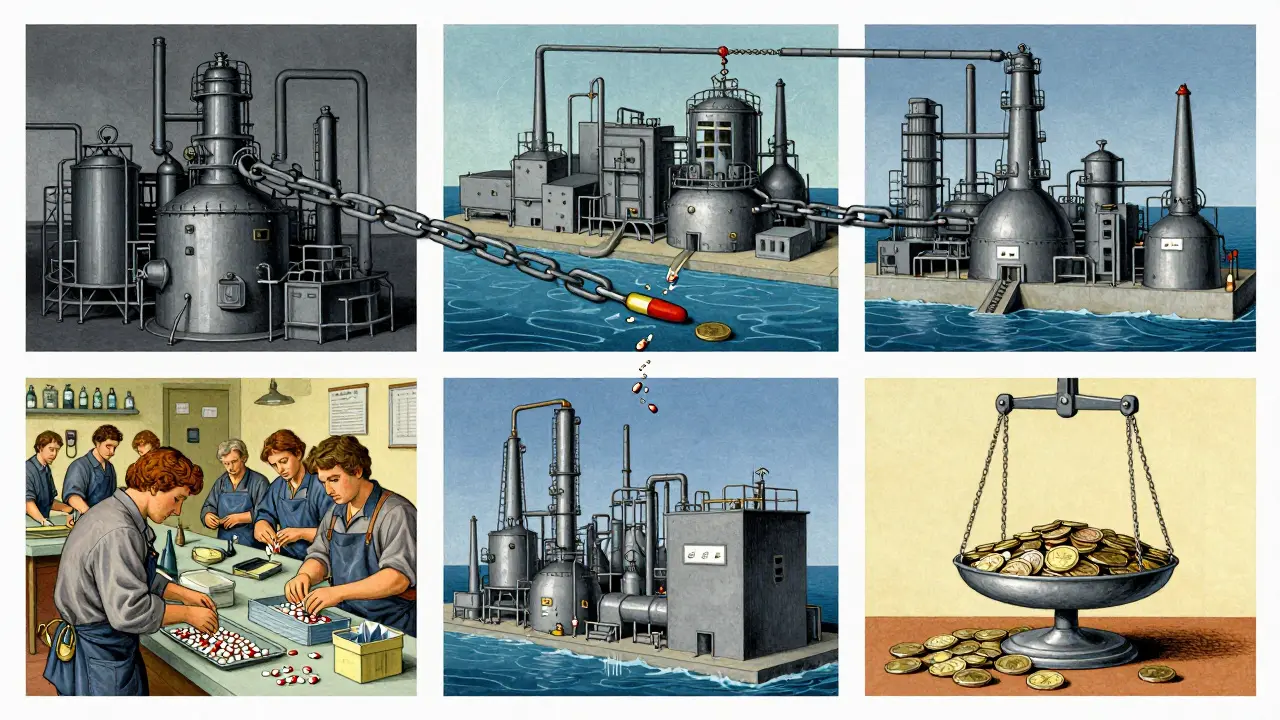
- Manufacturing bottlenecks: The FDA found quality issues in 23% of foreign factories in 2023. One shutdown means a drug disappears. Prices rise.
- Supply chain fragility: 35% of generic shortages were tied to price increases over 50%. When a drug is out of stock, the few remaining suppliers raise prices.
- Medicaid Best Price rule: Manufacturers must offer the same price to Medicaid as to anyone else. That means they can’t discount to compete. It locks in high prices.
- Consolidation: The top 10 generic makers now control 70% of the market. That’s not competition. That’s control.
And here’s the cruel irony: the drugs we rely on most - for blood pressure, diabetes, thyroid conditions - are the ones with the least competition. The more essential the drug, the more dangerous the market.
What’s Changing in 2025 and Beyond?
The government is starting to pay attention.
- The FDA now prioritizes faster approvals for drugs with three or fewer manufacturers. They’re aiming for 20% faster reviews.
- The FTC has 12 active investigations into unjustified generic price hikes.
- CMS expects Medicare generic spending to drop 8% by 2027 - not because prices fell, but because doctors are prescribing cheaper alternatives.
- Experts predict that by 2030, generic prices will grow at just 1.5% per year - far slower than brand drugs. But volatility? That won’t disappear.
Will this fix the problem? Maybe. But it won’t fix the underlying issue: when only a few companies control a life-saving drug, patients pay the price.
What You Can Do Right Now
You can’t control the market. But you can protect yourself.
- Use GoodRx or SingleCare. They often show prices 50% lower than pharmacy cash rates.
- Ask your pharmacist if there’s a different generic version. Sometimes the same drug is made by another company and costs less.
- Switch to a 90-day supply. Many pharmacies offer discounts for bulk purchases.
- Call around. Prices vary wildly between CVS, Walgreens, Walmart, and independent pharmacies.
- If your price jumps suddenly, talk to your doctor. Maybe there’s another drug with the same effect that’s cheaper.
Generic drugs still save the U.S. healthcare system over $250 billion a year. But those savings aren’t evenly distributed. Some people get deep discounts. Others get bills they can’t afford. The system works - but only if you know how to navigate it.
Why do generic drug prices go up even when there’s no shortage?
Even without shortages, prices can rise when there are only one or two manufacturers left. Without competition, they don’t need to lower prices. In fact, they often raise them slowly over time. This is especially common for older drugs that aren’t profitable enough to attract new makers.
Are generic drugs less effective than brand-name drugs?
No. The FDA requires generic drugs to have the same active ingredient, strength, dosage form, and route of administration as the brand-name version. They must also prove they work the same way in the body. The only differences are in inactive ingredients - like color or filler - which don’t affect how the drug works.
Why are some generic drugs more expensive in the U.S. than in other countries?
The U.S. doesn’t regulate drug prices like many European countries. In places like Canada or the UK, governments negotiate prices. In the U.S., prices are set by manufacturers and pharmacies with little oversight. Even though the pills are made in the same factories, U.S. prices are often 80% higher than in Europe.
Can I switch to a different generic brand if my price goes up?
Yes, if your doctor approves it. Many generic drugs have multiple manufacturers. The active ingredient is identical, but the pill might look different. Ask your pharmacist if there’s another version available at a lower price. You might be surprised how much it varies.
Is there a way to predict which generic drugs will have price spikes?
Yes. Look at how many manufacturers make the drug. If there are three or fewer, it’s risky. Also, check if the drug has been on the market for over 10 years - older drugs attract fewer makers. Tools like GoodRx and Drug Channels Institute track this data. If a drug has had multiple price hikes in the past, it’s likely to happen again.
Final Thought
Generic drugs are one of the biggest success stories in modern medicine. They make treatment possible for millions. But the system is fragile. When competition dies, prices rise. And when prices rise, people suffer. The solution isn’t to blame manufacturers. It’s to make sure enough companies can compete - so no one has to choose between their health and their rent.
Angie Datuin
February 11, 2026 AT 06:44I’ve been on metformin for years, and I’ve seen the price swing from $5 to $42 and back to $8 in 18 months. It’s insane how much it fluctuates. I don’t even know who to blame anymore. Just glad I have insurance, but I feel for people who don’t.
It’s not just about the drug - it’s about dignity. No one should have to choose between food and their meds.
Random Guy
February 12, 2026 AT 19:20so like… generic drugs are just the economy’s version of a scammy amazon product that’s $3 one week and $30 the next because ‘supply chain issues’? lol. we’re all just lab rats in a capitalist hamster wheel and the FDA is the guy holding the wheel.
also why is nitrofurantoin the villain of this whole story? like, did it betray us or something??
Tasha Lake
February 14, 2026 AT 02:46From a pharmacoeconomic standpoint, the concentration of manufacturing in 3–5 firms creates a near-monopolistic oligopoly, especially when entry barriers are high due to FDA compliance costs and API sourcing logistics. The price elasticity curve becomes inverted when supply is constrained - demand remains inelastic (life-saving), so marginal revenue increases with price hikes.
What’s fascinating is that 70% of these drugs are manufactured in India and China, where labor is cheap, but regulatory instability creates systemic fragility. It’s not greed - it’s structural vulnerability.
John McDonald
February 15, 2026 AT 23:35Man, I just read this whole thing and I’m exhausted. This isn’t just about money - it’s about trust. We’re supposed to believe generics are safe, affordable, reliable. But when your blood pressure med suddenly costs a mortgage payment, you start wondering if the whole system is rigged.
GoodRx helps, sure. But we need real policy change. Not just ‘here’s a coupon.’ We need more manufacturers. More transparency. More competition. Period.
Chelsea Cook
February 16, 2026 AT 17:36Oh wow. So the ‘cheaper’ option is now the financial trap? That’s some next-level irony. I love how the article says ‘use GoodRx’ like it’s a band-aid on a gunshot wound. Meanwhile, people are skipping doses because they can’t afford to be alive.
Also, why does every solution sound like ‘call your pharmacist’? Like, I’m supposed to become a pharmaceutical detective just to not die? That’s not healthcare. That’s a scavenger hunt.
Andy Cortez
February 17, 2026 AT 10:25so like… the u.s. is the only country where a pill that costs 50 cents to make is sold for $45? and the answer is ‘oh well, just switch brands’? bro. we’re literally letting people die because we’re too lazy to regulate prices.
also lol at ‘experts predict 1.5% growth by 2030’ - as if that’s a win. we’re talking about people’s LIVES here. not stock prices.
Jacob den Hollander
February 19, 2026 AT 09:58My dad’s on lisinopril - used to be $4. Now it’s $38. We called 7 pharmacies. The one at the corner gas station had it for $12. Turns out, same pill. Different manufacturer. Same FDA approval.
It’s not rocket science. It’s just… nobody tells you. Pharmacies don’t explain it. Doctors don’t push it. And the system? It’s designed to keep you confused.
Just ask. Always ask. ‘Is there another version?’ It’s your right. And it saves money. Every. Single. Time.
Patrick Jarillon
February 21, 2026 AT 05:28THIS IS A GLOBALIST PLOT. The FDA, Big Pharma, and the WHO are all in cahoots to destroy American sovereignty by making us dependent on Chinese and Indian factories. Why do you think they shut down U.S. plants? To force us into the global supply chain - where they control the price, the supply, and your life.
Also, did you know that 87% of generics are made in facilities that have no U.S. oversight? That’s not healthcare - it’s biological warfare.
Andrew Jackson
February 22, 2026 AT 20:54It is profoundly disconcerting to witness the systematic erosion of public health infrastructure under the banner of unfettered market capitalism. The notion that life-saving pharmaceuticals - essential to the preservation of human dignity - are subject to the whims of corporate consolidation and geopolitical supply-chain fragility is not merely an economic failure; it is a moral abdication.
One cannot help but contrast this with nations that employ universal price negotiation. Canada, the United Kingdom, Germany - all ensure equitable access. The United States, by contrast, has institutionalized a form of pharmaceutical apartheid, where socioeconomic status determines physiological survival.
The FDA’s ‘faster approvals’ are performative gestures. The FTC’s investigations? Symbolic theater. Until we break the monopolistic stranglehold and mandate multi-source manufacturing, we are not a society that values life - we are one that monetizes it.
This is not a policy debate. It is a civilizational reckoning.
Randy Harkins
February 24, 2026 AT 13:38