
FDA Listing for Biosimilars: How They Are Evaluated and Approved
 Mar, 3 2026
The FDA doesn’t rate biosimilars like you’d rate a movie or a restaurant. There’s no star system, no green/yellow/red labels. Instead, the FDA uses a rigorous, science-driven process to decide if a biosimilar is truly similar enough to its reference biologic to be approved for use. This isn’t about cutting corners-it’s about ensuring patients get safe, effective treatments at lower costs. And understanding how this works makes a big difference when you’re choosing between a brand-name biologic and its biosimilar version.
Biosimilars aren’t generics. That’s the first thing to get straight. Generics are exact copies of small-molecule drugs like aspirin or metformin. Biosimilars, on the other hand, are copies of complex biological drugs made from living cells-things like antibodies, proteins, or vaccines. Think of it like trying to copy a snowflake. Even if you try to make it identical, tiny differences in structure can happen. The FDA doesn’t demand perfect copies. It demands no clinically meaningful differences in safety, purity, or potency. That’s the bar.
How the FDA Approves a Biosimilar
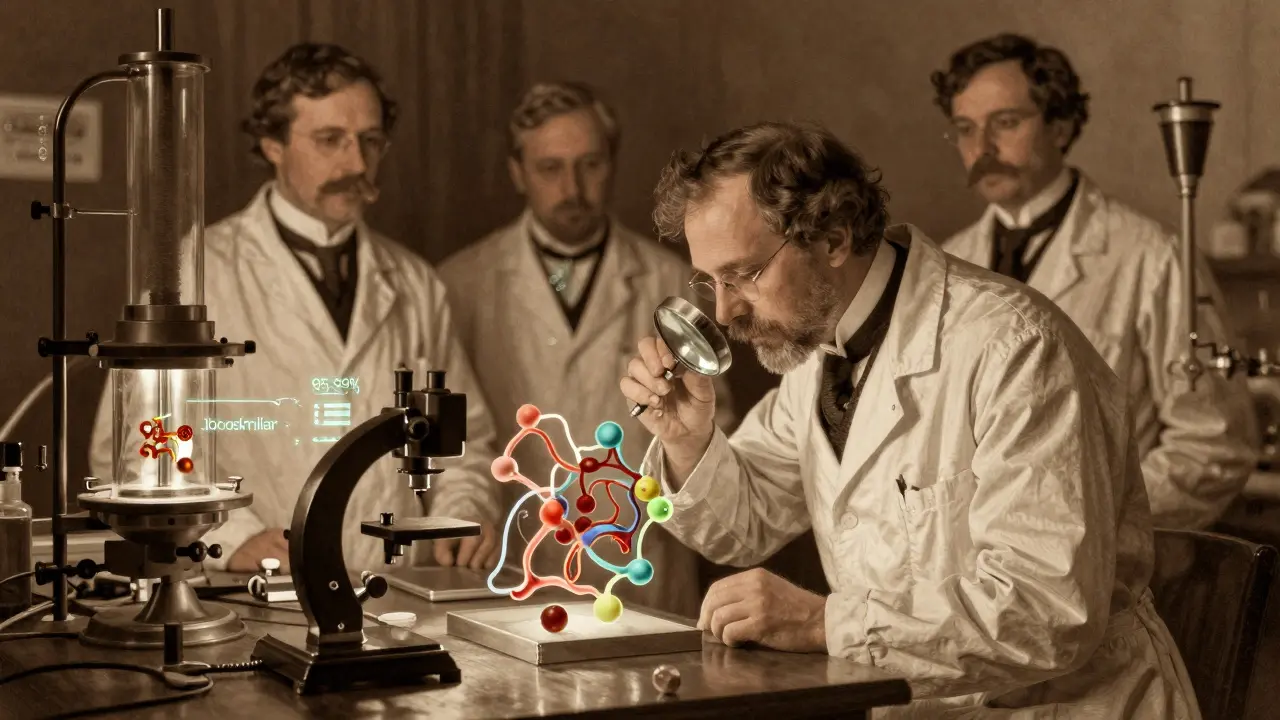
The process starts with analytical studies. Scientists use advanced tools-mass spectrometers, chromatography systems, capillary electrophoresis-to compare the biosimilar candidate to the original biologic molecule by molecule. They look at over 200 critical quality attributes: things like amino acid sequence, glycosylation patterns, protein folding, and aggregation levels. The goal? To show the biosimilar matches the reference product in 95-99% of these attributes. That’s not a suggestion-it’s a requirement. If the data doesn’t meet this standard, the application gets rejected before it even reaches human testing.
Once analytical data passes, the next step is usually a pharmacokinetic (PK) study. This involves giving both the biosimilar and the reference product to healthy volunteers or patients and measuring how fast the body absorbs and clears each one. A typical study uses 50-100 people in a crossover design, where each participant gets both drugs at different times. The results must show that the two products behave nearly identically in the body. If they don’t, the biosimilar won’t move forward.
Immunogenicity testing is mandatory. Every biosimilar must be monitored for immune reactions-like antibodies that could neutralize the drug or cause allergic responses. These studies run for 24 to 52 weeks, often in real patients with the condition the drug treats. The FDA tracks how often patients develop anti-drug antibodies and whether those reactions lead to side effects or reduced effectiveness. Since 2015, there have been zero biosimilar-specific safety signals identified in over 9 years of post-market surveillance. That’s a strong track record.
For a long time, the FDA required a full comparative clinical trial to prove effectiveness. But in September 2024, the rules changed. Now, for well-characterized proteins-like those used in treating rheumatoid arthritis or cancer-manufacturers can skip the clinical trial if analytical and PK data are strong enough. This shift has cut development time by 12-18 months and saved companies $50-100 million per product. It’s a smarter, science-based approach, not a shortcut.
The Purple Book: The Official FDA Listing
If you want to know which biosimilars are approved and what they’re approved for, you check the Purple Book. Yes, it’s literally called that. It’s the FDA’s official database of all biologics and biosimilars. As of October 2025, it lists 387 reference biologics and 43 approved biosimilars. That number has grown steadily since the first biosimilar, Zarxio (a copy of Neupogen), was approved in 2015.
Each entry includes the brand name, generic name, approval date, and indication. Crucially, it also flags whether a biosimilar is interchangeable. That’s a special designation. An interchangeable biosimilar can be substituted for the reference product at the pharmacy without a doctor’s permission-just like a generic. But to earn that label, a manufacturer must prove that switching between the biosimilar and the original doesn’t increase risk or reduce effectiveness. Only 17 of the 43 approved biosimilars have this status as of 2025. The rest require a prescriber’s explicit order.
The Purple Book got a major upgrade in early 2025. It’s now a searchable, API-accessible database with daily updates. You can pull real-time data on patent status, exclusivity periods, and approval dates. This transparency helps prescribers, pharmacists, and patients make informed decisions.
Why Biosimilars Cost Less-But Not as Much as You Might Think
Biosimilars are cheaper than their reference products, but not by half. On average, they’re priced 15-30% lower. Why not more? Because biologics are insanely complex to make. Manufacturing a single batch requires living cells, precise environmental controls, and months of purification. The analytical testing alone can cost $120-180 million per product. That’s why only 29 of the 43 approved biosimilars have actually launched in the U.S. The rest are stuck in patent litigation. Some companies use legal tactics to delay competition, adding over two years to market entry on average.
The biggest adoption is in oncology. Biosimilars for drugs like rituximab and trastuzumab now hold 65-75% of the market within 18 months of launch. In autoimmune diseases like rheumatoid arthritis, adoption is slower. Adalimumab biosimilars, launched in 2023, only reached 28% market share by mid-2025. Why? Payers often restrict access, and some doctors still prefer the original brand, even when the science says it doesn’t matter.
Biosimilar vs Generic: The Key Differences
It’s easy to confuse the two. Here’s the real difference:
- Generics: Chemically identical to the original. Made from simple molecules. Approval is based on bioequivalence studies with 20-40 people.
- Biosimilars: Highly similar, but not identical. Made from living cells. Require thousands of data points, animal studies, PK studies, immunogenicity monitoring, and sometimes clinical trials.
The FDA’s standard for biosimilars is far more demanding than the process for generics. That’s why it takes over 3 years on average to get a biosimilar approved-compared to about 18 months for a generic. And that’s why there are 118 biosimilars approved in Europe but only 43 in the U.S. The FDA’s standards are stricter, not slower.
What’s Next for Biosimilars?
The FDA is working on new guidance for complex biosimilars-like antibody-drug conjugates and fusion proteins. Only three applications for these have been submitted so far, and none have been approved. The agency plans to release specific guidance by Q3 2026.
Artificial intelligence is coming into play. Starting in Q1 2026, the FDA will pilot AI tools to help analyze massive amounts of analytical data faster and more accurately. This could cut review times and make approvals more consistent.
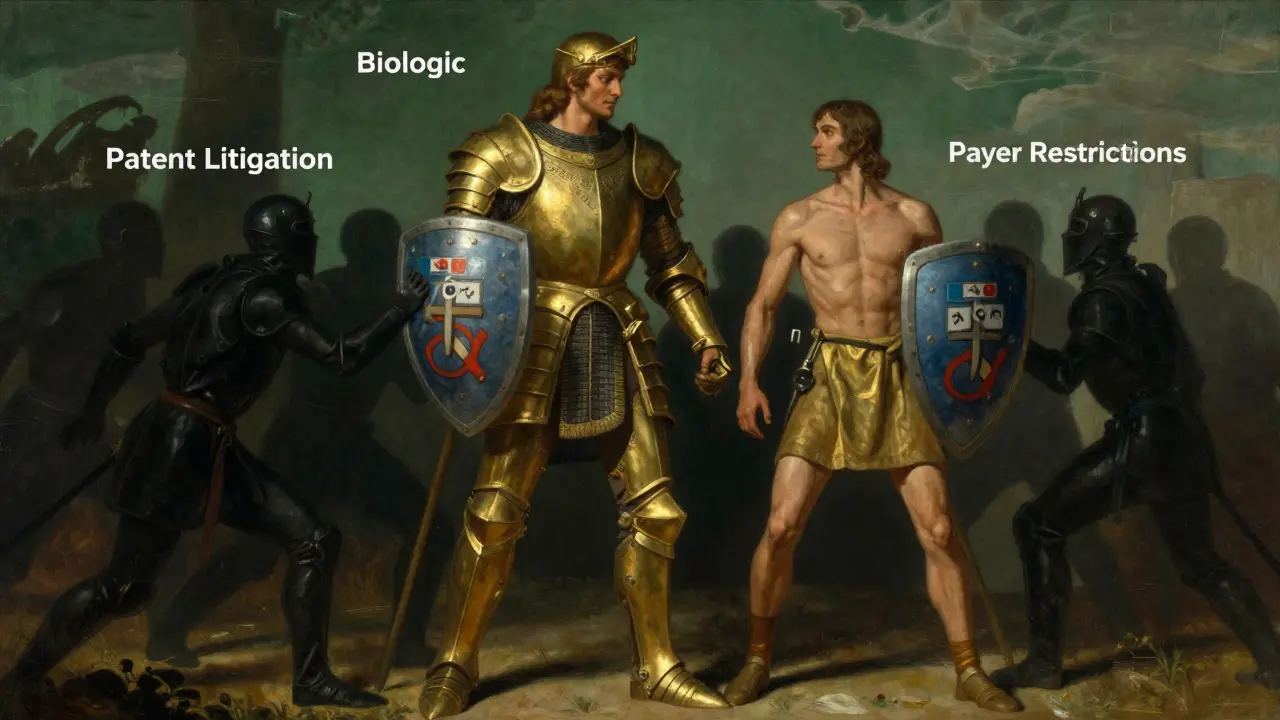
By 2030, the FDA projects biosimilars will make up 30% of the biologics market, saving over $250 billion. That’s a huge win for patients and the system. But the path forward isn’t smooth. Patent battles, payer restrictions, and lingering provider hesitation still slow things down.
Are biosimilars as safe as the original biologic?
Yes. Since the first biosimilar was approved in 2015, the FDA has tracked over 9 years of real-world data. Adverse event rates for biosimilars are statistically identical to their reference products-0.8 per 10,000 patients versus 0.7 for the original. No biosimilar-specific safety issues have been found. The rigorous testing before approval and ongoing monitoring make them just as safe.
Can a pharmacist switch my biologic to a biosimilar without asking my doctor?
Only if the biosimilar is designated as "interchangeable" by the FDA. As of 2025, only 17 out of 43 approved biosimilars have this status. For non-interchangeable biosimilars, your doctor must specifically prescribe the biosimilar by name. Even then, state laws vary on whether substitution is allowed without prescriber approval.
Why are there so few biosimilars in the U.S. compared to Europe?
The FDA requires more detailed analytical data than Europe’s EMA. While the EMA has approved 118 biosimilars as of 2025, the FDA’s stricter standards mean longer review times and higher development costs. The median approval time in the U.S. is 3.2 years versus 2.1 years in Europe. Also, patent litigation in the U.S. delays market entry by over two years on average.
Do biosimilars work for all the same conditions as the original drug?
Yes, but only if the FDA allows extrapolation. If a biosimilar is proven equivalent in one condition-say, rheumatoid arthritis-it can be approved for other conditions the original drug treats, without needing separate clinical trials. This is called extrapolation. The FDA permits this when analytical and PK data are strong enough. It’s based on science, not guesswork.
Why aren’t biosimilars cheaper if they’re copies?
Because they’re not simple copies. Manufacturing a biologic involves living cells, complex purification, and precise controls. The analytical testing alone costs over $100 million per product. Plus, patent litigation and payer restrictions limit competition. That’s why biosimilars typically cost only 15-30% less, not 80% like generics. But even that savings adds up to billions in healthcare costs.
Alex Brad
March 5, 2026 AT 06:26Renee Jackson
March 6, 2026 AT 00:30RacRac Rachel
March 7, 2026 AT 03:01Jane Ryan Ryder
March 9, 2026 AT 01:47Diane Croft
March 9, 2026 AT 03:59Deborah Dennis
March 10, 2026 AT 14:26Siri Elena
March 11, 2026 AT 05:52Pankaj Gupta
March 12, 2026 AT 05:29Matt Alexander
March 12, 2026 AT 05:42Mike Dubes
March 13, 2026 AT 05:28Aisling Maguire
March 15, 2026 AT 03:24Megan Nayak
March 17, 2026 AT 02:05