
Counterfeit Medications: How to Spot Fakes and Protect Your Health
 Jan, 21 2026
Counterfeit Medication Checker
This tool helps you assess potential counterfeit medication risk based on purchase source, packaging, and price. Use it to make safer medication decisions.
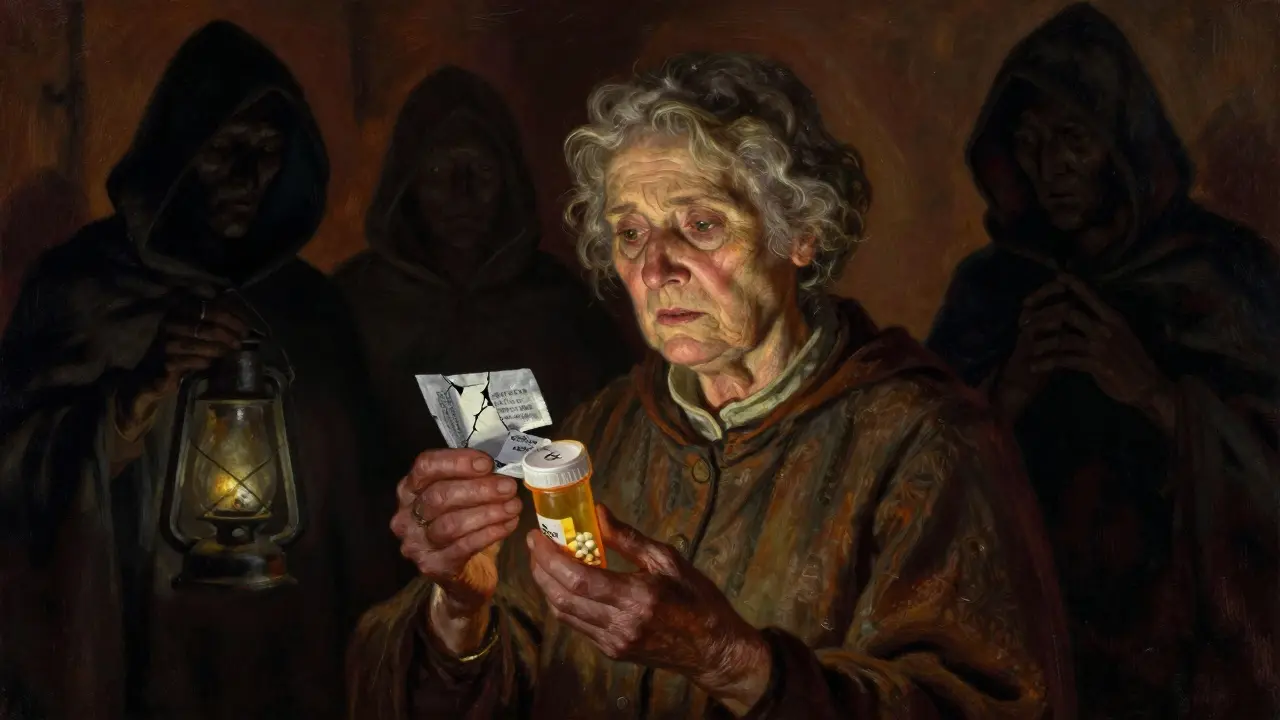
Every year, millions of people around the world take pills they think are real medicine-only to find out too late they were poisoned by fakes. These aren’t just poorly made knockoffs. Counterfeit medications can contain toxic chemicals, no active ingredients at all, or deadly doses of fentanyl. In 2024, over 50 million fake drug doses were seized globally. That’s not a statistic-it’s a warning.
What Exactly Are Counterfeit Medications?
Counterfeit medications are not just fake versions of real drugs. They’re dangerous imitations designed to look identical, but they fail in the most critical way: they don’t work as intended. The World Health Organization defines them as products that deliberately misrepresent their identity, composition, or source. This means the pill you bought might say "Lipitor" on it, but inside could be chalk, rat poison, or a cheap antibiotic you didn’t need. There are two main types: falsified drugs, made with bad or no active ingredients, and substandard ones, which are made poorly but not intentionally deceptive. Both can kill. In Africa alone, counterfeit antimalarials cause over 120,000 deaths every year. In the U.S., 1,247 adverse events in 2025 were linked to suspected fake medicines-87% of them from online purchases.How Do Fake Drugs Get to You?
The internet is the main highway for counterfeit medications. Over 97% of websites selling prescription drugs operate illegally. You might think you’re buying from a Canadian pharmacy because the site says so-but the U.S. FDA found that 85% of those "Canadian" pharmacies actually ship from countries with no drug safety rules. Social media ads, Instagram influencers promoting "discount insulin," and Facebook marketplace sellers offering "generic Viagra" at 80% off? All red flags. Criminal networks have gotten smarter. They now replicate holograms, barcodes, and even serialization codes used by real manufacturers. Some use 3D printers to make convincing pill molds. In 2025, Interpol shut down 13,000 websites and arrested 769 people in one global operation. But new ones pop up the next day.How to Spot a Fake Medicine
You can’t always tell by looking-but you can look for signs. Here’s what to check:- Packaging: Look for blurry text, mismatched fonts, or misspellings. Real drug boxes have crisp printing. If the seal looks loose or the box feels flimsy, walk away.
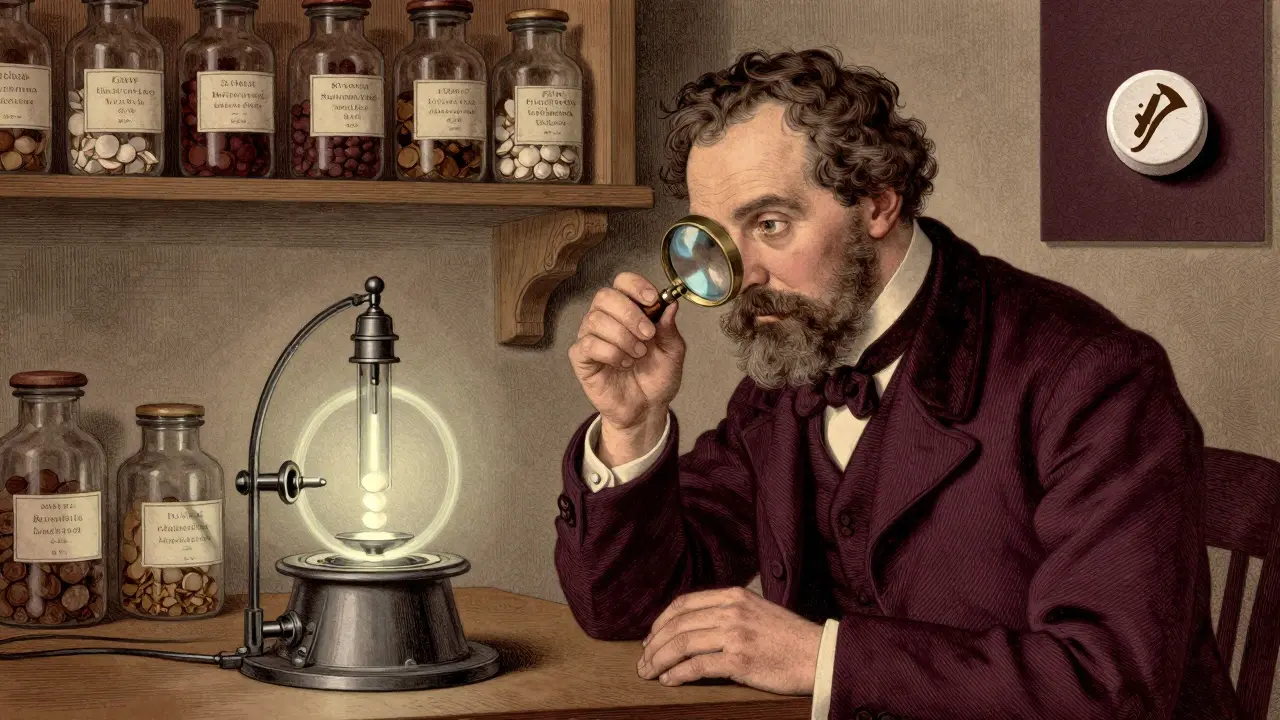
- Pill appearance: Compare the color, shape, and markings to the real drug. Pfizer, Novartis, and other manufacturers publish images of their pills online. If your pill looks different, it’s not real.
- Smell and texture: Some fake pills smell like plastic or chemicals. Others crumble too easily or feel waxy. Insulin vials that feel lighter than usual? That’s a known red flag.
- Price: If it’s way cheaper than your local pharmacy, it’s probably fake. Genuine cancer drugs or biologics cost thousands for a reason. A $20 bottle of insulin? It’s not a deal-it’s a death sentence.
- Prescription requirement: Legit pharmacies require a prescription. If a site sells you opioids, insulin, or antibiotics without one, it’s illegal-and dangerous.
One user on Reddit shared how their family member nearly died from counterfeit insulin. The packaging looked perfect. The only clue? The vial felt lighter. That’s how subtle these fakes have become.
Where to Buy Medicine Safely
The safest place to get medication is always a licensed, physical pharmacy. If you must buy online, follow these rules:- Only use pharmacies with the VIPPS seal (Verified Internet Pharmacy Practice Sites). You can verify them at the National Association of Boards of Pharmacy (NABP) website.
- Check that the pharmacy is based in your country. U.S.-based pharmacies will have a U.S. address and phone number.
- Verify the National Drug Code (NDC) number on the box using the FDA’s database. If it doesn’t match, don’t take it.
- Avoid any site that doesn’t require a prescription or asks for payment in cryptocurrency.
- Never buy from social media, eBay, or Amazon third-party sellers for prescription drugs.
The U.S. Drug Supply Chain Security Act (DSCSA), fully active by November 2025, will require every prescription drug package to have a unique digital identifier. That means in the near future, you’ll be able to scan a barcode and see if the product came from a verified source. But until then, you’re your own first line of defense.
Why This Matters More Than You Think
Counterfeit drugs aren’t just a personal risk-they’re a global health crisis. When people take fake antibiotics, they don’t get better. Instead, bacteria grow stronger. This fuels antimicrobial resistance, one of the biggest threats to modern medicine. The WHO says counterfeit medicines are directly responsible for increasing drug-resistant infections in low-income countries. And the economic damage? Pharmaceutical companies lose $200 billion a year. That money could’ve gone to research, new treatments, or lower drug prices. Instead, it funds organized crime. In Australia, where regulations are strict, fake drugs are rare in pharmacies. But online purchases from overseas are rising. If you’re buying from a site that ships from China, India, or Russia-even if it claims to be "trusted"-you’re taking a risk.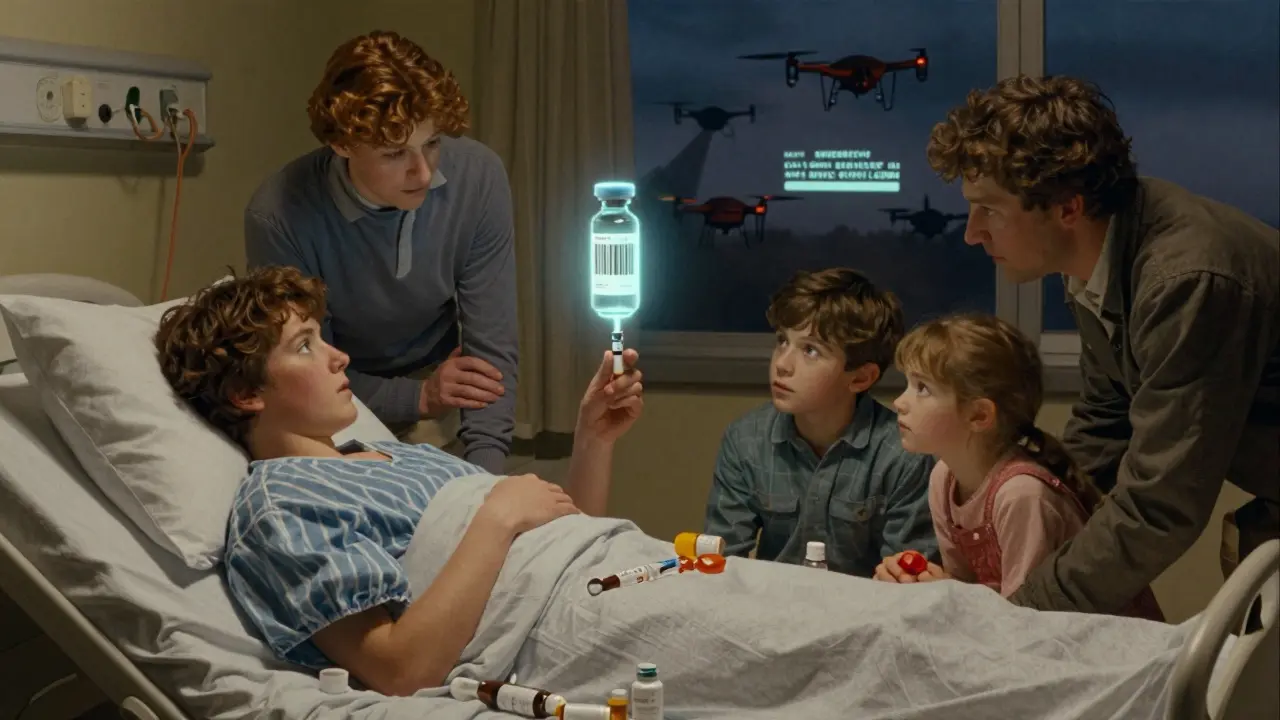
What to Do If You Suspect a Fake
If you think you’ve been sold a counterfeit drug:- Stop taking it immediately.
- Save the packaging, pill, and receipt.
- Report it to your national health authority. In Australia, use the TGA’s online reporting tool. In the U.S., use the FDA’s MedWatch system.
- Call your doctor. They may need to test your blood or adjust your treatment.
- Warn others. Share your experience with trusted health forums or local community groups.
Don’t wait for symptoms. Some fake drugs cause damage slowly-liver failure, kidney damage, or heart rhythm problems. By the time you feel sick, it might be too late.
Technology Is Fighting Back
There’s good news: detection tools are getting better. Portable spectroscopy devices-small, handheld scanners that analyze the chemical makeup of a pill-are now used by customs agents, pharmacists, and even some patients. These tools can tell in seconds if a pill contains the right active ingredient. The global market for these devices is growing fast, projected to hit $2.3 billion by 2030. North America leads in adoption, but Asia-Pacific is catching up fast. In China, fake drug seizures rose 22% in 2023, and so did investment in detection tech. Still, these tools aren’t available to most consumers. Until they are, your eyes, your instincts, and your caution are your best defenses.How common are counterfeit medications?
Globally, about 1 in 10 medicines in low- and middle-income countries are counterfeit or substandard. In some regions, that number jumps to over 30%. Even in high-income countries like the U.S. or Australia, fake drugs are rare in licensed pharmacies-but online purchases increase the risk dramatically. The FDA estimates less than 1% of drugs in the U.S. supply chain are fake, but that jumps to over 50% for unverified online pharmacies.
Can fake medicine make you sick even if it looks real?
Absolutely. Many counterfeit drugs look identical to the real thing-same color, shape, logo, even packaging. But inside, they might contain toxic chemicals like lead, mercury, or fentanyl. A 2025 study found that 52.8% of fake drugs in the legal supply chain had too little or no active ingredient. That means you’re not getting treatment-you’re risking poisoning.
Are all online pharmacies dangerous?
No-but 97% of them are. Only pharmacies with the VIPPS seal from the NABP are verified as legitimate in the U.S. In Australia, look for pharmacies listed on the TGA’s register. Any site that doesn’t require a prescription, ships from overseas without clear contact info, or accepts cryptocurrency is almost certainly illegal. Stick to well-known, licensed pharmacies with physical locations.
What should I do if I bought fake medicine?
Stop using it immediately. Keep the packaging and any receipts. Report it to your country’s health regulator-the TGA in Australia, the FDA in the U.S., or your local public health office. Contact your doctor to discuss possible side effects or needed medical checks. Even if you feel fine, some toxins build up over time. Don’t wait for symptoms to appear.
Is it safe to buy medicine from other countries?
It’s risky. Even if a website claims to be based in Canada or the UK, the drugs may be shipped from unregulated countries. The FDA and WHO both warn against importing medications from overseas pharmacies unless they’re licensed and verified by your own country’s health authority. What’s cheaper abroad might be deadly. Always check your national drug regulator’s warnings before buying from international sites.
Why are counterfeit drugs so hard to detect?
Criminal networks now use the same technology as real manufacturers: high-quality printing, holograms, serialization, and even tamper-proof seals. Some use 3D printers to create pill molds that match real drugs exactly. The only reliable way to confirm authenticity is through lab testing or portable spectroscopy devices-which most consumers don’t have access to. That’s why verifying the pharmacy and checking for packaging errors are your best tools.
Hilary Miller
January 23, 2026 AT 11:07Just saw a guy on Instagram selling "generic insulin" for $15. Bro, that’s not a deal-it’s a suicide note with a QR code.
Stay safe out there.
Jasmine Bryant
January 23, 2026 AT 11:14I bought my blood pressure med from a site that looked legit-until I noticed the batch number didn’t match the FDA database. Took me 3 weeks to get a refund. Now I only use CVS or Walgreens. Seriously, if it’s not in a brick-and-mortar store, assume it’s poison.
Also, the pill looked right but tasted weird. Like chalk with a hint of motor oil. 🤢
Daphne Mallari - Tolentino
January 25, 2026 AT 06:02It is profoundly disconcerting that the commodification of human health has devolved into a grotesque parody of pharmaceutical integrity. The proliferation of counterfeit medications represents not merely a failure of regulatory oversight, but a systemic collapse of epistemic trust in digital marketplaces. One must ask: when the very symbols of therapeutic assurance-holograms, serialization codes, packaging typography-are replicated with such precision, what epistemological framework remains for the layperson to invoke?
Moreover, the normalization of online pharmaceutical procurement among populations with limited health literacy constitutes an egregious form of structural violence. The WHO’s figures are not statistics-they are elegies.
arun mehta
January 25, 2026 AT 23:38My cousin in Mumbai got fake diabetes meds from a "trusted" WhatsApp seller. He ended up in ICU for 12 days. 😔
Now he only gets meds from the hospital pharmacy. Please, if you’re buying online-double-check the NDC code. It takes 2 minutes. Could save your life.
Stay safe, stay smart. 🙏
Kenji Gaerlan
January 26, 2026 AT 12:11bro why are we even talking about this? just buy from amazon. they got 4.8 stars. how bad could it be?
also my dog takes my pills and he’s fine sooo...
Liberty C
January 26, 2026 AT 23:50Oh, so now we’re treating pharmaceutical fraud like a DIY home repair video? "Here’s how to spot a fake pill!"-as if a blurry font and a waxy texture are the only clues in a global conspiracy orchestrated by shadowy cartels who’ve mastered 3D printing, blockchain serialization, and psychological manipulation.
Let’s not pretend this is about packaging. It’s about a system that lets billionaires profit off dying people while you’re told to "be skeptical." Skeptical of what? The FDA? The WHO? The same institutions that let OxyContin flood the nation? You’re not protecting yourself-you’re being fed a distraction while the real predators laugh all the way to the Cayman Islands.
And no, I won’t buy from CVS. They’re complicit too.
Keith Helm
January 27, 2026 AT 21:44While I acknowledge the gravity of the issue, I must respectfully dissent from the assertion that online pharmacies are universally perilous. A significant proportion of international patients rely on cross-border pharmaceutical procurement due to cost disparities and access limitations. The solution is not prohibition, but harmonization of regulatory standards and international verification protocols.
Furthermore, the conflation of unverified vendors with all digital distributors is a logical fallacy that undermines legitimate telepharmacy initiatives. One must distinguish between illegality and imprudence.
Oren Prettyman
January 28, 2026 AT 05:13Let’s be honest: the entire premise of this post is alarmist nonsense dressed in WHO citations. The FDA’s own data shows that less than 0.5% of pharmaceuticals in the U.S. supply chain are counterfeit. That’s statistically negligible. Meanwhile, the real crisis is the artificial inflation of drug prices by patent monopolies and PBMs-yet here we are, scaring people into believing that their statin might be chalk, when the real poison is the $400 co-pay.
And let’s not forget: the vast majority of counterfeit drugs originate from unregulated markets in Asia and Africa-places where the infrastructure for safe distribution is nonexistent. Why are we blaming American consumers for buying from overseas sites when the domestic system makes medicine unaffordable? This isn’t about safety-it’s about moral panic masking systemic failure.
Also, the claim that counterfeit antimalarials cause 120,000 deaths annually in Africa? That figure conflates substandard drugs with outright fakes. The WHO distinguishes between the two for a reason. Stop oversimplifying complex global health dynamics to fit a clickbait narrative.
shivani acharya
January 29, 2026 AT 14:33Okay but what if the FDA and WHO are part of the cover-up? 🤔
Think about it-why do they always say "report it" but never say "why is this even allowed?"
They’re not stopping the fake drugs-they’re using them as an excuse to push the DSCSA barcode system so they can track EVERY SINGLE PILLS YOU TAKE. That’s not safety. That’s control.
And don’t even get me started on the "VIPPS seal"-that’s just Big Pharma’s way of locking out small pharmacies so you HAVE to buy from their corporate partners. The real fake medicine? The whole system.
My aunt took insulin from a "trusted" Canadian site. She’s fine. But the government says she should’ve died. Coincidence? I think not.
They don’t want you to know that the same labs that make the real drugs also make the fake ones. Same machines. Same employees. Just different labels. And they’re laughing at us for falling for the "check the seal" nonsense.
Also, why is no one talking about the fact that 70% of all meds are made in China? And why do you think they’re so cheap? Because they’re not making pills-they’re making surveillance tools.
Next they’ll be putting microchips in your insulin. I’m not paranoid. I’m prepared.
Chiraghuddin Qureshi
January 30, 2026 AT 18:13Just got back from Delhi-saw a guy selling "Vitamin D" in a plastic bag with a sticky label. No batch number, no expiry, no name of the company. He said, "Bro, it’s good for bones!" 😅
My mom took it. She’s fine. But I still cringe.
Stay safe, everyone. And if you’re buying online? Ask for the invoice. No invoice? No pill. 💪❤️
Liberty C
February 1, 2026 AT 10:47Of course you’re going to report it. That’s the whole point. You don’t want to be the one who broke the chain. You want to be the good citizen who followed the rules. But the rules were written by the same people who profit when you’re sick.
They don’t want you to be safe. They want you to be compliant.
And if you think scanning a barcode is going to save you from corporate greed, you haven’t been paying attention.
Go ahead. Report it. Then go back to paying $600 for a bottle of insulin that costs $2 to make.
Keep being a good little patient. We’re all watching.