
Counterfeit Drugs in Developing Nations: The Hidden Health Crisis
 Dec, 7 2025
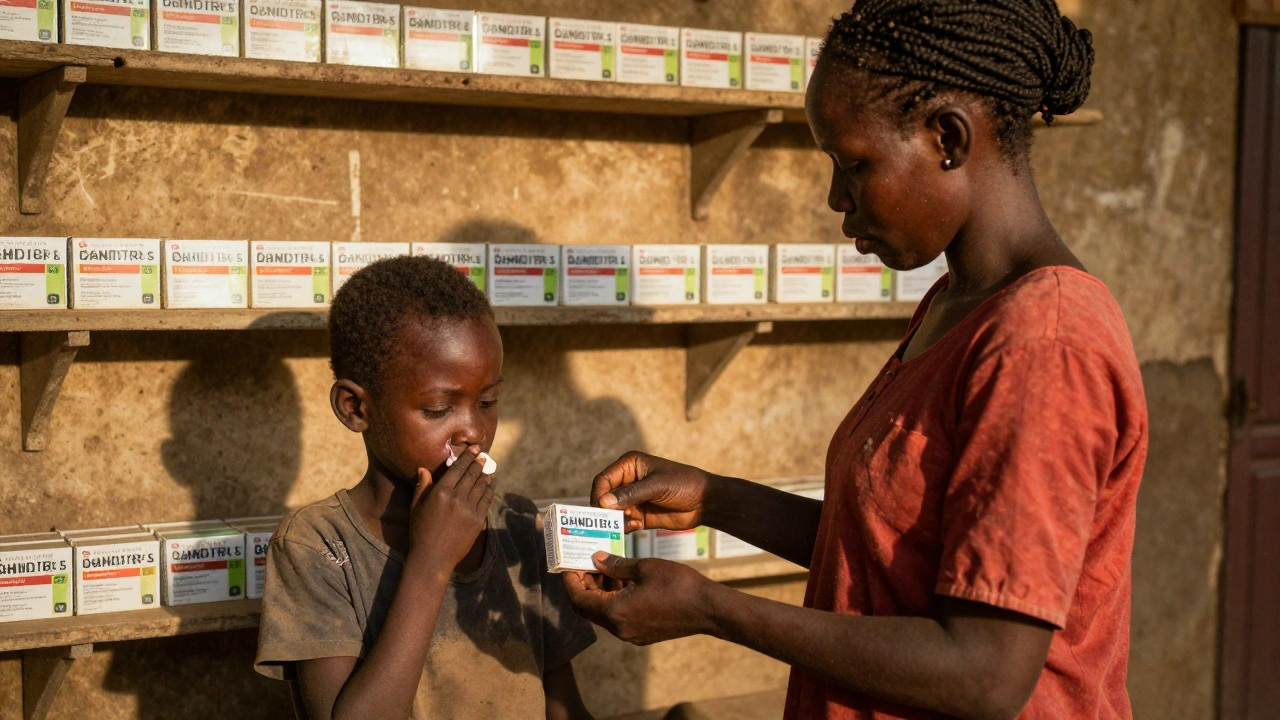
Every year, counterfeit drugs kill more children than malaria alone. In rural clinics across Africa, Asia, and Latin America, people are dying not because they lack access to medicine-but because the medicine they’re given is fake. These aren’t knockoff sneakers or fake handbags. These are pills that contain no active ingredient, or worse, toxic chemicals that poison the body. And the scale of this crisis is growing faster than most realize.
What Exactly Are Counterfeit Drugs?
Not all fake medicines are the same. The World Health Organization makes a clear distinction: substandard drugs are real products that were poorly made or stored incorrectly-maybe they expired, or lost potency in the heat. Falsified drugs are deliberate frauds: made in secret labs, packed to look like the real thing, and sold with fake labels, barcodes, and even holograms.
Think about it: if you buy a malaria drug that’s supposed to have artemisinin, but it’s just flour and chalk, your fever won’t break. Your body doesn’t know the difference. And if that fake drug contains a toxic chemical-like the antifreeze found in heart meds in Lahore in 2012-it doesn’t just fail to treat you. It kills you.
According to WHO data, 1 in 10 medicines in low-income countries are falsified or substandard. In some regions, it’s worse. In parts of Southeast Asia, half of all antimalarials are fake. In West Africa, counterfeit antibiotics are so common that doctors now assume the first dose won’t work. That’s not paranoia-it’s experience.
Why This Is So Much Worse in Developing Nations
It’s not that people in these countries are careless. It’s that the system is broken. Legitimate medicines are often too expensive. A full course of real antimalarials can cost $10-$15. A fake version? $1. For families living on $2 a day, the choice isn’t about trust-it’s about survival.
Meanwhile, the supply chain is a maze. A single pill can pass through five or seven middlemen before it reaches a village pharmacy. Each handoff is a chance for substitution. A truck gets hijacked. A warehouse gets swapped. A clerk doesn’t know the difference between the real and the fake. And by the time it gets to you, no one is checking.
Even when there are regulations, enforcement is weak. In many countries, medicine regulators have no budget, no lab equipment, and no power to shut down illegal sellers. Meanwhile, criminal networks operate with near-total impunity. The profit margins are insane-up to 9,000% on some drugs. And the risk? Low. Most counterfeiters are never caught. Those who are? Often fined a few hundred dollars and let go.
The Human Cost: More Than Just Numbers
Behind every statistic is a story.
In Nigeria, a mother bought Coartem for her 6-year-old son after he developed a high fever. She trusted the pharmacy-it had the same packaging, the same logo. But the pills had no artemisinin. He died three days later. She didn’t know it was fake until a WHO lab tested a leftover pill months after his death.
In Kenya, a clinic found that 50% of their rapid malaria test kits were counterfeit. That means half the time, they thought a child had malaria when they didn’t-and gave them useless drugs. The other half, they thought the child was fine when they were actually infected. Both outcomes cost lives.
The OECD estimates that counterfeit drugs cause between 72,000 and 169,000 child deaths from pneumonia each year. In sub-Saharan Africa, over 116,000 people die annually from fake antimalarials. These aren’t abstract figures. These are children who never got a chance. Parents who buried their kids because they trusted a pharmacy.
How Fake Drugs Are Made-and How They Fool Everyone
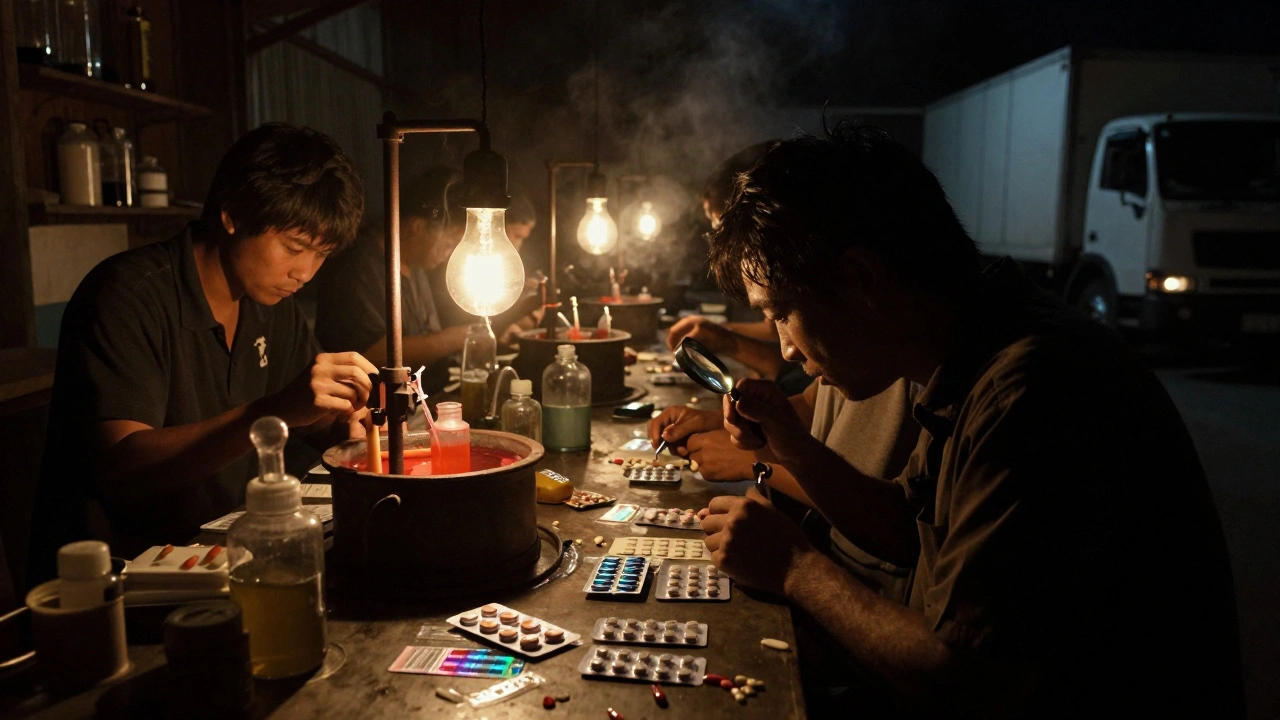
Counterfeiters aren’t amateurs. They’re organized, tech-savvy, and constantly upgrading. In China, factories use 3D printing to replicate blister packs with 99% accuracy. They copy the exact shade of blue on the box. They replicate the font on the label. They even include fake QR codes that scan to fake websites.
Some fake pills contain the right active ingredient-but in the wrong dose. Too little? The infection won’t clear. Too much? The patient gets poisoned. Others have no active ingredient at all. And 25% contain dangerous substances-like industrial dyes, rat poison, or battery acid.
Even healthcare workers can’t tell the difference. A 2024 WHO study found that visual inspection alone catches only 30% of fake drugs. You need a spectrometer to detect chemical differences-and those machines cost $20,000. In rural clinics? They don’t exist.
And then there’s the internet. Online pharmacies in Southeast Asia sell fake cancer drugs, antibiotics, and insulin with just a click. Many have websites that look like real hospitals. They use fake reviews. They offer “discounts” that are too good to be true. And when you get the pills? They’re made of sugar and ink.
What’s Being Done-and Why It’s Not Enough
There are solutions. But they’re not reaching the people who need them most.
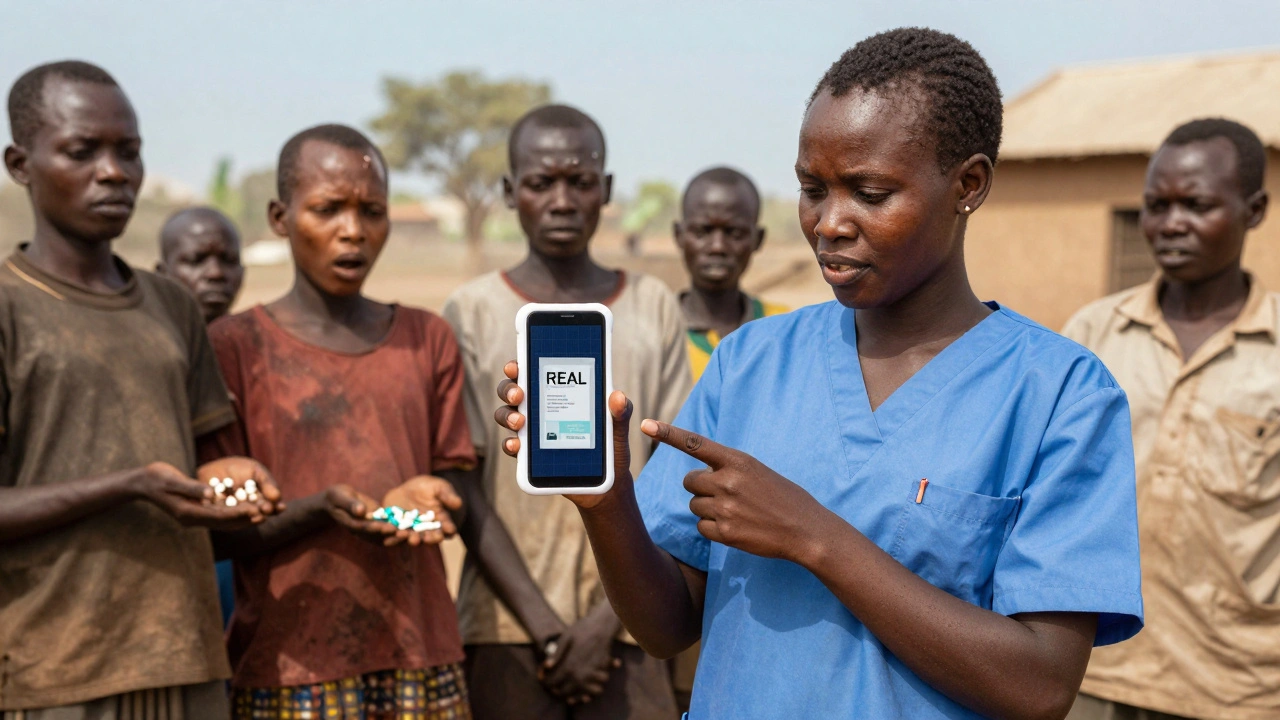
Some countries are using blockchain. The WHO’s Global Digital Health Verification Platform, launched in March 2025, lets patients scan a code on the medicine package to verify its origin. It works. In Ghana, the mPedigree system lets people text a code and get an instant reply: “Real” or “Fake.” It’s saved lives. But only 28% of people in low-literacy areas can use it without help.
Some NGOs are training community health workers to spot fake packaging. Others are distributing solar-powered testing kits that cost under $50. These tools work. But they’re rare. Only 22% of pharmacies in low-income countries use any kind of verification system. In the U.S., it’s 98%.
International efforts exist too. The Medicrime Convention has been signed by 76 countries-but only 45 have turned it into law. Interpol’s 2025 Operation Pangea XVI shut down 13,000 websites and arrested nearly 800 people. But for every criminal caught, ten more take their place.
And then there’s the money. The WHO says countries spend $30.5 billion a year on fake medicines. That’s money that could build clinics, train nurses, or buy real drugs. Instead, it’s lining the pockets of criminals.
The Future: AI, Cryptocurrency, and a Growing Threat
The problem isn’t getting better-it’s getting smarter.
Counterfeiters are now using AI to generate fake packaging that changes slightly with each batch, making it harder to track. They’re accepting payments in Bitcoin and Monero-untraceable, anonymous. They’re even starting to fake biologics-complex drugs like insulin and cancer treatments-that used to be too hard to copy.
By 2027, the fake drug market could hit $120 billion. That’s more than the entire pharmaceutical budget of many low-income countries. And if nothing changes, the World Bank predicts 5.7 million preventable deaths in developing nations by 2030.
But there’s hope. If AI-powered verification tools are deployed at scale, they could cut that number by 65%. The EU’s 2026 Anti-Counterfeiting Initiative will pour €250 million into supply chain security in 30 developing nations. The WHO’s goal? Reduce counterfeit prevalence to under 5% by 2027.
None of this will work unless local governments take ownership. Unless pharmacies are held accountable. Unless people know how to check their medicine. And unless the world stops treating this as a “developing country problem”-and starts seeing it for what it is: a global failure of justice, health equity, and human dignity.
What You Can Do-Even If You’re Not in a Developing Country
You might think this doesn’t affect you. But it does.
Counterfeit drugs don’t stay in one country. They move through global supply chains. A fake antibiotic made in China can end up in a pharmacy in the U.S. or Australia. A fake cancer drug sold online can be shipped anywhere.
Here’s what you can do:
- Only buy medicine from licensed pharmacies-online or in person.
- Check if the website has a verified pharmacy seal (like VIPPS in the U.S. or similar in your country).
- If a drug seems too cheap, it probably is.
- Report suspicious online pharmacies to your national health authority.
- Support organizations working to fight counterfeit drugs-donate, volunteer, or raise awareness.
This isn’t just about medicine. It’s about trust. It’s about the right to live without fear that the thing meant to save you is the thing that will kill you.
How common are counterfeit drugs in developing countries?
According to the World Health Organization, about 1 in 10 medicines in low- and middle-income countries are substandard or falsified. In some regions-like parts of Southeast Asia and sub-Saharan Africa-the rate can be as high as 30% to 50% for critical drugs like antimalarials and antibiotics.
What are the most common types of counterfeit medicines?
Anti-infectives like antibiotics and antimalarials are the most common, making up about 35% of all counterfeit cases. Cardiovascular drugs (20%) and central nervous system medications (15%) are also heavily targeted. Cancer drugs, insulin, and vaccines are increasingly being faked as their demand rises.
How can I tell if a medicine is fake?
It’s nearly impossible to tell by sight alone-counterfeiters now replicate packaging with 90% accuracy. The best way is to use verification tools: SMS codes, mobile apps like mPedigree, or blockchain verification platforms. If you’re in a developed country, buy only from licensed pharmacies and avoid websites that don’t require a prescription.
Why don’t governments stop this?
Many governments lack the resources, training, or legal power to enforce drug safety. Regulatory agencies are underfunded, corruption is common, and border controls are weak. Even when laws exist, enforcement is inconsistent. Criminal networks exploit these gaps with little fear of punishment.
Are online pharmacies safe to buy from?
Only if they’re verified. In developed countries, look for seals like VIPPS (U.S.) or CIPA (Canada). In developing nations, avoid online pharmacies altogether unless they’re officially endorsed by the national health authority. Most websites selling cheap medicines online are scams-and many sell counterfeit drugs.
What happens if I take a counterfeit drug?
Three things can happen: the drug does nothing (treatment fails), it contains too little active ingredient (leading to drug resistance), or it contains toxic substances (causing poisoning or death). In 87% of cases, counterfeit antibiotics have insufficient active ingredients, which contributes to the global rise in antimicrobial resistance.
Is there any progress in fighting counterfeit drugs?
Yes. Technologies like blockchain verification, mobile SMS checking, and solar-powered testing kits are being rolled out in Ghana, Kenya, and Nigeria. Interpol and WHO have increased international cooperation. But progress is slow and uneven. Without sustained funding and political will, the problem will keep growing.
Nicholas Heer
December 8, 2025 AT 03:51So let me get this straight-our government’s spending billions on drones and border walls, but some Chinese lab in Guangdong is pumping out fake insulin with battery acid and we’re just supposed to shrug? 🤡 This isn’t a health crisis-it’s a WAR. And the enemy’s got AI, crypto, and zero accountability. WHO’s talking about blockchain? Bro, that’s like bringing a butter knife to a gunfight. They need drone strikes on these labs, not QR codes.
Sangram Lavte
December 9, 2025 AT 22:42In rural India, we’ve learned the hard way: if the price feels too good, it’s poison. My uncle bought antibiotics from a roadside vendor after his fever didn’t break. He survived, but his kidneys didn’t. No one in the village checks labels. We just hope. That’s the real tragedy-not the tech gap, but the resignation.
Oliver Damon
December 10, 2025 AT 01:58This systemic failure isn’t just about supply chains-it’s about epistemic injustice. The global North treats pharmaceuticals as commodities, not rights. The fact that a spectrometer costs $20k while a child’s life is priced at $1 speaks to a moral architecture that privileges profit over personhood. Blockchain verification is a band-aid. What we need is a paradigm shift: treat medicine as a public good, not a speculative asset. The WHO’s 5% target is noble, but it’s still playing within the same broken game.
Kyle Flores
December 11, 2025 AT 23:26I know this sounds heavy, but I’ve seen this in my work with NGOs in Ghana. One mom told me she gave her kid fake malaria pills because she couldn’t afford the real ones-and then she cried because she didn’t know she was killing him. We need community-based verification, not just tech. Train the aunties, the church volunteers, the schoolteachers. They’re the real frontline. And we gotta pay them. No one’s asking for a miracle-just dignity.
Ryan Sullivan
December 11, 2025 AT 23:47Let’s be honest: this is what happens when you let peasants run their own hospitals. You think a Nigerian village clinic needs blockchain? They need a functioning toilet and someone who can read. The entire narrative is performative virtue signaling. Fix the basics first. Then we’ll talk about QR codes.
Wesley Phillips
December 12, 2025 AT 02:01Bro, I just bought a $3 ‘Viagra’ off Instagram and it gave me a headache and a 20-minute nap. I think I got the real thing. 😏 Anyway, if your medicine costs less than your Uber Eats order, you’re probably not getting penicillin. You’re getting glitter and regret. Also, fake cancer drugs? That’s just next-level evil. I’m not even mad-I’m impressed.
Desmond Khoo
December 13, 2025 AT 23:06There’s hope! 🌱 I just heard about a solar-powered tester that costs less than a pizza. Imagine if every pharmacy in Kenya had one. We can fix this. It’s not about money-it’s about will. Let’s fund the grassroots heroes, not just the tech bros with blockchain slides. 💪❤️ #RealMedicineNotFakeNews
Louis Llaine
December 15, 2025 AT 19:42Wow. 169k kids dead. And the solution? Text a code. Cool. Next they’ll tell us to pray to the QR code. 🙄