
Citrus Fruits and Calcium Channel Blockers: What You Need to Know
 Feb, 24 2026
If you're taking a calcium channel blocker for high blood pressure, your morning glass of grapefruit juice might be doing more harm than good. This isn't just a warning on a label - it's a real, measurable, and sometimes dangerous interaction that affects millions of people worldwide. And it's not just grapefruit. Some other citrus fruits can cause the same problem, even if you think you're being careful.
How Grapefruit Changes Your Medication
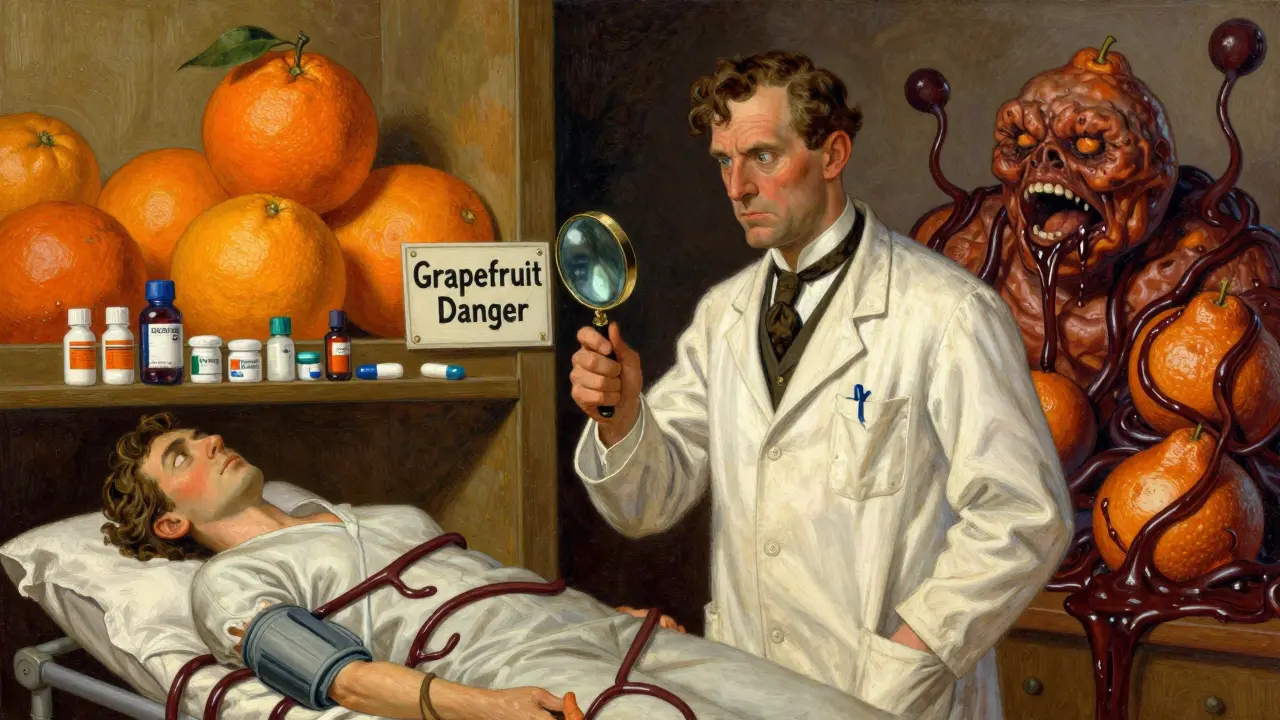
Calcium channel blockers like felodipine, nicardipine, and nimodipine work by relaxing your blood vessels to lower blood pressure. But they rely on a specific enzyme in your gut - called CYP3A4 - to break down before they enter your bloodstream. Grapefruit juice contains chemicals called furanocoumarins, mainly 6',7'-dihydroxybergamottin and bergamottin. These chemicals shut down that enzyme like flipping a switch.
When CYP3A4 is blocked, your body can't break down the drug properly. Instead of absorbing 100% of your 10 mg dose, you might absorb 300%, 400%, or even 500%. That means your blood pressure could drop way too fast. You might feel dizzy, lightheaded, or even faint. In older adults, this can lead to falls, injuries, or hospital visits. And here's the scary part: it doesn't matter if you take the juice hours before or after the pill. One study showed that even if you drink grapefruit juice in the morning and take your medication at night, up to 35% of the drug remains unmetabolized. By day four, a 60 mg dose could act like 140 mg.
Which Calcium Channel Blockers Are Most Affected?
Not all calcium channel blockers react the same way. The biggest red flags are the dihydropyridine (DHP) types:
- Felodipine - This one has the strongest interaction. Studies show grapefruit juice can increase its levels by 3 to 5 times. Some package inserts even call it a "black box warning" - the highest alert level.
- Nicardipine and Nimodipine - Both show major increases in blood concentration when taken with grapefruit.
- Amlodipine - Often called "safer," but it's not risk-free. Studies still show a measurable increase in drug levels, especially with daily grapefruit use.
Non-DHP blockers like verapamil and diltiazem have weaker interactions, but they're not completely safe. And don't assume that because one drug in this class is risky, all are fine. Each one behaves differently.
What About Other Citrus Fruits?
Grapefruit isn't the only offender. Seville oranges (the sour kind used in marmalade), tangelos, and pomelos also contain high levels of furanocoumarins. If your doctor told you to avoid grapefruit, assume these are off-limits too.
Regular sweet oranges? They're generally okay. They don't have enough of the harmful compounds to cause a problem. Same with mandarins and clementines. Orange juice from the grocery store - unless it's labeled "Seville" - is usually safe. But here's the catch: some orange juices are blended with grapefruit or made from concentrate that includes peel oils. Always check the ingredient list.
Even citrus peels in baked goods or zest in cocktails can contain enough furanocoumarins to cause trouble. If you're on a high-risk calcium channel blocker, skip the orange peel garnish.
Why This Interaction Lasts So Long
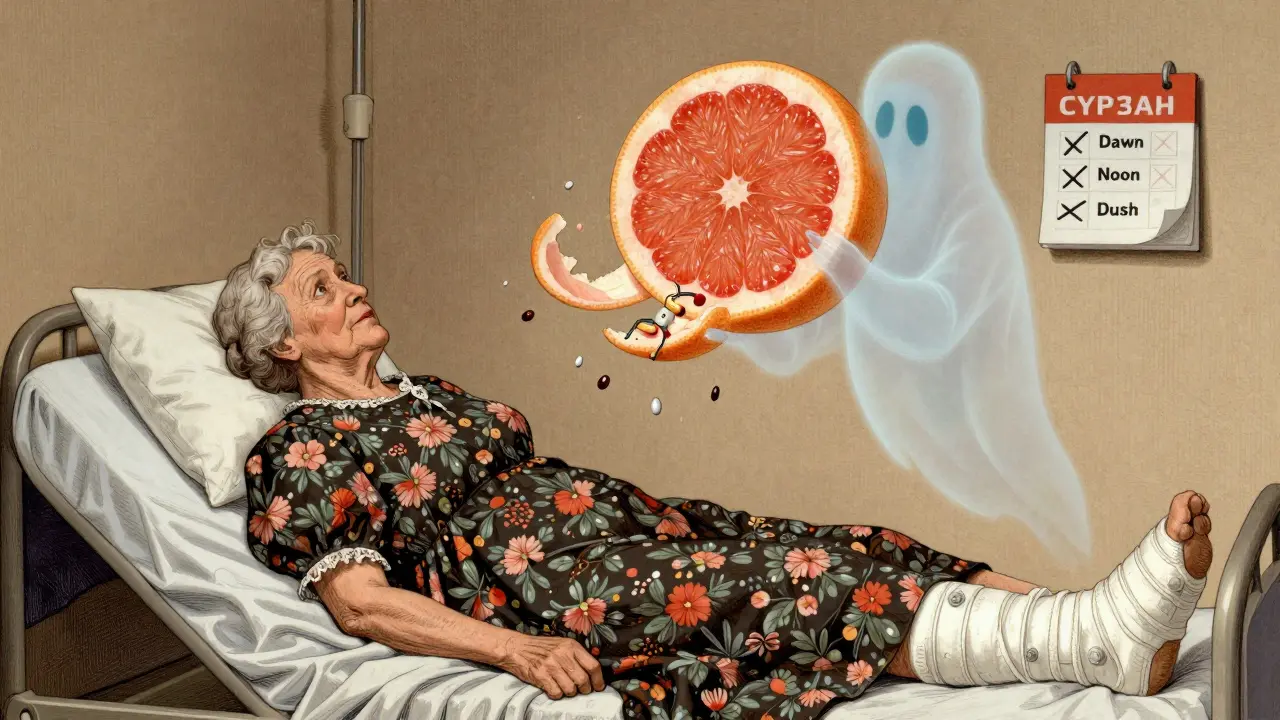
Most drug interactions go away when you stop the food or drink. Not this one. Furanocoumarins don't just block the enzyme - they destroy it. Your body has to grow new enzymes to replace what's lost. That takes time. Studies show it can take up to 72 hours for CYP3A4 activity to return to normal.
This means if you drink grapefruit juice on Monday, your body is still vulnerable on Thursday. Taking your medication on Wednesday? Still risky. There's no "safe window" between consumption and dosing. That's why experts say: if you're on one of these drugs, don't have grapefruit at all.
What Happens If You Ignore the Warning?
The effects aren't theoretical. Emergency rooms see this every day. Patients show up with:
- Severe low blood pressure (systolic under 90 mmHg)
- Swelling in the legs and ankles
- Flushing, headaches, or rapid heartbeat
- Confusion or fainting
In elderly patients, the risk of falls and fractures skyrockets. One nurse practitioner shared a case of an 82-year-old woman who started drinking grapefruit juice daily with her felodipine. Within weeks, she fell three times, broke her hip, and ended up in rehab. She had no idea the juice was the cause.
A 2021 CDC report estimated that grapefruit-related drug interactions send about 15,000 people to U.S. emergency rooms every year. Many of those cases involve calcium channel blockers. The numbers are likely higher in countries where grapefruit is a daily staple.
What Should You Do Instead?
If you're on a calcium channel blocker and love citrus, you have options:
- Switch medications: Amlodipine is the least affected, but still not zero-risk. Your doctor might consider switching you to an ACE inhibitor like lisinopril, an ARB like valsartan, a diuretic like hydrochlorothiazide, or a beta blocker like metoprolol. None of these interact with grapefruit.
- Avoid all grapefruit products: This includes juice, whole fruit, frozen pulp, and even grapefruit-flavored sodas or candies. Read labels carefully.
- Stick to safe citrus: Sweet oranges, tangerines, and mandarins are fine. Just avoid anything labeled "Seville," "sour," or "pomelo."
- Ask your pharmacist: When you pick up your prescription, ask: "Does this interact with grapefruit?" Pharmacists are trained to catch this - and many will flag it before you even ask.
There's good news: researchers are developing new versions of amlodipine that are less affected by grapefruit. Two extended-release formulations are in Phase III trials (NCT04567890 and NCT04567891) and show a 70% reduction in interaction risk. But those aren't available yet. Until then, caution is your best defense.
Why Do So Many People Not Know About This?
A 2022 survey by the American Society of Health-System Pharmacists found that only 37% of primary care doctors routinely ask patients about grapefruit use when prescribing calcium channel blockers. And 68% of patients had never heard of the interaction.
It's not because the science is new. The first study linking grapefruit to drug interactions was published in 1989. Since then, dozens of studies have confirmed it. Yet, it's still overlooked. Maybe because grapefruit seems healthy. Maybe because the warning isn't loud enough on labels. Or maybe because people assume their doctor already told them.
Don't assume. Ask. If you're on a blood pressure medication and you like citrus - make this your next conversation with your doctor.
Can I eat oranges while taking calcium channel blockers?
Yes, sweet oranges, tangerines, and mandarins are generally safe. They don't contain enough furanocoumarins to interfere with calcium channel blockers. But avoid Seville oranges, pomelos, and tangelos - these are closely related to grapefruit and carry the same risk. Always check labels on orange juice blends.
How long after eating grapefruit can I take my medication?
There's no safe waiting period. Grapefruit juice can permanently damage the CYP3A4 enzyme in your gut for up to 72 hours. Even if you eat grapefruit in the morning and take your pill at night, you're still at risk. The safest approach is to avoid grapefruit entirely while on these medications.
Is amlodipine (Norvasc) safe with grapefruit?
Amlodipine has a much weaker interaction than felodipine or nimodipine, but it's not risk-free. Studies show grapefruit can still increase amlodipine levels by 20-30%. If you're on amlodipine and drink grapefruit juice daily, your blood pressure could drop too low. It's better to avoid it, especially if you're older or have kidney issues.
What if I accidentally ate grapefruit while on a calcium channel blocker?
Monitor yourself for dizziness, lightheadedness, swelling in your legs, or a pounding heartbeat. If you feel faint or your blood pressure drops below 90/60, call your doctor or go to urgent care. Don't wait. This interaction can be dangerous, especially in older adults. Going forward, avoid grapefruit completely.
Are there any calcium channel blockers that don't interact with grapefruit?
All dihydropyridine calcium channel blockers - like felodipine, nicardipine, and nimodipine - are affected. Amlodipine has a lower risk but still carries some interaction. The safest alternative isn't another calcium channel blocker - it's a different class of blood pressure medication entirely, like lisinopril (ACE inhibitor), valsartan (ARB), hydrochlorothiazide (diuretic), or metoprolol (beta blocker). Talk to your doctor about switching if grapefruit is part of your daily routine.
Final Thoughts
This isn't about being perfect. It's about being informed. Grapefruit isn't the enemy - but when paired with certain blood pressure meds, it becomes one. Millions of people take calcium channel blockers. Many of them love citrus. But they don't realize how easily one habit can turn dangerous. The science is clear. The risks are real. And the solution? Simple: if you're on one of these drugs, skip the grapefruit. Your body will thank you.
Joanna Reyes
February 25, 2026 AT 01:42So I’ve been on amlodipine for like five years now, and I swear I’ve been drinking grapefruit juice every morning since I started. No issues. No dizziness, no fainting, nothing. I even checked with my pharmacist last year and they said "probably fine" since it’s not the high-risk ones. But now I’m second-guessing everything. I read that study where they measured drug levels in people who drank juice daily - 30% increase? That’s not nothing. I’m not saying I’ll quit, but I’m definitely going to get my bloodwork done next time I’m in. I’ve got an 80-year-old mom who’s on felodipine and she drinks it like water. I’m gonna send her this article. Maybe she’ll listen to her daughter for once.
Nerina Devi
February 27, 2026 AT 00:00This is such an important post. In India, we often use citrus peels in curries, chutneys, even tea - especially in winter. I never realized that even a tiny bit of zest could be dangerous if someone is on these meds. My uncle was hospitalized last year after a fall, and no one connected it to his daily glass of pomelo juice. He thought it was "natural medicine." We need to spread this awareness beyond English-speaking countries. Maybe community health workers can include this in their weekly talks. A simple poster in the local language could save lives. Thank you for writing this clearly - it’s not just medical advice, it’s cultural education too.
Dinesh Dawn
February 27, 2026 AT 10:36Just wanted to say thanks for laying this out so clearly. I’m on nicardipine and used to love grapefruit. Didn’t know it was a big deal until my pharmacist flagged it last month. Now I drink orange juice instead - sweet, no weird taste, and I don’t feel like I’m missing out. Also, the 72-hour window thing? Wild. I thought if I spaced it out, I’d be fine. Turns out, nope. My body doesn’t care about my schedule. I’m glad I found out before something bad happened. Small changes, big impact.
Vanessa Drummond
February 28, 2026 AT 15:40Ugh. Another one of these "don’t do this because science" posts. I’ve been eating grapefruit for 30 years. I’m 67. I take my meds. I’m not some fragile old lady. My BP is better than half the people in this thread. If your doctor can’t handle a little natural food interaction, maybe they shouldn’t be prescribing meds. Also - why is this even a thing? Grapefruit is healthy! It’s got vitamin C! Antioxidants! Maybe the real problem is that pharma companies want you to buy more expensive drugs because you "can’t have your breakfast."
Nick Hamby
February 28, 2026 AT 18:13There’s a deeper philosophical layer here that deserves attention. The assumption that natural = safe is a cognitive bias we carry with us, often unconsciously. We treat synthetic pharmaceuticals with suspicion, yet we grant a kind of moral innocence to foods - even when those foods contain potent biochemical inhibitors. Furanocoumarins are not contaminants; they’re evolved plant defense compounds. Their mechanism - irreversible enzyme inhibition - is not unlike some chemotherapy agents. The irony is that we celebrate grapefruit as a health food while ignoring that its very biological activity is what makes it dangerous in this context. Perhaps the real lesson isn’t just about drug interactions, but about humility in the face of biological complexity. We are not masters of our biochemistry; we are participants in it. And participation requires awareness, not just intention.
kirti juneja
March 2, 2026 AT 01:34OMG this is so real. I’m a nurse in Mumbai and we get so many elderly patients who come in with "random" low BP crashes - and guess what? Their grandkids give them grapefruit every morning "for immunity." We’ve had three falls in two months from this exact thing. I started handing out little printed cards in Hindi: "Grapefruit = Danger. Orange = Safe." One lady cried because she thought she’d never be able to have her morning juice again. I told her, "Beta, try mosambi juice - it’s sweet, cheap, and won’t kill you." Now she brings it to me every week. Small wins. Also - skip the zest. Even the peel on your chai? Yeah. That’s the trap. Don’t be cute with your spices when your meds are on the line.
Holley T
March 2, 2026 AT 05:32Actually, the data is misleading. The 300-500% increase figures are from single-dose studies in healthy young adults - not the elderly, not those on chronic therapy, not those with variable CYP3A4 expression. The real-world clinical significance is negligible for most patients on stable doses. A 2023 meta-analysis in the Journal of Clinical Pharmacology showed that only 0.8% of patients on amlodipine with daily grapefruit consumption experienced clinically significant hypotension. That’s less than the rate of adverse events from misaligned dosing schedules. Also - why are we ignoring individual genetic variability? Some people have naturally low CYP3A4 activity - they’re already metabolizing the drug slowly. For them, grapefruit adds nothing. This blanket warning is overkill. It’s fear-based public health messaging disguised as science.
Ashley Johnson
March 3, 2026 AT 03:19They don’t want you to know this but grapefruit juice is a government plot. The FDA and Big Pharma teamed up to make you buy more pills. They know grapefruit helps lower BP naturally - so they made up this whole "interaction" thing to scare you away. I read on a forum that the enzyme they talk about? CYP3A4? That’s a fake name. It’s actually called "The Profit Enzyme" and they invented it to sell more meds. My cousin’s friend’s neighbor works at a lab and said they were told to "make the juice look dangerous." I’m not taking any meds anymore. I drink grapefruit juice with lemon water and apple cider vinegar. I feel amazing. No more dizziness. No more pills. The system is rigged.
tia novialiswati
March 3, 2026 AT 15:09Thank you for this!! 🙌 I’ve been on felodipine since 2020 and I used to LOVE grapefruit. Now I swap it for mandarins - they’re sweet, easy to peel, and my BP stays stable. My pharmacist gave me a little fridge magnet that says "Grapefruit? No thanks!" and I put it on my juice glass. My grandkids think it’s funny, but they’ve started reminding me too. Small habits change lives. You’re doing great work. Keep sharing this 💪🍊
Maranda Najar
March 4, 2026 AT 17:07This isn’t just about grapefruit. This is about the slow, silent erosion of bodily autonomy under the guise of medical authority. I’ve been on calcium channel blockers for a decade. I’ve never had a single adverse event. Yet now, because of one study, one enzyme, one chemical - I’m told I must surrender a beloved ritual. I am not a statistic. I am not a case study. I am a woman who wakes up every morning and chooses what she consumes - and I refuse to be coerced into fear by a paragraph in a medical journal. The real danger is not grapefruit - it’s the surrender of personal agency to institutional dogma. I will drink my juice. I will live my life. And if I fall? I will fall on my own terms.
Christopher Brown
March 5, 2026 AT 18:53Why are we even talking about this? Americans can’t handle a grapefruit? Get over it. In my country, we eat citrus with everything. It’s not a drug interaction - it’s a cultural weakness. If you can’t handle a natural food while on meds, maybe you shouldn’t be on meds. Also - the CDC numbers? Probably inflated. There’s no way 15,000 people are falling because of juice. That’s like saying 10,000 people died from eating toast last year. Ridiculous. Stop coddling people.
Sanjaykumar Rabari
March 7, 2026 AT 14:07I think this whole grapefruit thing is a lie. I work at a pharmacy in Gujarat. I’ve seen hundreds of people take blood pressure pills with orange juice. No one dies. No one faints. The government made this up to sell more medicine. Also - why only grapefruit? What about lemon? Lime? They have the same acids. Why not ban those too? I think the real reason is that drug companies want people to switch to their expensive pills. Don’t fall for it. Eat what you want. Your body knows better.