
Cardiac Rehabilitation After Heart Attack or Surgery: What to Expect and Why It Matters
 Feb, 7 2026
After a heart attack or heart surgery, your body doesn’t just need time to heal-it needs the right kind of support. Many people think rest is the answer, but the truth is, cardiac rehabilitation is one of the most powerful tools you have to get back to life-and even live longer. It’s not a luxury. It’s a proven, medically supervised program that’s been shown to cut your risk of dying from heart disease by up to 30%. Yet, fewer than 4 in 10 people who qualify actually join one. That’s a huge gap between what works and what happens.
What Exactly Is Cardiac Rehabilitation?
Cardiac rehabilitation isn’t just a gym membership or a few physical therapy sessions. It’s a structured, science-backed program designed for people who’ve had a heart attack, bypass surgery, stent placement, valve repair, or even heart failure. The goal? To help you recover safely, build strength, reduce future heart risks, and feel more in control of your health.
According to the American Heart Association (2024), every effective cardiac rehab program includes four key parts: supervised exercise, education on heart-healthy living, help managing emotional health, and tracking your progress over time. It’s not about pushing yourself to the limit. It’s about moving smartly, steadily, and with medical oversight.
The Three Phases of Cardiac Rehab
Cardiac rehab happens in three clear stages, each with its own focus and timing. Skipping any of them can slow your recovery.
Phase I: In-Hospital Recovery (Starts Within 24-48 Hours)
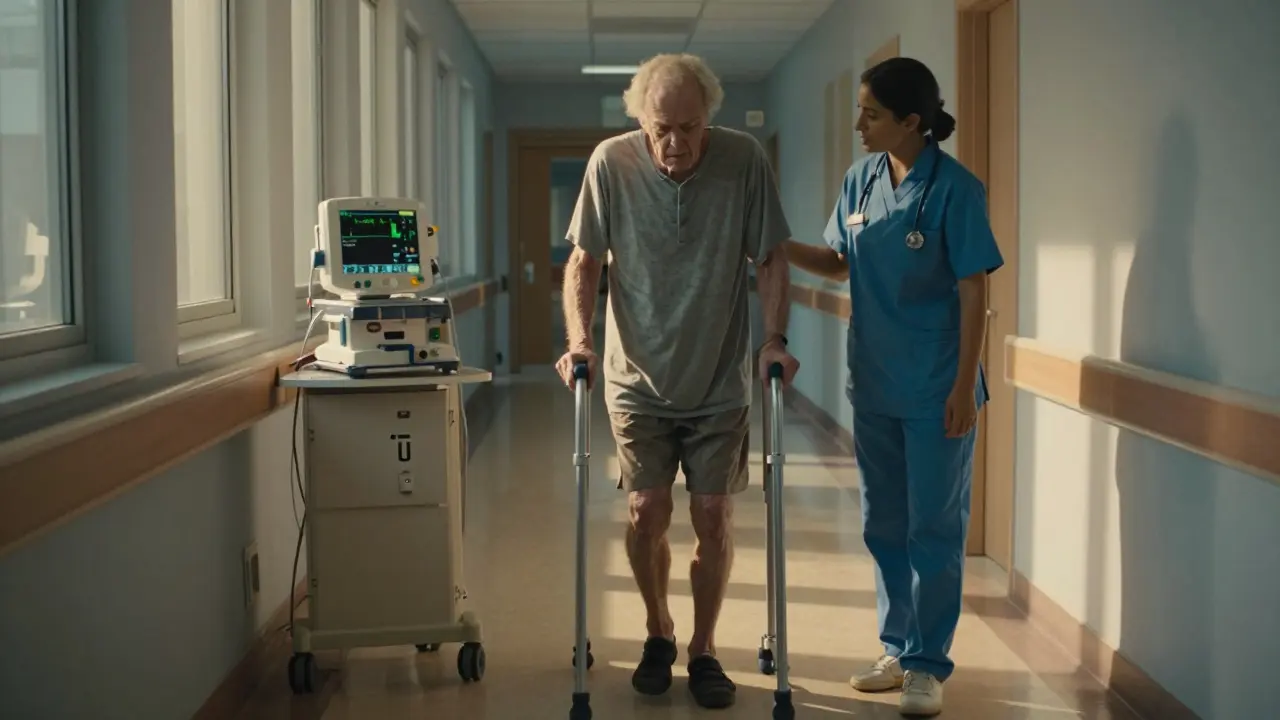
This phase begins while you’re still in the hospital. It’s not about running laps-it’s about getting up, sitting in a chair, and taking a few slow steps. Doctors and physiotherapists monitor your heart rate and blood pressure closely. You’ll do short bursts of activity-maybe 3 to 5 minutes of walking-followed by rest. These sessions happen 3 to 4 times a day for the first few days.
The rules are simple: keep your heart rate under 120 beats per minute, or no more than 20 beats above your resting rate. You shouldn’t feel dizzy, chest pain, or extreme shortness of breath. If you’re using the Borg scale for effort, aim for a rating of 11 to 13-meaning you’re working hard enough to notice it, but not so hard you can’t talk.
Phase II: Outpatient Program (Starts 1-3 Weeks After Discharge)
This is where most of the real progress happens. Phase II typically lasts 12 weeks and includes 36 supervised sessions, usually three to five times a week. Each session lasts about an hour and combines aerobic exercise, strength training, and education.
Aerobic workouts-like walking on a treadmill, cycling, or using an elliptical-are done at a moderate intensity. That means you’re working at 40% to 60% of your heart rate reserve, or about 60% to 75% of your maximum predicted heart rate. On the Borg scale, that’s still a 12 to 13. You should be able to speak in short sentences, but not sing.
Strength training is added twice a week. You’ll do 8 to 10 exercises targeting major muscle groups, using light weights or resistance bands. The goal? Ten to fifteen reps per set, with no straining. Breathing normally during lifts is critical-holding your breath can spike your blood pressure dangerously.
Progress is measured. A successful rehab program should show at least a 15% increase in your peak oxygen uptake, a 40% boost in your exercise capacity (measured in metabolic equivalents), and a 10% improvement in how far you can walk in six minutes.
Phase III: Long-Term Maintenance (Lifelong Habit)
Once Phase II ends, you’re not done-you’re just getting started. Phase III is about making heart-healthy habits stick. You’ll move from supervised sessions to self-managed routines, but you’ll still check in with your care team periodically.
The goal here? At least 150 minutes of moderate-intensity aerobic activity per week. That’s 30 minutes, five days a week. You can break it into 10-minute chunks if needed. Add two days of light strength training. Walk to the shop. Take the stairs. Garden. Dance. The point isn’t perfection-it’s consistency.
Who Should Join Cardiac Rehab?
Not everyone who has a heart issue qualifies, but many more people should than do. The American Heart Association says cardiac rehab is recommended if you’ve had:
- A heart attack in the past 12 months
- Coronary artery bypass surgery
- Angioplasty or stent placement
- Heart valve repair or replacement
- A heart or lung transplant
- Stable angina (chest pain during activity)
- Chronic heart failure
It’s also helpful for people with blocked arteries that cause pain when walking, certain types of cardiomyopathy, or even peripheral artery disease. If your doctor says you’re stable and cleared for activity, rehab is likely right for you.
There are some cases where it’s not safe yet: unstable angina, uncontrolled arrhythmias, severe aortic stenosis, or active heart inflammation. But these are exceptions, not the rule.

Why So Few People Join
Here’s the hard truth: even though Medicare covers 36 sessions (with just a 20% coinsurance), only 36.8% of eligible patients in the U.S. enrolled in 2021. Why?
- Many doctors don’t refer patients. Only about 70% of eligible people even get a recommendation.
- Transportation is a big barrier, especially in rural areas.
- Scheduling conflicts-work, family, childcare-make it hard to commit.
- Some people think it’s not necessary or fear it’s dangerous.
But here’s the data: cardiac rehab has a complication rate of just 1 per 100,000 hours of exercise. That’s safer than driving to the store. A 2022 Cochrane review of over 12,700 people showed it cuts heart-related deaths by 26% and hospital readmissions by 18%. It’s not a guess. It’s a fact.
What If You Can’t Go to a Center?
Not everyone lives near a rehab facility. That’s why telehealth cardiac rehab is now a real option. A 2022 study in JAMA Network Open found that people who did rehab at home with remote monitoring had nearly the same improvements in fitness as those who went to a center. Wearable devices track your heart rate, steps, and sleep. You check in via video calls. Your exercise plan is adjusted online.
The Centers for Medicare & Medicaid Services started covering remote rehab in 2021. If you’re eligible and can’t travel, ask your doctor about this option. It’s not second-best-it’s a valid, effective alternative.

What You Should Do Right Now
If you’ve had a heart event, here’s what to do:
- Ask your doctor for a referral to cardiac rehab. Don’t wait for them to bring it up.
- If they say no, ask why. If it’s because you’re “too old” or “not active enough,” that’s outdated thinking.
- Check if your insurance covers it. Medicare does. Most private plans do too.
- If travel is an issue, ask about home-based or virtual rehab options.
- Start moving. Even if you’re not in rehab yet, walk 5 to 10 minutes a day. Gradually build up. Don’t push through pain or dizziness.
And if you’re a family member-help. Drive them to sessions. Cook heart-healthy meals. Encourage them. Your support matters more than you know.
Final Thought
Cardiac rehab isn’t about fixing your heart. It’s about helping you live again. It gives you back control-over your body, your routine, your future. You don’t need to be an athlete. You just need to show up, move safely, and stick with it. The science is clear. The benefits are real. And the opportunity? It’s waiting for you.