
Bariatric Vitamins: Preventing Deficiencies After Weight Loss Surgery
 Jan, 19 2026
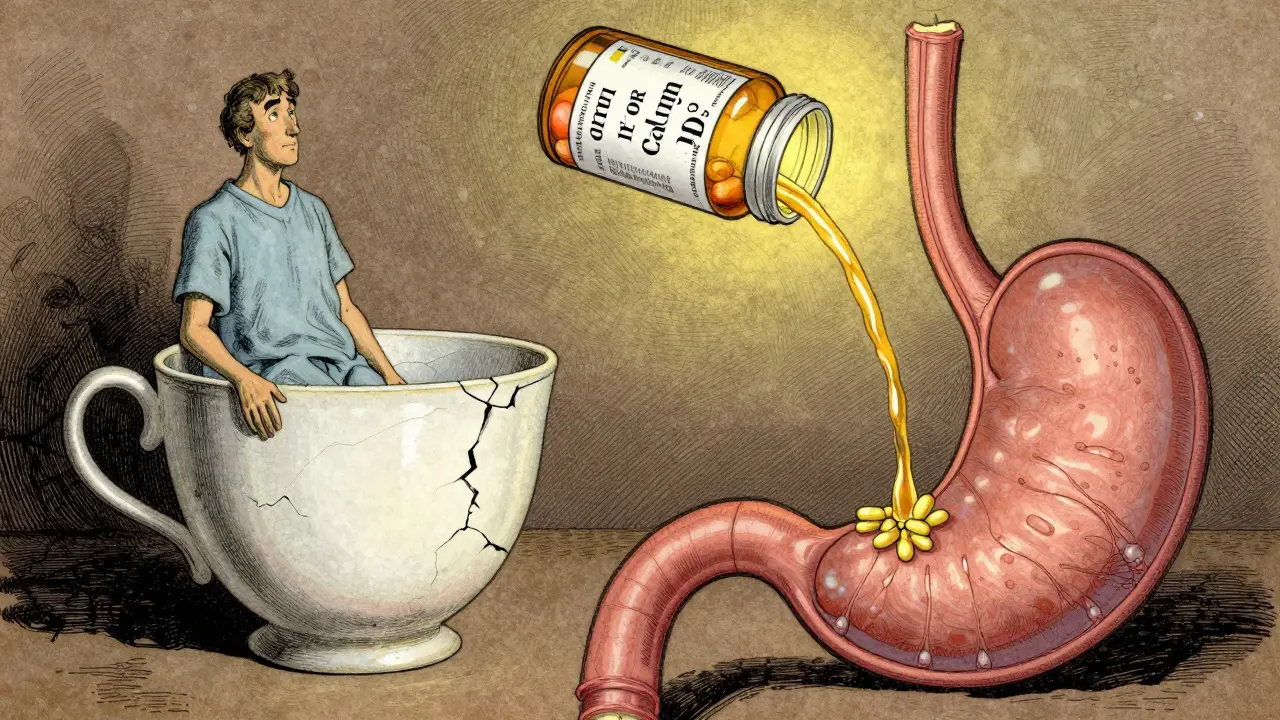
After weight loss surgery, your body changes in ways most people don’t expect. Your stomach is smaller, your digestive tract is rerouted, and the way your body absorbs nutrients is completely different. That’s why taking a regular multivitamin from the drugstore isn’t enough-it’s like trying to fill a race car with a teacup. Without the right bariatric vitamins, you’re at serious risk for deficiencies that can lead to fatigue, nerve damage, bone fractures, and even permanent neurological problems.
Why Regular Vitamins Don’t Work After Bariatric Surgery
Standard multivitamins are designed for people with fully functioning digestive systems. After a gastric bypass or sleeve gastrectomy, your body can’t absorb nutrients the same way. For example, vitamin B12 needs stomach acid and intrinsic factor to be absorbed-both are reduced or eliminated after surgery. Iron requires an acidic environment to convert into a usable form, and calcium carbonate needs stomach acid to dissolve. If you’re not taking supplements made specifically for bariatric patients, your body simply isn’t getting what it needs.Studies show that without proper supplementation, up to 60% of people who’ve had a Roux-en-Y gastric bypass develop vitamin B12 deficiency within the first year. Nearly half experience folic acid deficiency. Vitamin D levels drop in about 12% of patients, and iron deficiency affects 20-47% of bypass patients. These aren’t rare side effects-they’re expected outcomes if you don’t take the right vitamins.
What Bariatric Vitamins Must Contain
The American Society for Metabolic and Bariatric Surgery (ASMBS) sets the gold standard for post-surgery nutrition. Their 2019 guidelines outline exactly what your daily supplement should include:- Iron: At least 18 mg daily-higher than most multivitamins
- Vitamin B12: 500 mcg daily (oral) or injections for severe deficiency
- Calcium: 1,000-1,200 mg total per day, split into two or three doses of 500-600 mg
- Vitamin D3: 3,000 IU daily (some patients need more based on blood levels)
- Vitamin A: 5,000-10,000 IU daily
- Folic acid: 400-800 mcg daily
- Thiamine (B1): At least 12 mg daily-often overlooked but critical
These numbers aren’t suggestions-they’re medical requirements. Many patients think one pill a day is enough, but the reality is you’ll likely need multiple pills or a combination of chewables, liquids, and separate supplements.
Form Matters: Chewables, Liquids, and Why Pills Won’t Cut It
For the first 3 to 6 months after surgery, your stomach is too small to handle large pills. Solid tablets may not dissolve properly, and your body won’t absorb them. That’s why chewables and liquids are the only options during this phase.Many patients report that swallowing pills causes nausea, vomiting, or even blockages. Switching to a liquid B12 or a chewable multivitamin solved their problems. One patient on Reddit shared that after struggling with pills for two months post-sleeve, switching to a liquid B12 eliminated their tingling hands and brain fog within weeks.
Even after the initial healing period, many patients continue preferring chewables or liquids because they’re easier on the stomach. Some bariatric-specific brands now offer once-daily chewable formulas that combine iron, B12, and vitamin D-making adherence easier.
Calcium: The Trickiest Nutrient to Get Right
Calcium is one of the most misunderstood supplements after surgery. Your body can only absorb about 500-600 mg at a time. Taking 1,200 mg in one pill means more than half is wasted.You need to spread your calcium intake across meals. For example: 500 mg with breakfast, 500 mg with lunch, and 200 mg with dinner. And not all calcium is equal. Calcium carbonate needs stomach acid to work-something you don’t have much of after surgery. Calcium citrate doesn’t need acid, so it’s the only form you should use.
Many bariatric vitamins include calcium citrate, but not enough. Most patients need to buy extra calcium citrate tablets to meet the full daily requirement. Don’t assume your multivitamin is doing the job alone.

How Deficiencies Differ by Surgery Type
Not all weight loss surgeries are the same, and neither are your vitamin needs.Roux-en-Y Gastric Bypass (RYGB) cuts off part of the small intestine, so nutrients don’t get absorbed well. This leads to the highest risk for B12, iron, calcium, and fat-soluble vitamins (A, D, E, K). About 60% of RYGB patients develop B12 deficiency. Iron deficiency hits 47%.
Sleeve Gastrectomy removes part of the stomach but doesn’t reroute the intestines. Deficiencies are less severe but still common. Iron and vitamin D are the biggest concerns, with 15-30% of patients developing iron deficiency. B12 deficiency affects 25-30%.
Adjustable Gastric Banding is less common now, but patients still need extra vitamin D and iron. Fat-soluble vitamin deficiencies are less frequent than in bypass patients.
There’s no one-size-fits-all formula. Your supplement plan should match your surgery type. If you’re unsure, ask your dietitian or surgeon for a tailored plan.
Real People, Real Problems
Online communities like Reddit’s r/bariatrics are full of stories that mirror clinical data. One user, ‘BariatricWarrior2022,’ said their numb hands and memory issues disappeared after starting 1,000 mcg of sublingual B12. Another, ‘GastricBypassJourney,’ said taking 8 pills a day felt impossible. They struggled with constipation from iron and gave up for months-until they switched to ferrous fumarate, which was gentler on their stomach.Cost is another barrier. A full bariatric supplement routine can cost $30-$60 a month. For patients without insurance coverage, that’s a lot. Some find savings by buying in bulk from Costco (Kirkland Signature offers a bariatric formula) or using mail-order pharmacies. Others rely on free samples from their surgical center.
One of the most common complaints? ‘I forgot.’ Life gets busy. Work, kids, appointments-it’s easy to skip a dose. That’s why pill organizers, phone alarms, and apps with reminder features are game-changers.
Monitoring: Blood Tests Are Non-Negotiable
You can’t guess if your vitamins are working. You need blood tests.The ASMBS recommends testing every 3-6 months during the first two years after surgery, then annually after that. Key tests include:
- Vitamin B12
- Folate (folic acid)
- Iron studies (ferritin, hemoglobin, transferrin)
- Vitamin D (25-hydroxyvitamin D)
- Calcium
- Thiamine
Some patients feel fine-until they get tested and find their B12 is below 200 pg/mL (normal is 200-900). That’s when nerve damage can start. By then, it’s often too late to reverse.
Don’t wait for symptoms. Get tested. Even if you’re taking your vitamins, levels can still drop due to poor absorption, medication interactions, or changes in diet.

What to Look for in a Bariatric Vitamin Brand
Not all bariatric vitamins are created equal. Here’s what to check:- Iron form: Ferrous fumarate or ferrous sulfate? Fumarate is gentler on the stomach.
- Calcium form: Must be calcium citrate.
- Vitamin D form: D3 (cholecalciferol), not D2.
- Vitamin B12 form: Cyanocobalamin or methylcobalamin-both work, but methylcobalamin may be better absorbed.
- Form: Chewable or liquid preferred, especially early on.
- Third-party testing: Look for USP or NSF certification to ensure quality.
Top-rated brands like Nature’s Bounty Bariatric Formula and Bariatric Fusion are popular, but many patients still need to add extra calcium or B12 because the doses in the multivitamin aren’t enough. Always compare the label to the ASMBS guidelines.
Long-Term Commitment: This Isn’t Temporary
This isn’t a 6-month fix. It’s a lifelong habit. Studies show that only 30-50% of patients stick with their vitamin regimen after five years. That’s why so many end up with osteoporosis, anemia, or neuropathy years later.Think of your bariatric vitamins like insulin for diabetes. You don’t stop taking them when you feel better. You keep taking them because your body can’t make up for what it can’t absorb.
Set reminders. Keep your vitamins by your toothbrush. Use a pill box. Talk to your dietitian every time you see them. Your future self will thank you.
Final Warning: Toxicity Is Also a Risk
More isn’t always better. Fat-soluble vitamins-A, D, E, K-can build up in your body and become toxic if you take too much. Vitamin A toxicity can cause liver damage, headaches, and dizziness. Vitamin D overdose can raise calcium levels dangerously high.Stick to the recommended doses. Don’t double up because you missed a day. Don’t take extra vitamin D because you’re ‘feeling low.’ Get tested instead. Your doctor can adjust your dose safely based on blood results.
Can I just take a regular multivitamin after bariatric surgery?
No. Regular multivitamins don’t contain enough iron, B12, calcium, or vitamin D to meet the needs of someone who’s had weight loss surgery. They also often use forms of nutrients (like calcium carbonate) that your body can’t absorb after surgery. Using them puts you at high risk for serious deficiencies.
How long do I need to take bariatric vitamins?
For life. Your body’s ability to absorb nutrients changes permanently after surgery. Stopping supplements-even if you feel fine-can lead to irreversible damage like bone fractures, nerve problems, or anemia years later. Lifelong supplementation is non-negotiable.
Why do I need calcium citrate instead of calcium carbonate?
Calcium carbonate needs stomach acid to dissolve and be absorbed. After sleeve gastrectomy or gastric bypass, your stomach produces far less acid. Calcium citrate doesn’t need acid-it’s absorbed directly in the small intestine, making it the only effective form after surgery.
Is it okay to take B12 injections instead of pills?
Yes. Injections are the gold standard for treating severe B12 deficiency. For maintenance, high-dose oral B12 (1,000 mcg daily) works just as well for most people after gastric bypass. Injections are usually reserved for those who can’t absorb oral B12 or have symptoms like numbness or memory loss.
What should I do if my bariatric vitamins make me sick?
Switch forms. If pills cause nausea, try chewables or liquids. If iron causes constipation, switch from ferrous sulfate to ferrous fumarate. Talk to your dietitian-they can help you find a brand or format that works with your body. Don’t stop taking your vitamins-just find a better way to take them.
Roisin Kelly
January 19, 2026 AT 21:19lol so now i'm supposed to take 8 pills a day and get blood tests every 3 months just to not turn into a zombie? sounds like the medical industrial complex just invented a new subscription service for people who lost weight. i bet they get kickbacks from vitamin companies. also who has time for this? i'm already late for work and my coffee's cold.
lokesh prasanth
January 20, 2026 AT 21:49vitamins not magic. body changed. adapt or die. simple. no need for 8 pills. just take what u need. doctors overcomplicate. u dont need thiamine if u dont feel shaky. stop listening to asmbs. they paid by pharma.
MAHENDRA MEGHWAL
January 21, 2026 AT 03:23Thank you for this meticulously detailed and clinically grounded exposition. As someone who has observed the long-term outcomes of bariatric patients in my professional capacity, I can attest to the profound necessity of adherence to these supplementation protocols. The physiological alterations post-surgery are not merely incremental-they are transformative, and the biochemical consequences of neglect are both insidious and irreversible. I urge all post-operative individuals to treat this regimen with the reverence it deserves.
Dee Monroe
January 22, 2026 AT 16:19I remember when I first started taking my bariatric vitamins-I thought I was being dramatic, like I was on some kind of medical mission. But then I started getting these weird tingles in my fingers, and my brain felt like it was wrapped in cotton. I didn’t connect it to anything until I read this and realized I hadn’t taken B12 in weeks. I switched to sublingual methylcobalamin and within 10 days, the fog lifted. It’s not just about taking pills-it’s about listening to your body when it whispers before it screams. You’re not being extra, you’re being smart. And honestly? The fact that you’re even reading this means you’re already ahead of 90% of people who had the surgery. Keep going. Your future self is already hugging you.
Sangeeta Isaac
January 23, 2026 AT 21:15so i took my 12 pills this morning like a good little zombie and then i remembered i forgot to charge my phone so the reminder app didn’t go off yesterday. i cried a little. not because i’m weak, but because i spent 45 minutes sorting these damn chewables into a pill organizer shaped like a unicorn and now i feel like i’m in a cult where the god is calcium citrate. also i just googled ‘can you overdose on vitamin D’ and now i’m terrified i’m gonna turn into a human glowstick. send help. or at least a better brand.
Philip Williams
January 25, 2026 AT 16:49This is an exceptionally thorough and well-researched overview. The distinction between calcium carbonate and calcium citrate is critical and frequently misunderstood. I would like to add that patients should also monitor their zinc and copper levels, as malabsorption often extends beyond the commonly cited nutrients. Additionally, while chewables are ideal early on, some patients may benefit from sublingual or transdermal formulations later as tolerance improves. Consistency and monitoring remain paramount.
Jerry Rodrigues
January 26, 2026 AT 07:44Been doing this for 7 years. Still forget sometimes. Still take my pills. Still get blood work. Still feel like a robot. But I walk without pain. I don't have numb hands. I didn't break a bone. So yeah. Worth it. Just take the damn vitamin.
Barbara Mahone
January 27, 2026 AT 01:49Interesting how the language of medical necessity often mirrors that of religious devotion-'lifelong commitment,' 'non-negotiable,' 'gold standard.' One wonders whether the fear of deficiency is leveraged to ensure compliance, or whether the science truly demands such rigidity. Either way, the data is clear: adherence saves lives. I take my calcium citrate with breakfast, my B12 with lunch, and my iron with dinner. I do not question it. I simply do it.
Amber Lane
January 28, 2026 AT 12:55My mom took one pill a day for 3 years after her sleeve. Got osteoporosis at 58. Don’t be her.