
Authorized Generic Pricing: Why They Cost Less Than Brand Name Drugs
 Dec, 4 2025
When you see a prescription for a brand-name drug like Lipitor or Nexium, you might assume the only cheaper option is a generic version. But there’s another option most people don’t know about: authorized generics. These aren’t knockoffs. They’re the exact same pill, capsule, or injection you’d get from the brand - same factory, same ingredients, same packaging, sometimes even the same box. The only difference? The price. Authorized generics often cost 4% to 8% less than the brand, and sometimes even more. So why do they cost less? And why does it matter?
What Exactly Is an Authorized Generic?
An authorized generic is a brand-name drug sold under a different label, but made by the same company that makes the original. It’s not a copy. It’s the real thing, just without the brand name on the bottle. The U.S. Food and Drug Administration (FDA) requires the original manufacturer to notify them when they start selling an authorized generic. That’s why you’ll see a list of these drugs updated every quarter on the FDA’s website.
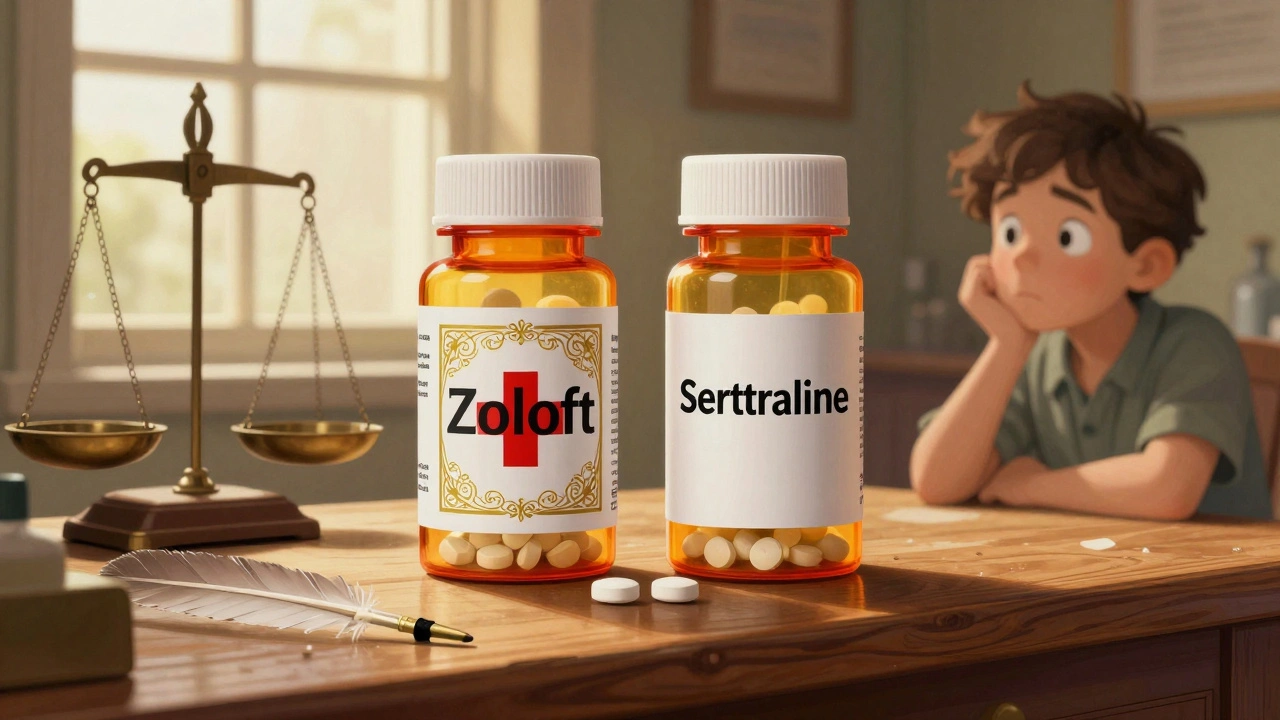
For example, if Pfizer makes the brand-name drug Zoloft, they might also produce an authorized generic version of sertraline - the same active ingredient, same dosage, same manufacturing line. The only change? The label says "Sertraline" instead of "Zoloft." The pills are identical. No differences in how they work, how fast they absorb, or how safe they are.
This isn’t a loophole. It’s legal. In fact, it’s built into the system. The Hatch-Waxman Act of 1984 gave drug companies a way to protect their profits when patents expire. One of those tools? Authorized generics.
Why Do Authorized Generics Cost Less?
The answer is simple: no marketing costs.
Brand-name drugs spend billions on advertising - TV commercials, doctor visits, patient brochures, online ads. All of that gets baked into the price. Authorized generics skip all of that. There’s no need to convince doctors or patients that this drug is better. It’s the same drug. So the company doesn’t need to spend a dime on promotion.
They also don’t need to pay for expensive clinical trials. The original brand already did that. The FDA approved the drug years ago. Authorized generics use the same approval path - the original New Drug Application (NDA). That saves millions in regulatory costs.
And because they’re made in the same factory as the brand, there’s no need to build new production lines or hire new quality control teams. The same machines, same workers, same inspections. Just a different label.
That’s why the price drops. Not because the drug is cheaper to make - it’s not. It’s because the company stops spending money on things that don’t add value to the product itself.
How Authorized Generics Change the Market
When a brand-name drug’s patent expires, the first generic company to file gets 180 days of exclusive rights to sell the generic version. That’s a big deal. During those six months, they’re the only one allowed to sell a generic. That gives them power to set high prices - sometimes even close to the brand price.
But if the brand company launches an authorized generic at the same time? Everything changes.
Now there are two low-cost versions on the shelf: the first generic and the authorized generic. Suddenly, competition isn’t just between the brand and the generic - it’s between two generics. That forces prices down fast. Studies from the Federal Trade Commission show that when an authorized generic enters the market at the same time as the first generic, retail prices drop 4% to 8% compared to when no authorized generic is present. For pharmacies buying in bulk, the discount can be as high as 18%.
Take the EpiPen. In 2016, Mylan raised the price from $100 to $600. Public outrage followed. They responded by launching an authorized generic for $300 - half the price. That didn’t fix everything, but it gave people a real alternative.
Another example: Gilead’s hepatitis C drugs Harvoni and Epclusa. Before their patents expired, Gilead launched authorized generics to keep market share as cheaper options were coming. It worked. Patients got lower prices, and Gilead still kept a piece of the pie.
Authorized Generics vs. Traditional Generics
It’s easy to confuse authorized generics with regular generics. But here’s the key difference:
- Authorized generics are made by the brand company or under its direct permission. Same factory. Same NDA. Same quality control.
- Traditional generics are made by other companies. They file their own application (ANDA) with the FDA. They might use different fillers, different coatings, or different packaging. They’re still safe and effective, but they’re not identical in every detail.
That’s why authorized generics are often preferred by pharmacists and doctors. They’re the closest thing to the brand - without the brand price tag.
And because they’re made by the original manufacturer, there’s less risk of supply issues. If the brand company runs out of the branded version, they can just switch production to the authorized generic. No delays. No shortages.
Why Aren’t Authorized Generics More Common?
They’re actually more common than you think. About 67% of brand-name drug makers have used authorized generics for at least one product since 2010. But they’re not always easy to find.
Pharmacy Benefit Managers (PBMs) - the middlemen who negotiate drug prices for insurance plans - often put authorized generics on the same tier as the brand name. That means your copay might be the same whether you pick the brand or the generic. You won’t know you’re paying more than you need to.
Some PBMs even push the brand name first. Why? Because they get rebates from the brand company. Those rebates don’t always go to you. They go to the PBM. So even if the authorized generic is cheaper, your plan might not show it as the best option.
That’s why it’s important to ask your pharmacist: "Is there an authorized generic for this?" And if they say no, ask again. Sometimes they have to check a separate system.
How to Save Money With Authorized Generics
Here’s how to make sure you’re getting the best price:
- Ask your doctor if an authorized generic is available for your prescription. Many don’t know.
- Call your pharmacy and ask: "Do you carry the authorized generic for [drug name]?"
- Check the FDA’s quarterly list of authorized generics. It’s public and free.
- If your insurance says the brand is cheaper, ask why. Ask for a breakdown of the copay tiers.
- Use a price comparison app like GoodRx. It often shows the authorized generic as the lowest price.
One study of 1.2 million Medicare Part D patients found that when authorized generics were placed on the same tier as traditional generics, medication adherence improved by 8.2 percentage points. People took their meds more consistently because they could afford them.
What’s Next for Authorized Generics?
The Inflation Reduction Act of 2023 capped out-of-pocket drug costs for Medicare beneficiaries at $2,000 a year. That’s a big win. But it also means insurers and PBMs are looking harder at every dollar they spend. Authorized generics are becoming even more valuable.
Drug manufacturers know this. They’re using authorized generics not just to compete, but to delay the entry of multiple generic competitors. The FTC has raised concerns about this - especially when brand companies strike deals with generic makers to delay competition. But for now, if you’re a patient, this is still your best shot at a low-cost, high-quality version of your medicine.
There’s no trick. No hidden catch. Authorized generics are just the same drug, sold for less. And if you’re paying full price for a brand-name drug when an authorized generic exists? You’re leaving money on the table.
Are authorized generics as safe as brand-name drugs?
Yes. Authorized generics are made by the same company, in the same facility, using the same ingredients and quality controls as the brand-name version. The FDA requires them to be identical in dosage, strength, safety, and effectiveness. There is no difference in how they work or how safe they are.
Why don’t pharmacies always offer authorized generics?
Many pharmacies don’t automatically stock them because Pharmacy Benefit Managers (PBMs) often place them on the same tier as the brand-name drug. That means your copay doesn’t change, so pharmacists have no incentive to push them. Always ask - they may need to order it.
Can I switch from a brand-name drug to an authorized generic?
Yes, and you should. Authorized generics are chemically and therapeutically identical. Switching won’t affect how the drug works. Many patients report no difference at all. Always check with your doctor first, but switching is safe and often saves money.
Do authorized generics have the same side effects as brand-name drugs?
Yes. Since they contain the exact same active ingredient and are manufactured under the same standards, side effects are identical. Any differences in how you feel are likely due to inactive ingredients, but those are minimal and rarely cause issues.
How do I find out if my drug has an authorized generic?
Check the FDA’s quarterly list of authorized generics online. You can also ask your pharmacist or use price comparison tools like GoodRx. If the drug is on the list, ask your doctor to prescribe the generic version - even if the brand is listed on your insurance formulary.
Jimmy Jude
December 4, 2025 AT 15:06So let me get this straight - the same damn pill, same factory, same everything, but now it’s cheaper because they took off the fancy label? And we’re supposed to be shocked? This isn’t innovation, it’s corporate theater. They’re just repackaging greed as a public service. The real scam is that we still have to beg our pharmacists to even *tell* us this exists.
Mark Ziegenbein
December 6, 2025 AT 00:19Let’s not romanticize this as some kind of consumer win - it’s a calculated maneuver within the capitalist machinery designed to preserve monopolistic control under the guise of competition. The brand-name manufacturer doesn’t ‘lose’ anything - they simply redirect their profit stream from branding overhead to market dominance through preemptive generic saturation. The FDA’s role here is not regulatory - it’s performative. They’re the stagehands in a play where the audience pays for the tickets and the lights, but never gets to see the script.
Katie Allan
December 7, 2025 AT 23:08This is actually one of the most important things patients should know about their prescriptions. I’ve seen so many people pay hundreds more than they need to because they didn’t ask. Pharmacists aren’t always trained to push this - but you can change that by asking. It’s not complicated: same pill, lower price. If your insurance doesn’t reflect that, it’s not your fault - it’s the system. Keep asking. Keep pushing. You deserve better.
Deborah Jacobs
December 8, 2025 AT 11:02I used to think generics were sketchy until I switched my antidepressant to the authorized version - same tiny white pill, same side effects, same relief. My copay dropped from $85 to $18. I cried in the pharmacy aisle. Not because I was sad - because I realized I’d been overpaying for years out of fear, not facts. If you’re on a chronic med, please, please ask your pharmacist. It’s not magic. It’s just justice.
James Moore
December 9, 2025 AT 23:10Let’s be clear: this isn’t about ‘saving money’ - it’s about exposing the complete moral bankruptcy of the American pharmaceutical industry. We’re being fleeced by corporations who profit from our ignorance, our fear, and our inability to question the system. The fact that we have to Google FDA lists just to get the same damn drug for less? That’s not capitalism - that’s feudalism with a pharmacy counter. And don’t get me started on PBMs - those middlemen are the real villains, skimming rebates while you bleed out your paycheck.
Kylee Gregory
December 11, 2025 AT 00:35I think this is actually kind of beautiful in a weird way - the system has a crack in it, and this is how it’s being used. The brand company isn’t trying to destroy competition; they’re using their own infrastructure to soften the blow of generic entry. It’s not perfect, but it’s a step toward fairness. Maybe if enough people ask for it, the system will have to adapt. Not because it wants to - but because we’re forcing it to.
Lucy Kavanagh
December 11, 2025 AT 16:06Wait - so you’re telling me the drug companies are secretly giving us cheaper versions of their own drugs… but only if we ask? And the insurance companies are hiding it? This sounds like a government-authorized scam. Who’s really behind this? Are the PBMs working with Big Pharma to keep us docile? I’ve been reading about how they track our prescriptions… maybe this is just another way to control us. Why don’t they just lower prices outright? Something’s off.
Stephanie Fiero
December 12, 2025 AT 08:18Y’all need to stop overthinking this. Just ask your pharmacist. I did. They had to dig through their system but found it - saved me $60/month on my blood pressure med. No drama. No conspiracy. Just a stupidly simple fix that no one tells you about. Stop scrolling. Start asking. You got this.
Michael Dioso
December 13, 2025 AT 19:58Oh wow, so the same company that charges $500 for a pill now sells it for $460 and calls it a ‘win’? Congrats, you’ve just turned price gouging into a public service announcement. This isn’t transparency - it’s a PR stunt wrapped in FDA paperwork. Meanwhile, real generic manufacturers are still stuck waiting 180 days to even get in the door. This isn’t competition - it’s a corporate chokehold with a smiley face.
Krishan Patel
December 15, 2025 AT 01:19What a disgrace. In my country, we don’t let corporations play these games. We have universal pricing - the drug is the drug, and the price is set by the state. Here? You need to be a detective just to buy the same medicine your neighbor got for half the cost. This isn’t freedom - it’s exploitation dressed up as choice. The FDA should be protecting patients, not rubber-stamping corporate tricks. Shame on us for accepting this.