
Antihistamines and Restless Legs: Worsening Symptoms and Safe Alternatives
 Dec, 8 2025
Antihistamine Safety Checker for RLS
Check Antihistamine Safety for RLS
Enter the name of an antihistamine or its active ingredient to see if it's safe for restless legs syndrome.
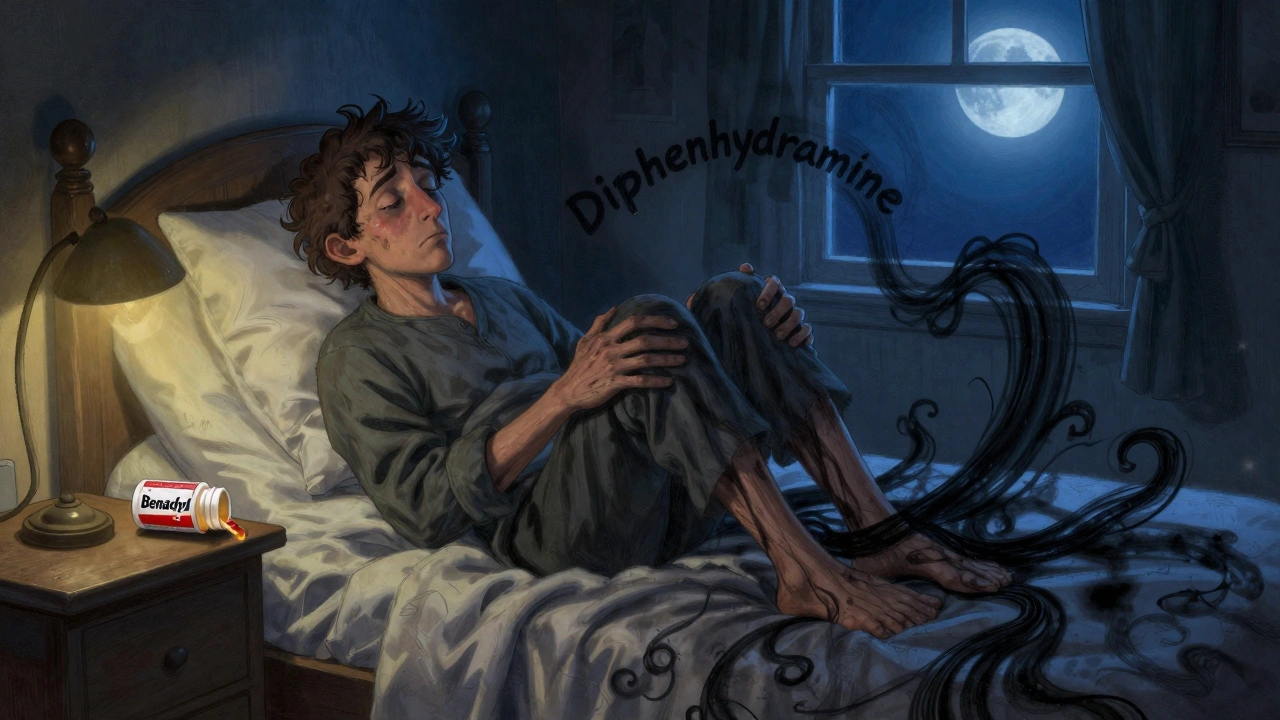
If you have restless legs syndrome (RLS), taking a common allergy medicine like Benadryl might seem like a harmless fix - until your legs feel like they’re on fire at 2 a.m. You’re not imagining it. For many people with RLS, sedating antihistamines make symptoms dramatically worse. And it’s not just Benadryl. Dozens of over-the-counter cold, flu, and sleep aids contain the same active ingredient - diphenhydramine - and they’re hiding in plain sight.
Why Antihistamines Make Restless Legs Worse
Restless legs syndrome isn’t just about discomfort. It’s a neurological condition tied to how your brain handles dopamine, a chemical that helps control movement. When dopamine levels drop or get blocked, your legs scream for movement - often at night, when you’re trying to sleep. Sedating antihistamines like diphenhydramine (Benadryl), chlorpheniramine (Chlor-Trimeton), and hydroxyzine (Atarax) don’t just make you drowsy. They slip easily into your brain because they’re fat-soluble. Once inside, they don’t just block histamine - they accidentally block dopamine receptors too. This double hit is deadly for RLS. A 2014 study of over 16,000 kidney patients found those taking these antihistamines were nearly twice as likely to develop or worsen RLS symptoms. Even if you’ve had RLS for years, a single dose of Benadryl can turn a manageable night into a sleepless one.Which Antihistamines Are Safe?
Not all antihistamines are created equal. The second-generation, non-sedating ones - like fexofenadine (Allegra), loratadine (Claritin), and desloratadine (Clarinex) - barely cross into your brain. Why? They’re pushed out by a natural brain gatekeeper called P-glycoprotein. That means they treat your sneezes and itchy eyes without touching your dopamine system. Here’s what the data shows:- Diphenhydramine (Benadryl): Worsens RLS in 78% of patients
- Chlorpheniramine: High risk - found in many cold medicines
- Hydroxyzine: Prescription sedating antihistamine - avoid
- Loratadine (Claritin): Safe for 95% of RLS patients
- Fexofenadine (Allegra): Safest option - only 5% report mild worsening
- Cetirizine (Zyrtec): Moderate risk - 15% report increased symptoms
The Hidden Danger: Combination Products
The real trap isn’t just the antihistamine - it’s what else is in the bottle. Many nighttime allergy or cold medicines combine diphenhydramine with pain relievers or decongestants. Products like Advil PM, Tylenol PM, and Vicks Cough and Cold all contain diphenhydramine. Even more dangerous: some include pseudoephedrine or phenylephrine - decongestants that independently worsen RLS in about 35% of patients. Check the label. Look for these words:- Diphenhydramine
- Doxylamine
- Chlorpheniramine
- Pseudoephedrine
- Phenylephrine

What to Use Instead
You don’t have to suffer through allergy season. Here are proven, RLS-safe alternatives:- Nasal corticosteroids like Flonase or Nasacort - 82% of RLS patients report improved symptoms without worsening legs
- Saline nasal sprays or rinses - 76% find them helpful for congestion
- Non-dopaminergic sleep aids like melatonin (0.5-5 mg) - 65% of RLS patients use it safely to improve sleep
- Prescription nasal antihistamines like azelastine - no systemic absorption, so no brain impact
Real Stories, Real Consequences
RLS patients aren’t making this up. On Reddit’s r/RestlessLegs, user “AllergySuffererRLS” wrote in 2022: “I took Night Nurse cough syrup and walked five miles just to stop my legs from screaming.” Another member, “RLSsurvivor,” posted: “Benadryl ruined three nights. Claritin fixed it in 24 hours.” A 2019 survey by RLS-UK of 1,247 patients found that 68% had their symptoms made worse by sedating antihistamines. Of those, 42% needed medical help. But here’s the good news: 87% of people who switched to non-sedating options saw improvement or complete relief.
How to Avoid Triggers
Most people with RLS don’t realize they’re taking something harmful. A Cleveland Clinic study found that 25% of RLS patients unknowingly use meds that worsen symptoms. Here’s how to protect yourself:- Read every label - even “natural” or “herbal” sleep aids may contain diphenhydramine
- Use apps like Medscape or Drugs.com to scan OTC products
- Ask your pharmacist: “Does this contain a sedating antihistamine?”
- Keep a list of safe meds - Claritin, Allegra, Flonase - and stick to them
- Don’t assume “new” brands are safer - check the active ingredient
What’s Changing in Medicine
Doctors are catching on. The American Academy of Neurology updated its 2021 RLS guidelines to specifically warn against sedating antihistamines. The FDA now requires updated warnings on prescription antihistamine labels. Insurance companies like Medicare Part D now cover non-sedating antihistamines in 98% of plans - up from 76% in 2017. Pharmaceutical sales reflect the shift: non-sedating antihistamine sales rose 12.7% between 2016 and 2022, while sedating ones dropped 4.3%. Research is now focused on why 15-20% of RLS patients still react to “safe” antihistamines. A 2022 study is looking at genetic differences that might make some people more sensitive.Bottom Line
If you have restless legs syndrome, you don’t need to choose between allergies and sleep. You just need to know what to avoid - and what to reach for instead. Antihistamines like Benadryl are a major trigger, but safe alternatives exist. Stick with Claritin, Allegra, or Flonase. Skip anything with “PM,” “Night,” or “Sleep” on the label. Read every bottle. Talk to your pharmacist. Your legs - and your sleep - will thank you.Can Zyrtec make restless legs worse?
Yes, Zyrtec (cetirizine) can make RLS symptoms worse for some people. While it’s considered a non-sedating antihistamine, about 15% of RLS patients report increased leg discomfort after taking it. This is likely because it still has slight brain penetration. Fexofenadine (Allegra) and loratadine (Claritin) are safer choices, with only 5-8% of patients reporting any worsening. If you’ve had bad reactions before, skip Zyrtec.
Is Benadryl the only antihistamine that worsens RLS?
No. Any sedating antihistamine can trigger RLS, including chlorpheniramine (Chlor-Trimeton), hydroxyzine (Atarax), and doxylamine (found in Unisom). These all cross the blood-brain barrier and block dopamine. Even though Benadryl is the most common, it’s not the only culprit. Always check the active ingredient, not just the brand name.
Can I take Claritin every day if I have RLS?
Yes. Loratadine (Claritin) is one of the safest antihistamines for RLS patients. Studies show only 5% of users report mild symptom changes, and most experience no effect at all. It’s safe for daily use during allergy season. Just avoid combination products that include decongestants like pseudoephedrine.
Do nasal sprays help with allergies without worsening RLS?
Yes. Nasal corticosteroid sprays like Flonase and Nasacort are highly effective for allergies and do not affect dopamine or worsen RLS. In fact, 82% of RLS patients report improved allergy symptoms without leg discomfort. Saline sprays are also safe and can reduce congestion naturally. These are often better than oral antihistamines for RLS patients.
Why do some people react to non-sedating antihistamines?
Researchers are still studying this. While most non-sedating antihistamines don’t enter the brain, about 15-20% of RLS patients still report worsening symptoms even with Claritin or Allegra. Early evidence suggests genetic differences in how the body processes these drugs may play a role. Some people may have less active P-glycoprotein, allowing small amounts to cross into the brain. Ongoing studies are looking for biomarkers to predict sensitivity.
Can I use melatonin for sleep if I have RLS?
Yes. Melatonin is a safe sleep aid for RLS patients. It doesn’t affect dopamine pathways like antihistamines do. A 2021 study found 65% of RLS patients using melatonin (0.5-5 mg) reported better sleep without worsening leg symptoms. It’s a good alternative to sleep aids containing diphenhydramine or doxylamine.
Shubham Mathur
December 8, 2025 AT 15:28Bro I took Benadryl last week for a cold and my legs felt like they were being electrocuted at 3am I thought I was having a stroke
Stacy Tolbert
December 9, 2025 AT 14:17I cried for an hour after I realized I’d been poisoning myself with NyQuil for years. My legs were screaming and I thought it was just stress. Turns out it was diphenhydramine. I feel so stupid.
Ronald Ezamaru
December 11, 2025 AT 06:48As a neurologist who treats RLS patients, I can confirm this is one of the most underreported iatrogenic triggers. The dopamine blockade from sedating antihistamines is well-documented in clinical literature. Patients often don’t connect their sleepless nights to a random OTC med they took weeks ago. Always screen for these. Claritin and Allegra are gold standards. Avoid anything with PM, Night, or Sleep on the label - it’s not a feature, it’s a red flag.
Ryan Brady
December 12, 2025 AT 17:12USA is full of weaklings. You can’t even take a simple cold pill without crying about your legs? Just suck it up. I take Benadryl every night and my legs don’t care. Probably just lazy. Also Zyrtec is for pansies. Get real.
Katherine Rodgers
December 14, 2025 AT 00:11soooo… you’re telling me the reason i’ve been walking in circles at 2am for 3 years is because i like my allergy meds to come with a side of sleep? wow. mind blown. next you’ll tell me sugar is bad for you.
Gilbert Lacasandile
December 15, 2025 AT 12:20I’ve been using Claritin daily for 4 years with RLS and never had an issue. I used to take Zyrtec until I noticed my legs twitching after 2 days - switched and never looked back. Small change, huge difference. Just read the label.
Lola Bchoudi
December 15, 2025 AT 13:30For RLS patients, the pharmacodynamic profile of sedating antihistamines is a Class I contraindication due to H1 receptor-mediated dopaminergic suppression in the basal ganglia. Non-sedating agents like fexofenadine exhibit negligible CNS penetration due to P-gp efflux. Nasal corticosteroids remain first-line for allergic rhinitis comorbidity - no systemic absorption, no neurological interference. Always verify active ingredients - brand names are marketing, not medical guidance.
Morgan Tait
December 16, 2025 AT 21:47Did you know the FDA is hiding this? Big Pharma doesn’t want you to know that diphenhydramine is designed to keep you awake at night so you buy more meds. The P-glycoprotein thing? Total lie. It’s all about controlling the sleep market. I’ve been using raw garlic and saltwater rinses since 2019 - no meds, no problems. They don’t want you to know this.
Christian Landry
December 17, 2025 AT 13:36holy crap i just checked my night time cold med and it had diphenhydramine 😭 i’ve been taking this for 2 years… i thought my rls was just getting worse. i’m switching to claritin tomorrow. thanks for this.
Mona Schmidt
December 18, 2025 AT 10:29It’s important to note that while cetirizine is generally considered safer than diphenhydramine, its metabolite, desloratadine, may still have low CNS penetration in genetically susceptible individuals. The 15% reaction rate is statistically significant and should not be dismissed as anecdotal. Always consider pharmacogenetic testing if symptoms persist despite switching agents.
Guylaine Lapointe
December 18, 2025 AT 19:41Wow. So the entire pharmaceutical industry is just quietly poisoning people with RLS? And we’re supposed to trust the labels? I don’t buy it. I bet they’re still putting diphenhydramine in "natural" sleep aids too. I’ve seen the documents. This is intentional.
Brianna Black
December 19, 2025 AT 22:52Thank you for writing this. I’m a nurse in Ohio and I’ve seen so many patients come in with severe RLS after taking OTC meds. I now hand out a printed list of safe and unsafe meds. I wish every pharmacy had this posted next to the allergy aisle. You just saved someone’s sleep - and maybe their sanity.