
5-HTP and SSRIs: The Hidden Danger of Combining These for Depression
 Jan, 7 2026
Serotonin Syndrome Risk Assessment Tool
Combined use of 5-HTP with SSRIs (like sertraline, fluoxetine, or escitalopram) can cause serotonin syndrome—a potentially life-threatening condition. This tool helps you identify symptoms that may indicate you're experiencing serotonin syndrome. Do not rely solely on this tool for medical decisions.
Check Your Symptoms
Select all symptoms you are currently experiencing:
URGENT MEDICAL ATTENTION REQUIRED
If you have any of these symptoms, you may be experiencing serotonin syndrome. This is a medical emergency. Go to the nearest emergency room immediately.
Call emergency services or go to the ER right now. Do not wait.
Do not stop taking your SSRI without consulting your doctor.
SEEK MEDICAL ATTENTION SOON
Your symptoms may indicate early-stage serotonin syndrome. Contact your healthcare provider as soon as possible for evaluation.
Describe your symptoms and tell them you're taking both 5-HTP and an SSRI.
Do not stop taking your SSRI without medical supervision.
No Symptoms of Serotonin Syndrome Detected
You're not currently experiencing symptoms associated with serotonin syndrome. However, if you're taking both 5-HTP and SSRIs, stop taking 5-HTP immediately and consult your doctor about safe alternatives.
Remember: Serotonin syndrome can develop quickly and without warning.
Important Note: This tool is designed to help identify symptoms of serotonin syndrome, which can be life-threatening. If you experience severe symptoms like seizures, high fever (over 104°F), or loss of consciousness, call emergency services immediately. Do not wait for results from this tool.
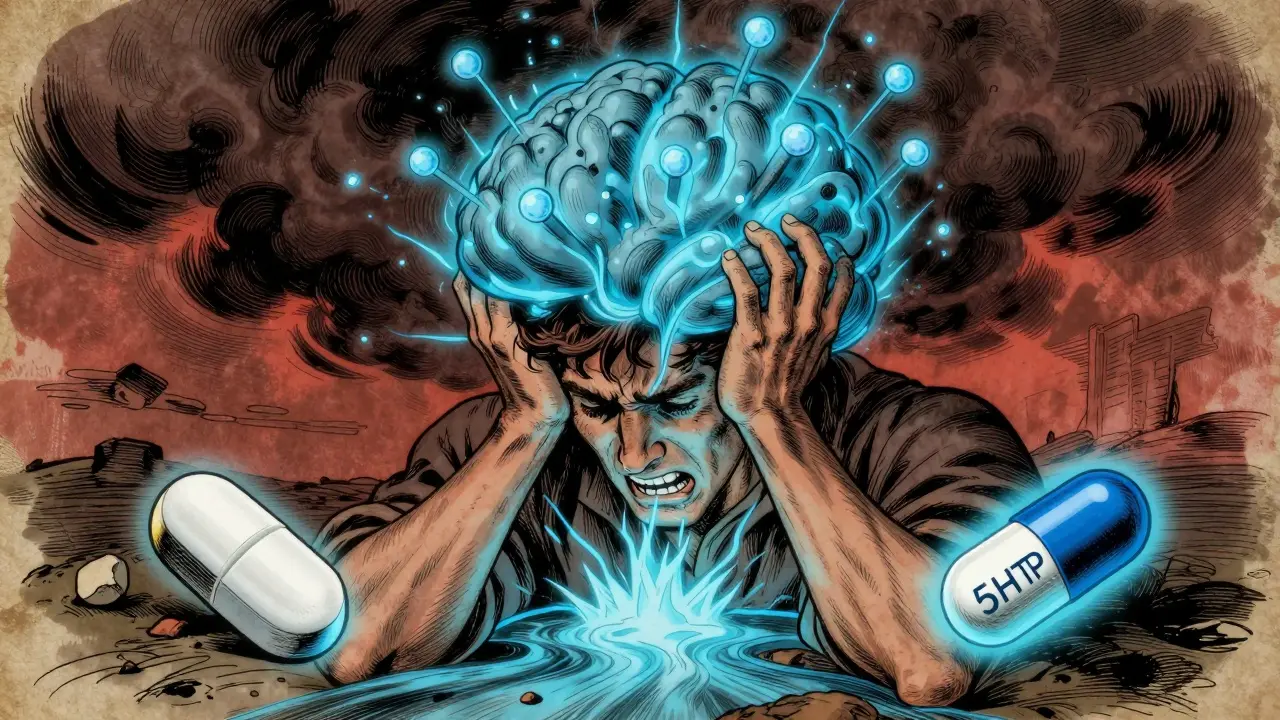
Combining 5-HTP with SSRIs isn’t just a bad idea-it’s a medical emergency waiting to happen. You might think, "It’s natural, so it’s safe," or "I’m just taking a little extra to feel better," but this combination can push your serotonin levels into a dangerous zone. Serotonin syndrome isn’t rare. It’s not just a footnote in a drug label. It’s real, it’s fast, and it kills.
What Happens When 5-HTP Meets SSRIs?
SSRIs like sertraline, fluoxetine, or escitalopram work by stopping your brain from reabsorbing serotonin. That leaves more of it floating around to improve your mood. Simple, right? Now add 5-HTP. This supplement is a direct building block for serotonin. Your body converts it into serotonin almost immediately-no filters, no brakes.
So now you’ve got two forces working together: one (the SSRI) keeps serotonin from leaving your brain, and the other (5-HTP) dumps more of it in. It’s like turning on a faucet full blast while plugging the drain. Serotonin levels spike fast. And when they cross 300-400 ng/mL (normal is 101-283 ng/mL), your nervous system starts to short-circuit.
What Does Serotonin Syndrome Actually Look Like?
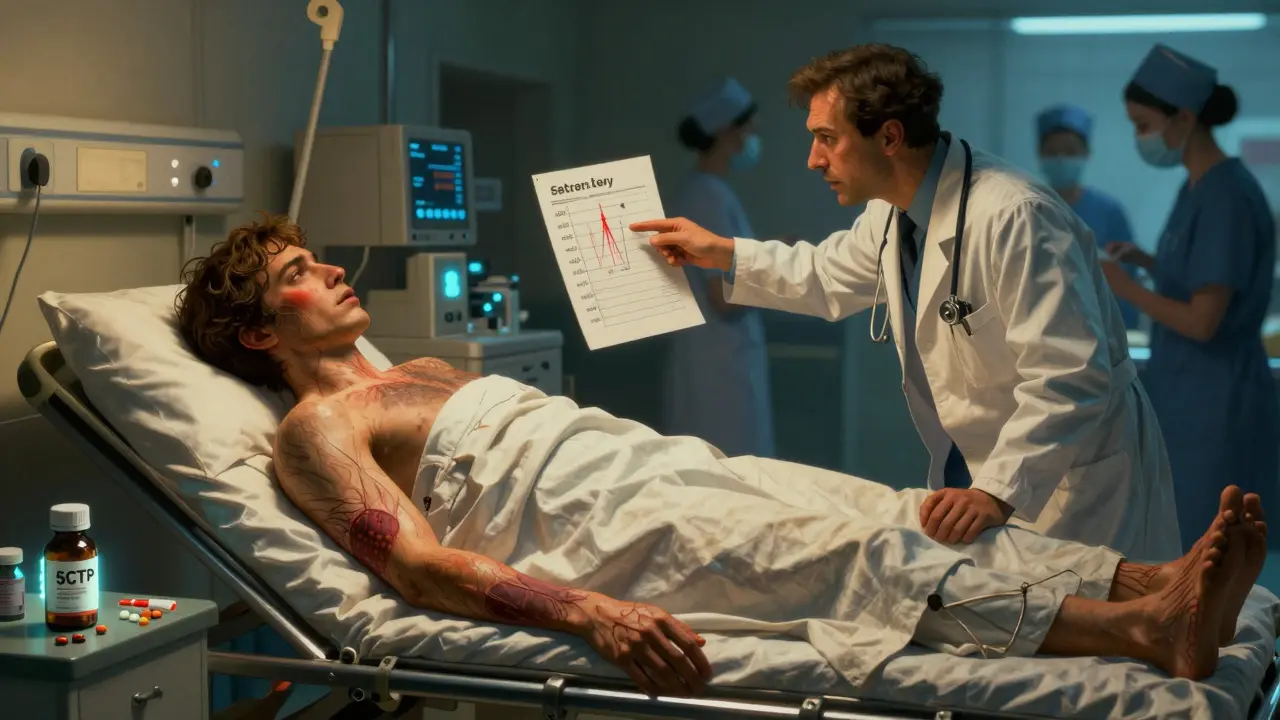
It doesn’t always start with a seizure or a fever. Often, it begins quietly: a sudden shiver, unexplained diarrhea, or your hands trembling when you didn’t notice before. These are early signs. If you ignore them, it escalates. Muscle stiffness. Sweating like you’ve run a marathon in winter. Your temperature climbs-104°F isn’t uncommon. Then comes confusion, rapid heartbeat, high blood pressure, and in worst cases, seizures or loss of consciousness.
Doctors use the Hunter Criteria to diagnose it. It’s simple: if you’re on a serotonin-boosting drug and have one of these, you likely have serotonin syndrome:
- Spontaneous clonus (involuntary muscle contractions)
- Inducible clonus plus agitation or diaphoresis
- Eye clonus plus agitation or diaphoresis
- Tremor plus hyperreflexia
- Hypertonia plus temperature above 38°C plus ocular or inducible clonus
One study found this system catches 97% of real cases. That’s better than most lab tests. And it’s not theoretical. Between 2015 and 2019, the FDA logged 127 adverse events tied to 5-HTP and SSRIs-nine of them fatal.
Why Is This Happening So Often?
Because people don’t know. A 2022 survey of over 1,000 supplement users found that 41% believed “natural supplements can’t cause dangerous drug interactions.” That’s not just ignorance-it’s deadly. 5-HTP is sold on shelves next to vitamins, with no prescription needed. No doctor’s note. No warning label that says, “Do not take with antidepressants.” The FDA doesn’t require it.
Even worse, supplement quality is a gamble. ConsumerLab.com tested 5-HTP products in 2022 and found 31% had doses that were 72% to 128% of what was on the label. You buy 100 mg, you might get 72 mg-or 128 mg. You have no control. And when you’re already on an SSRI, even a small extra dose can be enough to trigger symptoms.
And it’s growing. In 2010, only 7% of serotonin syndrome cases involved supplements like 5-HTP. By 2020, that jumped to 22%. Dr. David Juurlink from Toronto’s Sunnybrook Hospital calls this one of the fastest-growing causes of serotonin toxicity. And it’s avoidable.
What About People Who Say It Works?
You’ll find stories online. Reddit threads. Blog posts. People claiming they lowered their SSRI dose by taking 5-HTP and felt better. One user on Depressionforums.org said they “successfully tapered off” their medication using 5-HTP. But here’s the catch: none of them had documented medical supervision. No lab tests. No doctor’s approval. No safety plan.
That’s not evidence. That’s anecdote. And anecdote doesn’t save lives. Dr. Jeffrey L. Cummings, who led a 2021 systematic review in CNS Drugs, put it plainly: “There is no high-quality evidence supporting the safety of 5-HTP during SSRI therapy.” Every case report of success is matched by multiple reports of ER visits, ICU admissions, and deaths.
Dr. Kent Holtorf argues in his book that careful titration can work. But he’s in the minority. The American College of Medical Toxicology, the Mayo Clinic, the FDA, and the American Psychiatric Association all say the same thing: don’t do it.
What If You’re Already Taking Both?
If you’re currently taking 5-HTP and an SSRI, stop the supplement immediately. Do not stop your SSRI without talking to your doctor. Abruptly stopping an SSRI can cause withdrawal symptoms-dizziness, nausea, brain zaps, anxiety spikes.
But you can stop 5-HTP. Now. And then wait. The Mayo Clinic recommends a two-week washout period before starting 5-HTP again. But if you’re on paroxetine (Paxil), which sticks around in your body for weeks, you may need longer. Dr. James Bibb at UT Southwestern says some patients need up to five weeks.
And if you’re experiencing symptoms right now-tremors, sweating, confusion, high temperature-go to the ER. Don’t wait. Don’t call your doctor tomorrow. Go now. Serotonin syndrome can kill in hours.
What’s the Safe Alternative?
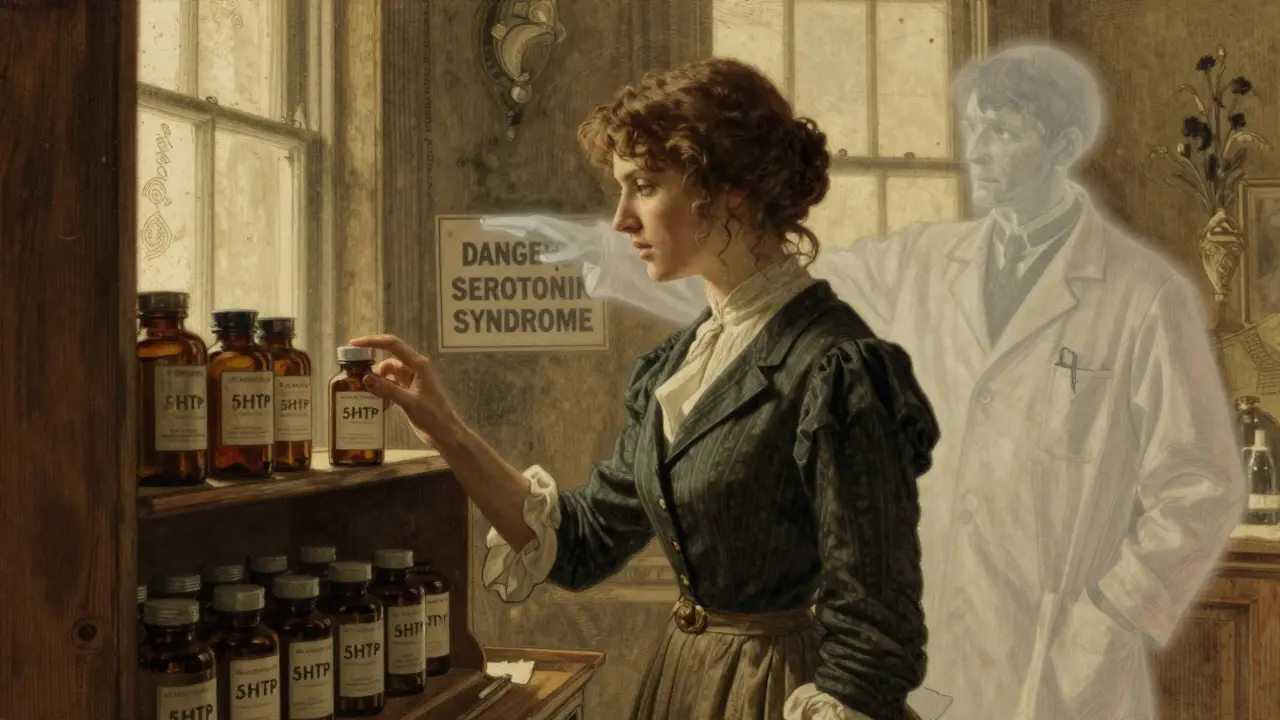
If you’re on an SSRI and feel like it’s not working well enough, talk to your psychiatrist. There are proven ways to adjust treatment: increase the dose, switch medications, add therapy, or try other evidence-based approaches like exercise, light therapy, or sleep hygiene. None of these carry the same risk as 5-HTP.
There’s no supplement that replaces professional care. And no “natural” shortcut that’s worth your life.
Who’s at Highest Risk?
Women aged 35-54 are the most likely to combine 5-HTP with SSRIs, according to the 2022 National Health Interview Survey. They’re also more likely to use supplements for mood support. But men aren’t immune. Anyone taking an SSRI-whether for depression, anxiety, OCD, or PTSD-is at risk.
And here’s the kicker: only 38% of primary care doctors correctly identify 5-HTP as a serotonin syndrome risk. That means if you mention you’re taking it, your doctor might not know it’s dangerous. You have to be your own advocate.
What’s Changing?
Good things are coming. By mid-2025, the FDA plans to require clear serotonin syndrome warnings on all SSRI packaging. The American Psychiatric Association now requires doctors to ask patients directly about supplement use during mental health evaluations.
But until then, the burden is on you. If you’re on an SSRI, don’t touch 5-HTP. Don’t trust forum advice. Don’t assume “natural” means safe. And if you’ve already combined them, stop now. Your brain doesn’t care if it came from a pill or a capsule. It only cares about the chemistry.
There’s no magic supplement that makes SSRIs work better. There’s only one thing that works: time, patience, and medical supervision. Don’t gamble with your nervous system.
christy lianto
January 9, 2026 AT 03:26Okay but real talk-how many people are even aware that 5-HTP is even a thing? I saw a friend pop one after her doctor switched her to sertraline and she ended up in the ER with tremors and confusion. No one warned her. Not the pharmacist, not the online review, not even the bottle. Natural doesn’t mean harmless. This needs to be shouted from rooftops.
Luke Crump
January 9, 2026 AT 07:52Ah yes, the classic ‘natural = dangerous’ narrative. Tell me, when did science become a religion and supplements the heretics? People have been combining herbal remedies with pharmaceuticals for centuries. The real danger is pharmaceutical monopolies silencing alternative pathways to mental wellness. You fear chemistry? Then why do you trust a pill made in a lab with undisclosed fillers but distrust a plant-derived amino acid? Hypocrisy is the real syndrome here.
Lois Li
January 10, 2026 AT 18:59I appreciate the urgency here, but I also know people who’ve used 5-HTP safely while on SSRIs under careful supervision. It’s not black and white. The issue isn’t the supplement-it’s the lack of education. Doctors need to ask about supplements. Pharmacies need to put warnings on the shelf. Patients need to speak up. Let’s fix the system, not just scare people away from everything that isn’t FDA-approved.
Manish Kumar
January 10, 2026 AT 22:14Look, I come from India where we’ve used ashwagandha, shatavari, and even tryptophan-rich foods for mood for generations. We never had serotonin syndrome because we didn’t stack things like this. But here in the US, everyone’s trying to optimize everything at once-supplements, SSRIs, nootropics, caffeine, CBD, melatonin-it’s a cocktail party for your brain. And then you wonder why people crash. It’s not the 5-HTP. It’s the cultural obsession with quick fixes. You want to feel better? Sleep. Move. Talk. Not stack chemicals. The body isn’t a lab. It’s a system. You break one part, you break the whole.
Prakash Sharma
January 11, 2026 AT 17:40Western medicine is so weak they’re scared of anything that isn’t patented. 5-HTP is cheaper than a prescription and works better for some. You think the FDA cares about your life? They care about lawsuits and profits. My cousin took 5-HTP with fluoxetine for 8 months and felt better than he had in 10 years. He didn’t go to the ER-he went to work. Stop scaring people with cherry-picked FDA stats. Real people live with this every day. Not all of us are victims.
Donny Airlangga
January 12, 2026 AT 19:35My sister had serotonin syndrome last year. She didn’t even know she was taking 5-HTP-her ‘mood support’ gummy had it listed in the ingredients under ‘natural extracts.’ No bold warning. No asterisk. Just buried in fine print. She spent three days in ICU. Now she’s fine, but she won’t touch anything labeled ‘natural’ again. This isn’t fearmongering. It’s a public health blind spot.
Kristina Felixita
January 13, 2026 AT 03:24Can we just agree that the supplement industry is a wild west?? I bought a bottle of 5-HTP last year and the label said 100mg… turned out it was 135mg and had a weird filler I couldn’t even spell. And no one checks this stuff!! I’m so glad someone’s talking about this-my therapist didn’t even know 5-HTP was a thing. Like, how do we fix this??
Joanna Brancewicz
January 13, 2026 AT 14:025-HTP + SSRI = pharmacokinetic synergy gone rogue. Monoamine oxidase inhibition is irrelevant here-this is direct serotonergic overload. No buffer. No ceiling. No safety margin. The Hunter Criteria are underutilized in primary care. This is a diagnostic emergency, not a lifestyle choice.
Evan Smith
January 15, 2026 AT 06:13So… if I take 5-HTP and an SSRI, and I don’t turn into a human seizure, does that mean it’s safe? 😏